Bedroom Furniture Market Size and Growth Trends

Bedroom furniture represents a key subsegment within the overall furniture market, covering major product groups such as beds, wardrobes and chests of drawers. As a category, it is closely linked to housing activity and consumer willingness to make large, infrequent purchases, making it particularly sensitive to broader macroeconomic conditions.

This analysis focuses on wooden bedroom furniture market size and development across major furniture markets. Market sizes are estimated using a trade-based allocation approach, where HS940350 (wooden bedroom furniture) is used to derive category shares from total furniture trade and applied to national retail turnover. The aim is to review market development at a more detailed level and assess how this core category evolves across markets, highlighting the role of bedroom furniture as a fundamental component of overall furniture demand.

Bedroom Furniture as a Share of Total Furniture Retail

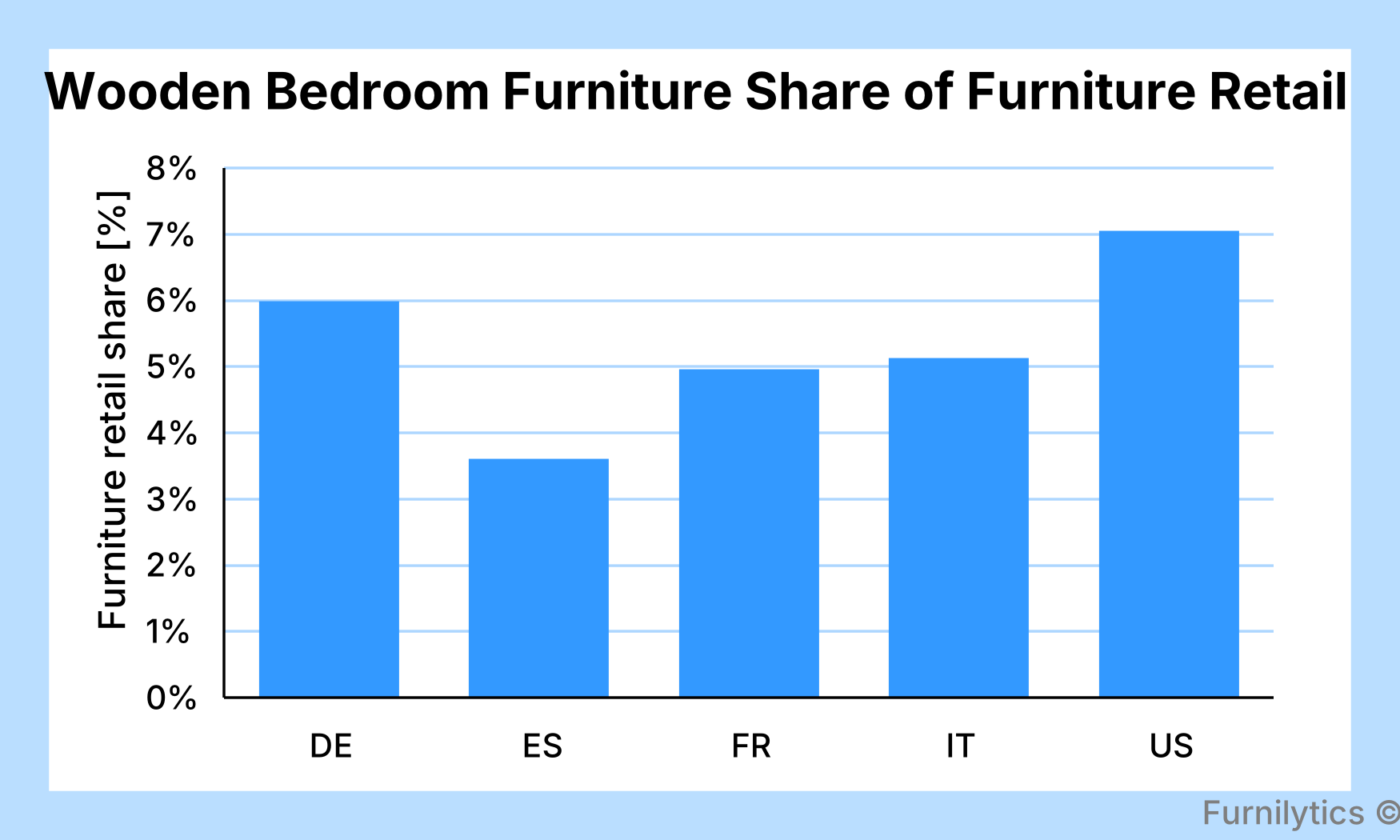
Understanding the share of bedroom furniture within total furniture retail provides a useful starting point for assessing the importance of this category across markets. As a core segment covering essential products such as beds, wardrobes and chests of drawers, it reflects both consumer priorities and market structure.

The share of wooden bedroom furniture varies noticeably between countries. The United States leads at around 7%, followed by Germany at approximately 6%. Italy and France are both around 5%, while Spain stands out with a significantly lower share of roughly 3.5%. These differences indicate that the role of bedroom furniture within the overall market is not uniform, but shaped by varying consumer preferences and broader market dynamics.
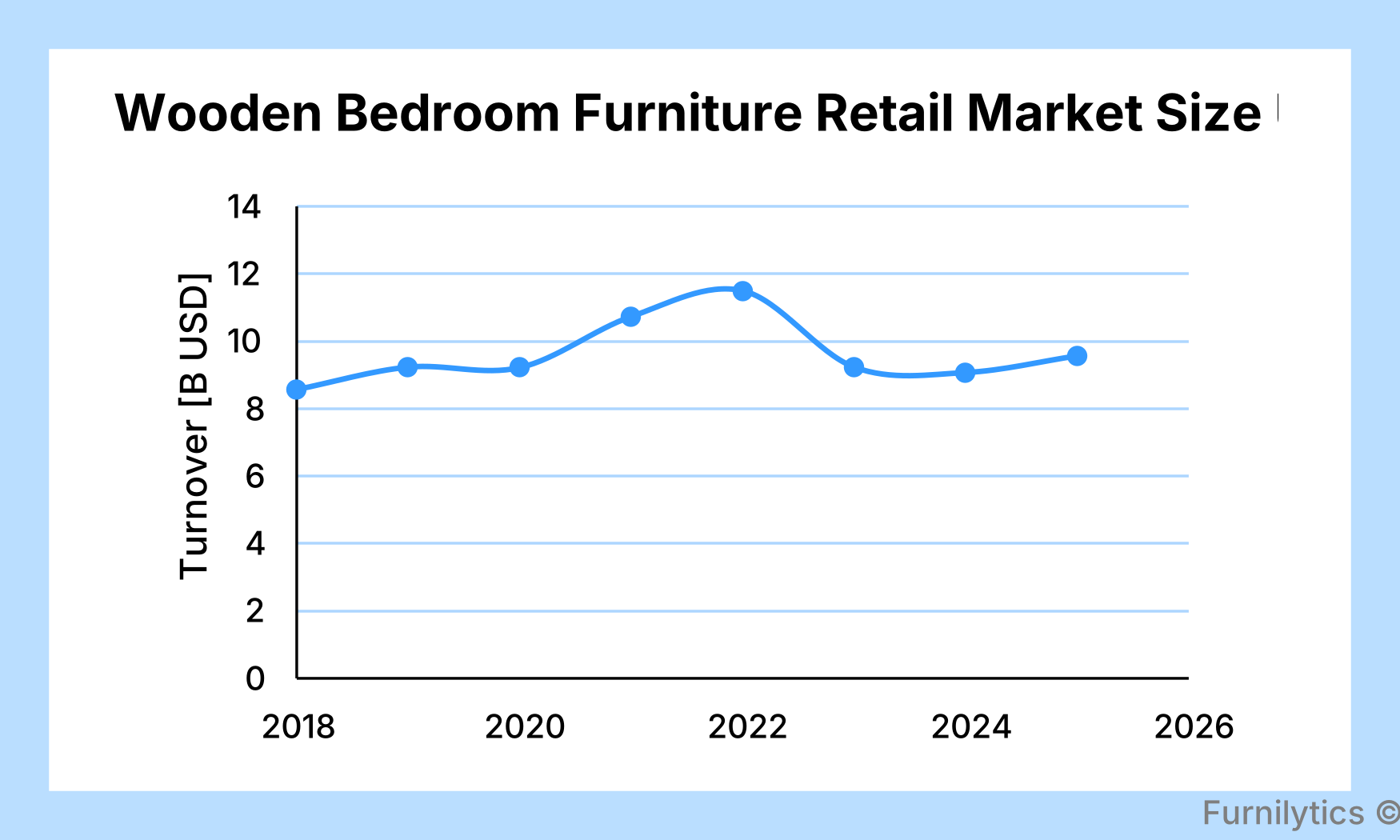
The United States is by far the largest market for wooden bedroom furniture, both in absolute terms and as a share of total furniture retail. As shown in the chart, the market experienced strong growth in the post-Covid period, peaking around 2022, followed by a clear correction phase. After this peak, market size declined notably through 2023 and has since stabilised at a lower level, indicating a normalisation of demand after the pandemic-driven surge. Despite this adjustment, the market remains structurally large compared to other countries.

In 2025, the overall furniture retail market grew by 2.2%, although momentum weakened in the second half of the year. In contrast, the wooden bedroom furniture segment showed stronger performance, increasing by 5.4% over the same period. This suggests that while the broader market is still adjusting, the bedroom furniture segment is showing early signs of renewed growth within the US market.
EU Bedroom Furniture Market Size and Growth Patterns

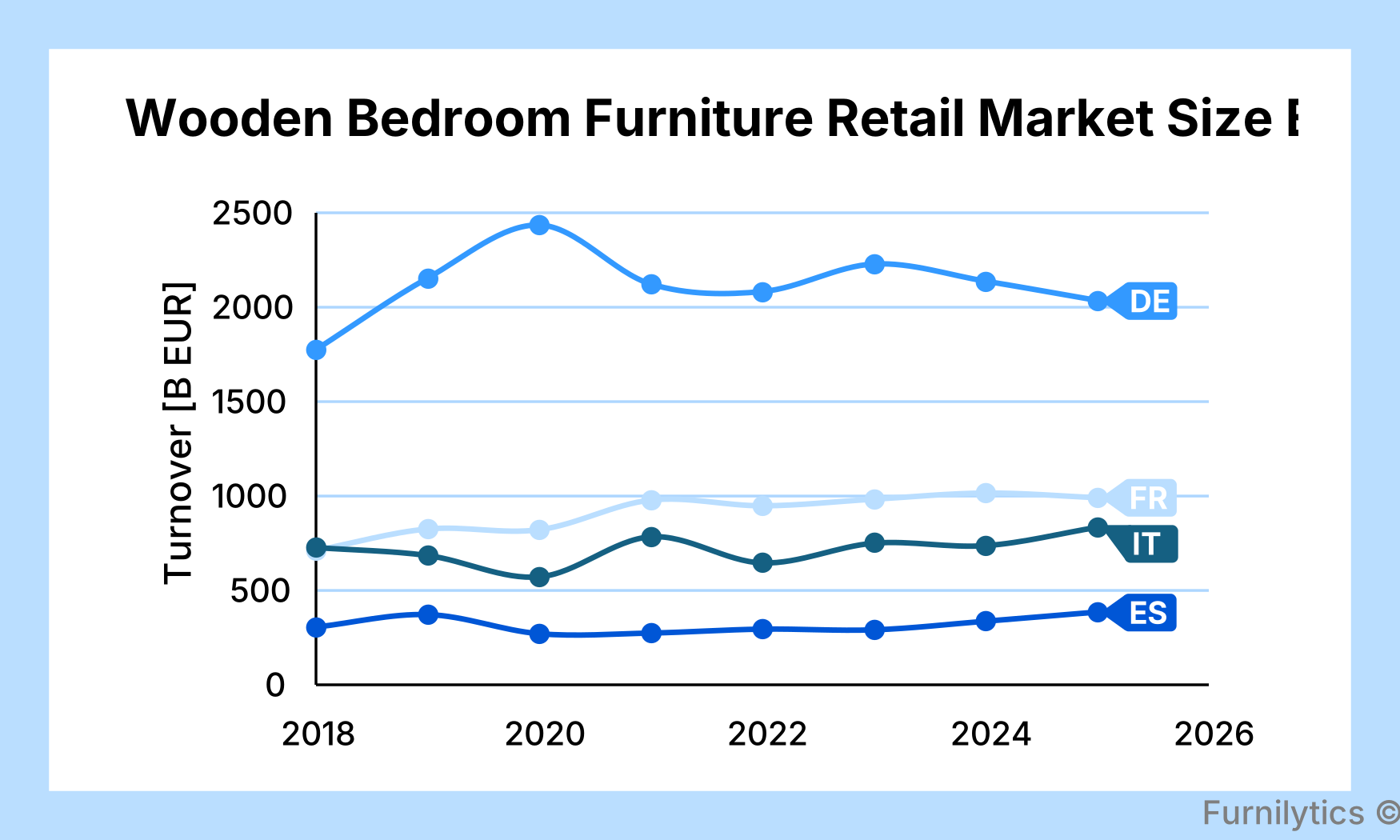
Across the major European markets, a clear divergence emerges between larger and smaller countries. Germany, the largest market in Europe, follows a similar pattern to the United States, with a post-Covid peak followed by a period of stabilisation and recent decline. In 2025, total furniture retail in Germany decreased by 1.1%, while the wooden bedroom furniture segment declined more sharply at -4.8%. France shows a comparable trend, with both total market (-3.0%) and bedroom furniture (-2.4%) contracting, indicating continued weakness in one of Europe’s core markets.

In contrast, Southern European markets display stronger growth dynamics. Spain recorded a 4.5% increase in total furniture retail, with the wooden bedroom segment growing significantly faster at 14.1%. Italy shows a similar pattern, with a stable overall market (-0.1%) but strong growth in bedroom furniture (+13.2%).

This split highlights a broader structural shift within the European market. While the largest markets are stabilising or declining after earlier peaks, growth is increasingly driven by smaller markets, particularly within the bedroom furniture segment.
Conclusion

Wooden bedroom furniture markets continue to reflect broader macroeconomic conditions, with demand closely linked to housing activity and consumer confidence. Following the post-Covid peak, the largest markets, particularly the United States and Germany, have entered a phase of stabilisation or decline, indicating a normalisation of demand after earlier growth.

At the same time, a clear shift is emerging within the wooden bedroom furniture segment. While large markets remain under pressure, smaller European markets such as Spain and Italy are showing strong growth, significantly outperforming their total furniture markets. This highlights a divergence not only between countries, but also within the category itself.

Overall, the analysis shows that wooden bedroom furniture follows a distinct market dynamic. As a core but cyclical segment, it provides a more granular view of demand, revealing that current growth is increasingly concentrated in smaller, faster-growing markets rather than in the largest economies.

Sources:
U.S. Census Bureau – International Trade Data

Eurostat – Comext database DS-045409
Furnilytics indicator – France Furniture Retail Turnover
Furnilytics indicator – Germany Furniture Retail Turnover
Furnilytics indicator – Italy Furniture Retail Turnover
Furnilytics indicator – US Furniture Retail Turnover

Methodology & limitations:
Market sizes are estimated using a trade-structure allocation approach, a common method in market analytics. Wooden bedroom furniture (HS 940350) is measured relative to total furniture trade (HS 9401 and 9403). These shares are then applied to national furniture retail turnover (NACE 47.59) to approximate category-level market sizes. Trade data is sourced from the U.S. Census Bureau and Eurostat Comext. Medical furniture (HS 9402) is excluded.

This approach assumes that import structures reflect consumption structures, which may not fully hold in all markets due to domestic production differences. HS categories may also include some non-household items.

Last refresh:
Source:
Source description:

Get our latest data in your dashboard for FREE

No registration required

Bedroom Furniture Market Size and Growth Trends

Bedroom furniture represents a key subsegment within the overall furniture market, covering major product groups such as beds, wardrobes and chests of drawers. As a category, it is closely linked to housing activity and consumer willingness to make large, infrequent purchases, making it particularly sensitive to broader macroeconomic conditions.

This analysis focuses on wooden bedroom furniture market size and development across major furniture markets. Market sizes are estimated using a trade-based allocation approach, where HS940350 (wooden bedroom furniture) is used to derive category shares from total furniture trade and applied to national retail turnover. The aim is to review market development at a more detailed level and assess how this core category evolves across markets, highlighting the role of bedroom furniture as a fundamental component of overall furniture demand.

Bedroom Furniture as a Share of Total Furniture Retail

Understanding the share of bedroom furniture within total furniture retail provides a useful starting point for assessing the importance of this category across markets. As a core segment covering essential products such as beds, wardrobes and chests of drawers, it reflects both consumer priorities and market structure.

The share of wooden bedroom furniture varies noticeably between countries. The United States leads at around 7%, followed by Germany at approximately 6%. Italy and France are both around 5%, while Spain stands out with a significantly lower share of roughly 3.5%. These differences indicate that the role of bedroom furniture within the overall market is not uniform, but shaped by varying consumer preferences and broader market dynamics.

The United States is by far the largest market for wooden bedroom furniture, both in absolute terms and as a share of total furniture retail. As shown in the chart, the market experienced strong growth in the post-Covid period, peaking around 2022, followed by a clear correction phase. After this peak, market size declined notably through 2023 and has since stabilised at a lower level, indicating a normalisation of demand after the pandemic-driven surge. Despite this adjustment, the market remains structurally large compared to other countries.

In 2025, the overall furniture retail market grew by 2.2%, although momentum weakened in the second half of the year. In contrast, the wooden bedroom furniture segment showed stronger performance, increasing by 5.4% over the same period. This suggests that while the broader market is still adjusting, the bedroom furniture segment is showing early signs of renewed growth within the US market.

EU Bedroom Furniture Market Size and Growth Patterns

Across the major European markets, a clear divergence emerges between larger and smaller countries. Germany, the largest market in Europe, follows a similar pattern to the United States, with a post-Covid peak followed by a period of stabilisation and recent decline. In 2025, total furniture retail in Germany decreased by 1.1%, while the wooden bedroom furniture segment declined more sharply at -4.8%. France shows a comparable trend, with both total market (-3.0%) and bedroom furniture (-2.4%) contracting, indicating continued weakness in one of Europe’s core markets.

In contrast, Southern European markets display stronger growth dynamics. Spain recorded a 4.5% increase in total furniture retail, with the wooden bedroom segment growing significantly faster at 14.1%. Italy shows a similar pattern, with a stable overall market (-0.1%) but strong growth in bedroom furniture (+13.2%).

This split highlights a broader structural shift within the European market. While the largest markets are stabilising or declining after earlier peaks, growth is increasingly driven by smaller markets, particularly within the bedroom furniture segment.

Conclusion

Wooden bedroom furniture markets continue to reflect broader macroeconomic conditions, with demand closely linked to housing activity and consumer confidence. Following the post-Covid peak, the largest markets, particularly the United States and Germany, have entered a phase of stabilisation or decline, indicating a normalisation of demand after earlier growth.

At the same time, a clear shift is emerging within the wooden bedroom furniture segment. While large markets remain under pressure, smaller European markets such as Spain and Italy are showing strong growth, significantly outperforming their total furniture markets. This highlights a divergence not only between countries, but also within the category itself.

Overall, the analysis shows that wooden bedroom furniture follows a distinct market dynamic. As a core but cyclical segment, it provides a more granular view of demand, revealing that current growth is increasingly concentrated in smaller, faster-growing markets rather than in the largest economies.

Sources:
U.S. Census Bureau – International Trade Data

Eurostat – Comext database DS-045409
Furnilytics indicator – France Furniture Retail Turnover
Furnilytics indicator – Germany Furniture Retail Turnover
Furnilytics indicator – Italy Furniture Retail Turnover
Furnilytics indicator – US Furniture Retail Turnover

Methodology & limitations:
Market sizes are estimated using a trade-structure allocation approach, a common method in market analytics. Wooden bedroom furniture (HS 940350) is measured relative to total furniture trade (HS 9401 and 9403). These shares are then applied to national furniture retail turnover (NACE 47.59) to approximate category-level market sizes. Trade data is sourced from the U.S. Census Bureau and Eurostat Comext. Medical furniture (HS 9402) is excluded.

This approach assumes that import structures reflect consumption structures, which may not fully hold in all markets due to domestic production differences. HS categories may also include some non-household items.