
Brazil Furniture Industry 2025: Market Size, Exports and Productivity
Brazil’s furniture industry enters 2025 as one of the world’s larger manufacturing markets, shaped by strong domestic demand, elevated inflation, and limited exposure to international trade. While the industry has historically been inward-looking, recent shifts in export patterns and the Mercosur–EU agreement point to the possibility of a gradual change in strategic focus.
The sections that follow explore how market growth has been influenced by price effects, how Brazil’s domestic dominance contrasts with evolving export destinations, and how the industry’s scale compares with its productivity in an international context—highlighting both the strengths and structural challenges facing Brazilian furniture manufacturers.
Market Size and Inflation Effects
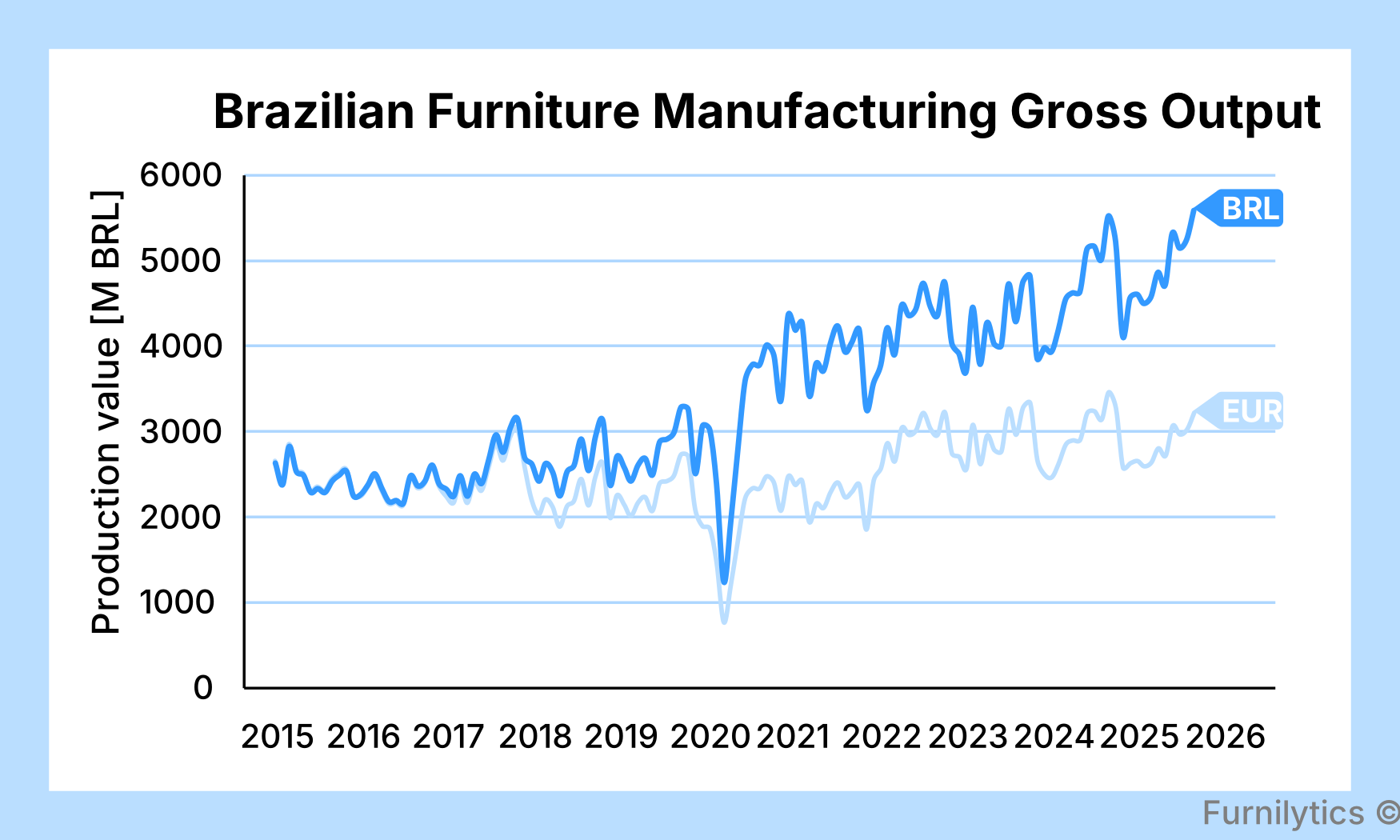
Brazil has one of the largest furniture manufacturing industries globally, showing steady growth in production value over the past decade, aside from a brief Covid-related disruption in 2020. Overall output has since recovered and continued to expand. The industry is highly concentrated geographically. About 85% of total production is located in just six states: Minas Gerais, Rio de Janeiro, São Paulo, Paraná, Santa Catarina, and Rio Grande do Sul. As a result, national market dynamics are largely driven by developments in Brazil’s South and Southeast regions.
When looking at production values by currency, a clear post-Covid divergence emerges. Output measured in BRL rises strongly, while values expressed in EUR remain largely flat. This widening gap points to inflation and currency effects as key drivers of nominal growth, rather than a comparable increase in real production—an issue explored further in the inflation comparison that follows.
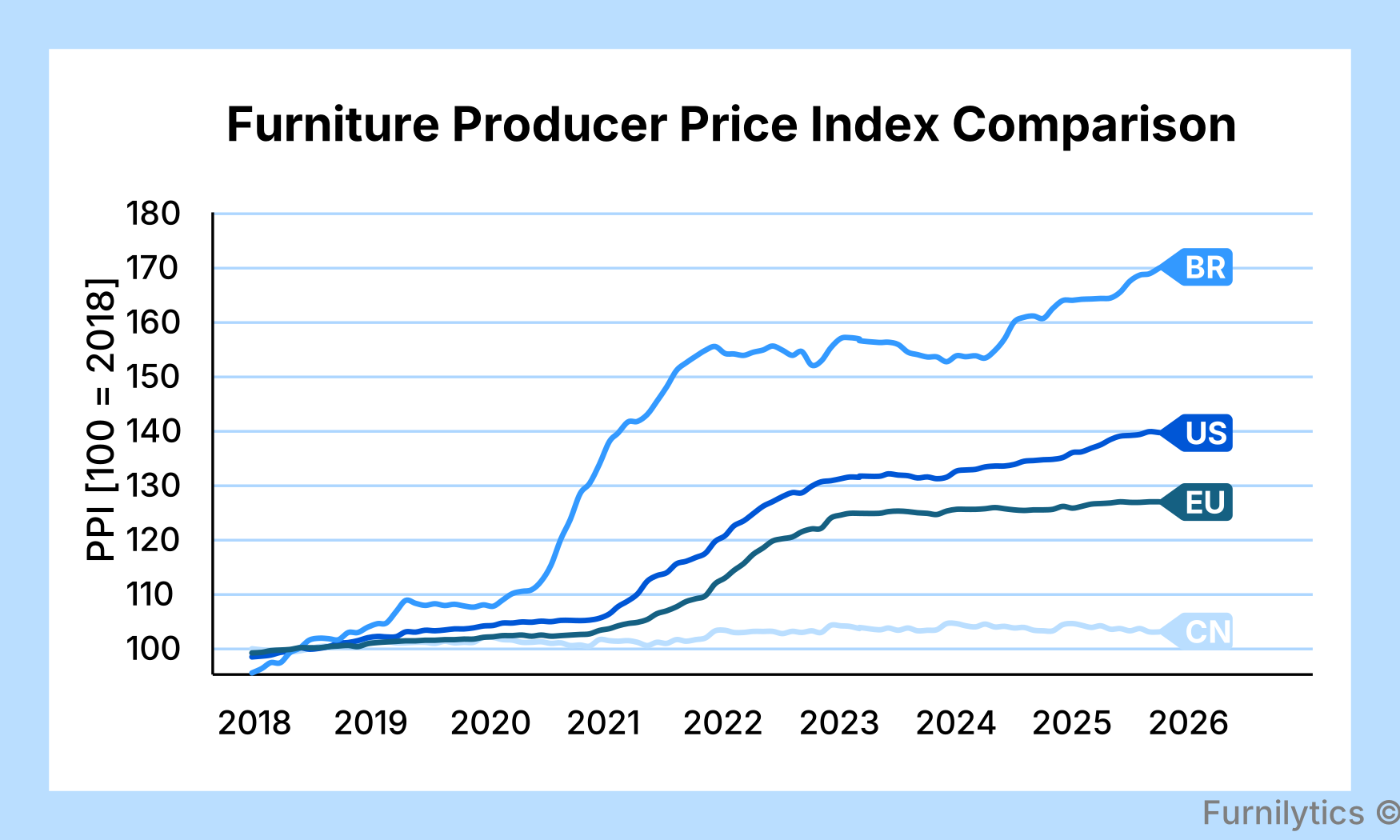
The split between BRL and EUR production values is mirrored in producer price inflation. Since 2020, Brazil’s furniture PPI has increased far more sharply than in the EU, the US, or China. While cost pressures in the EU and US have risen at a moderate pace, Brazil stands out with significantly higher inflation, helping to explain the strong nominal growth in BRL terms. This reinforces that recent growth in Brazil’s furniture market is driven largely by price effects rather than real output expansion.
Domestic Focus and Trade Patterns
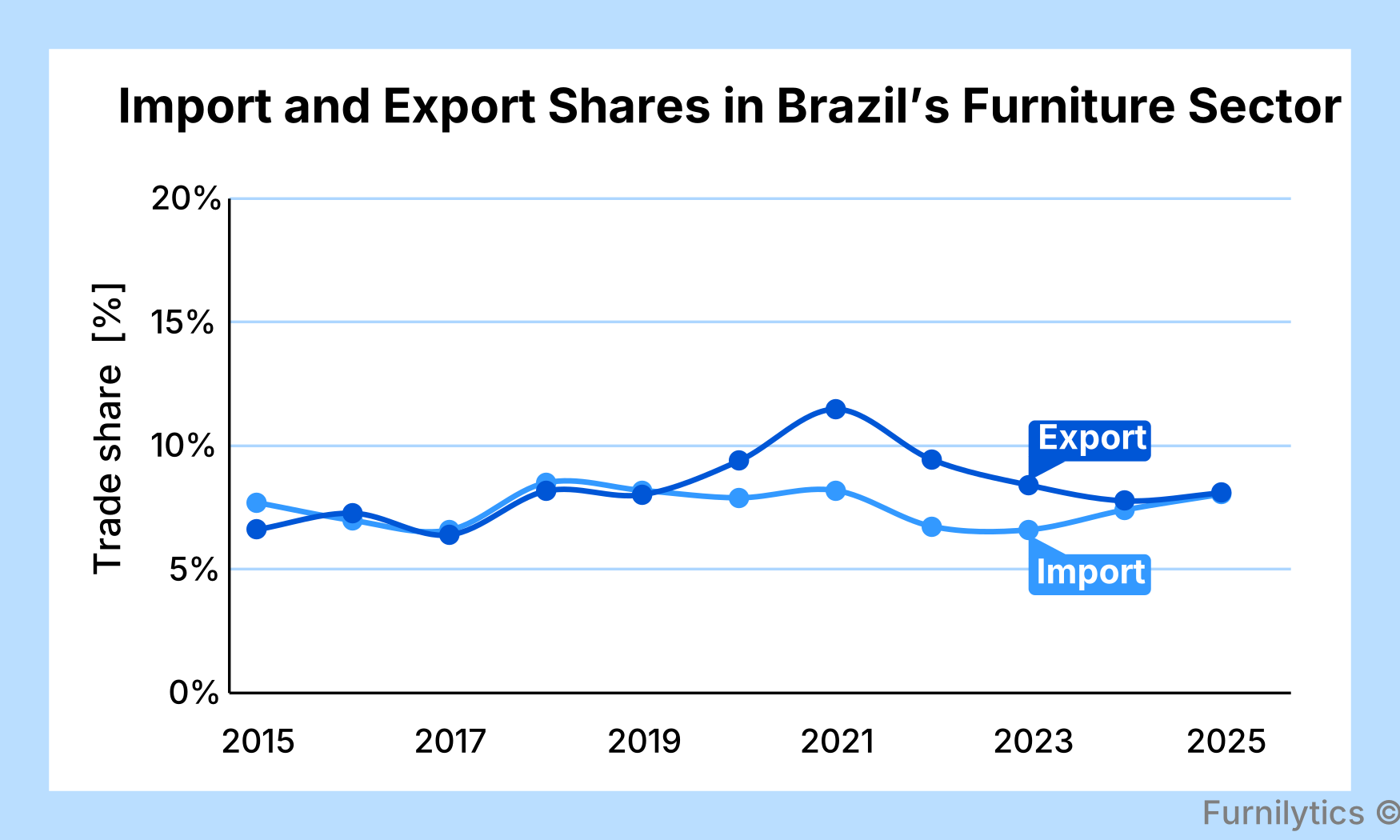
Brazil’s furniture industry is strongly domestically oriented, with imports and exports typically accounting for only 6–8% of total market size. This is well below the EU average export share of around 20%, highlighting Brazil’s limited integration into international furniture trade.
Both import and export shares remain low even at their peaks, pointing to a structurally low reliance on cross-border flows. Industry performance is therefore driven mainly by domestic demand and cost conditions, setting the context for a closer look at export destinations and recent trade shifts.
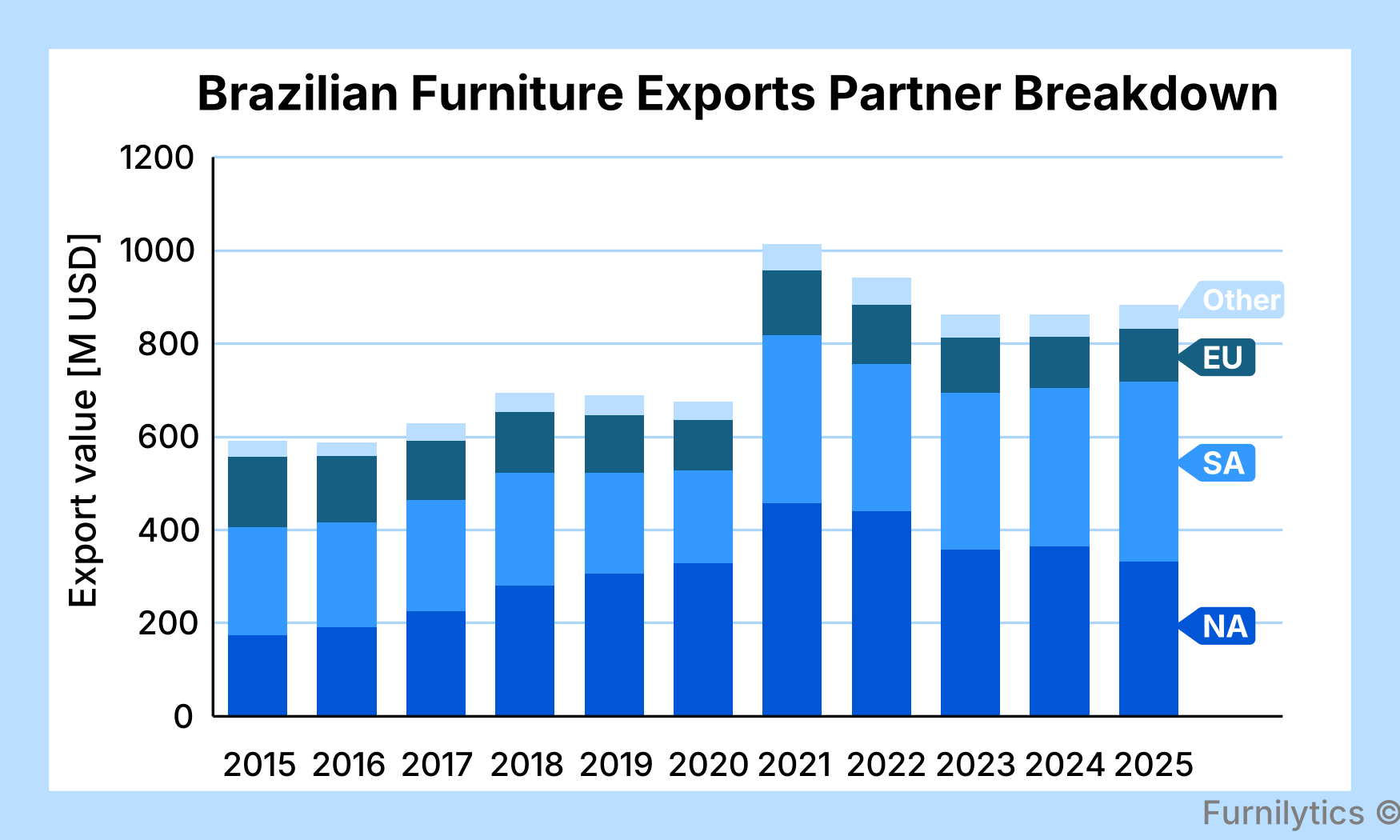
Brazil’s furniture exports remain limited in absolute terms, but their regional composition is changing. North America, primarily the United States, was the dominant export destination until 2020, when it accounted for around 40% of total exports. Since then, the U.S. share has declined steadily, falling to roughly 23% by 2025. The most recent year shows a particularly sharp drop in export value to the U.S., from around USD 250 million to USD 200 million, reflecting the impact of tariffs and less favourable trade conditions.
At the same time, exports to Europe and South America have gained relative importance. The Brazilian Furniture Manufacturers Association ABIMÓVEL has highlighted this shift as part of a broader strategic reorientation toward Europe following the Mercosur–EU agreement. While this change is visible in export shares, it is important to note that, in absolute terms, total export volumes remain modest within Brazil’s largely domestic-focused furniture industry.
Brazil in International Comparison
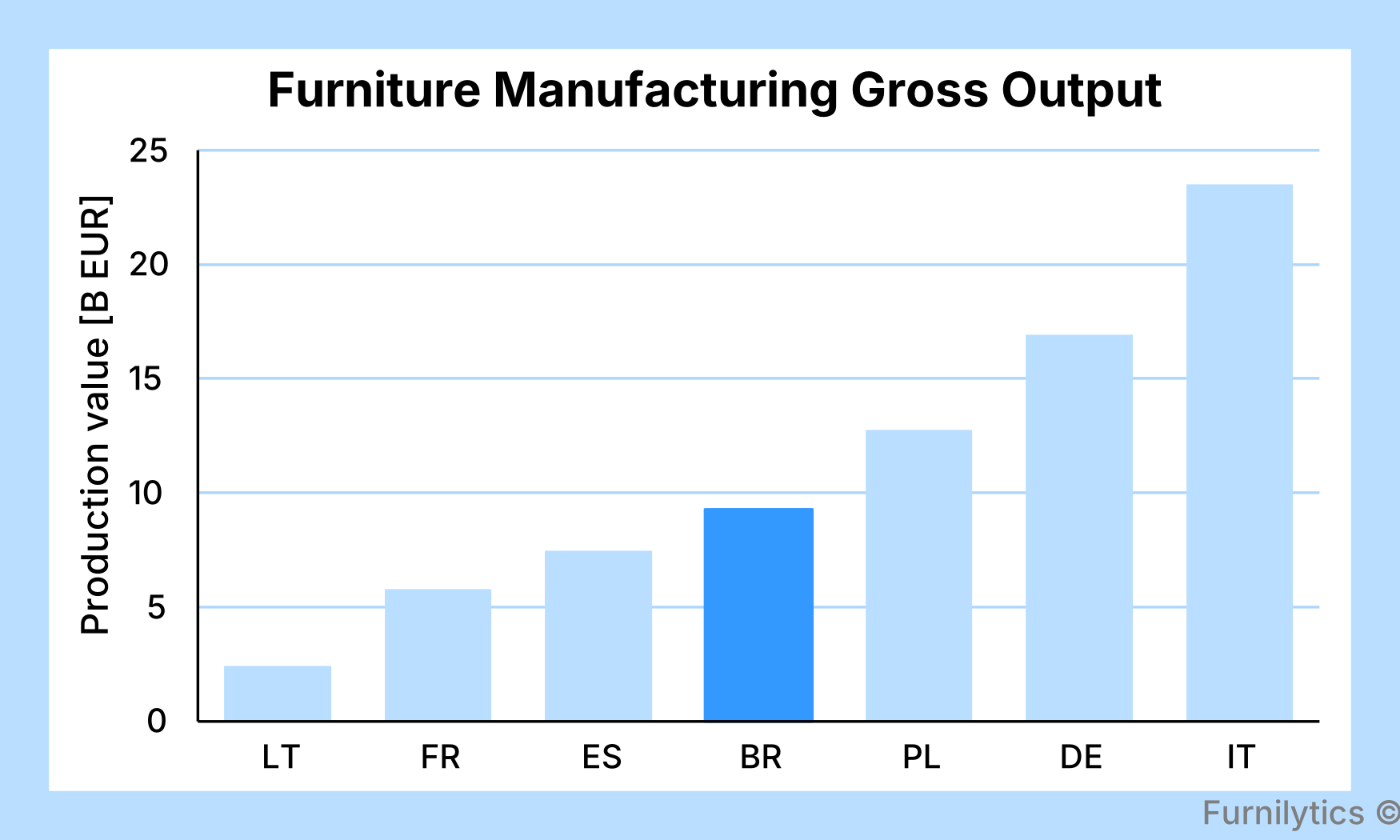
When compared with major European furniture producers, Brazil stands out as a large manufacturing country by total output. In value terms, Brazilian furniture production is comparable to that of Spain and exceeds several established EU producers, placing Brazil just behind Poland among the countries shown.
This highlights that, despite its strong domestic focus and limited export exposure, Brazil operates at a meaningful industrial scale within the global furniture landscape. However, production value alone does not reflect differences in efficiency or industrial structure, which become evident when output is measured on a per-employee basis.
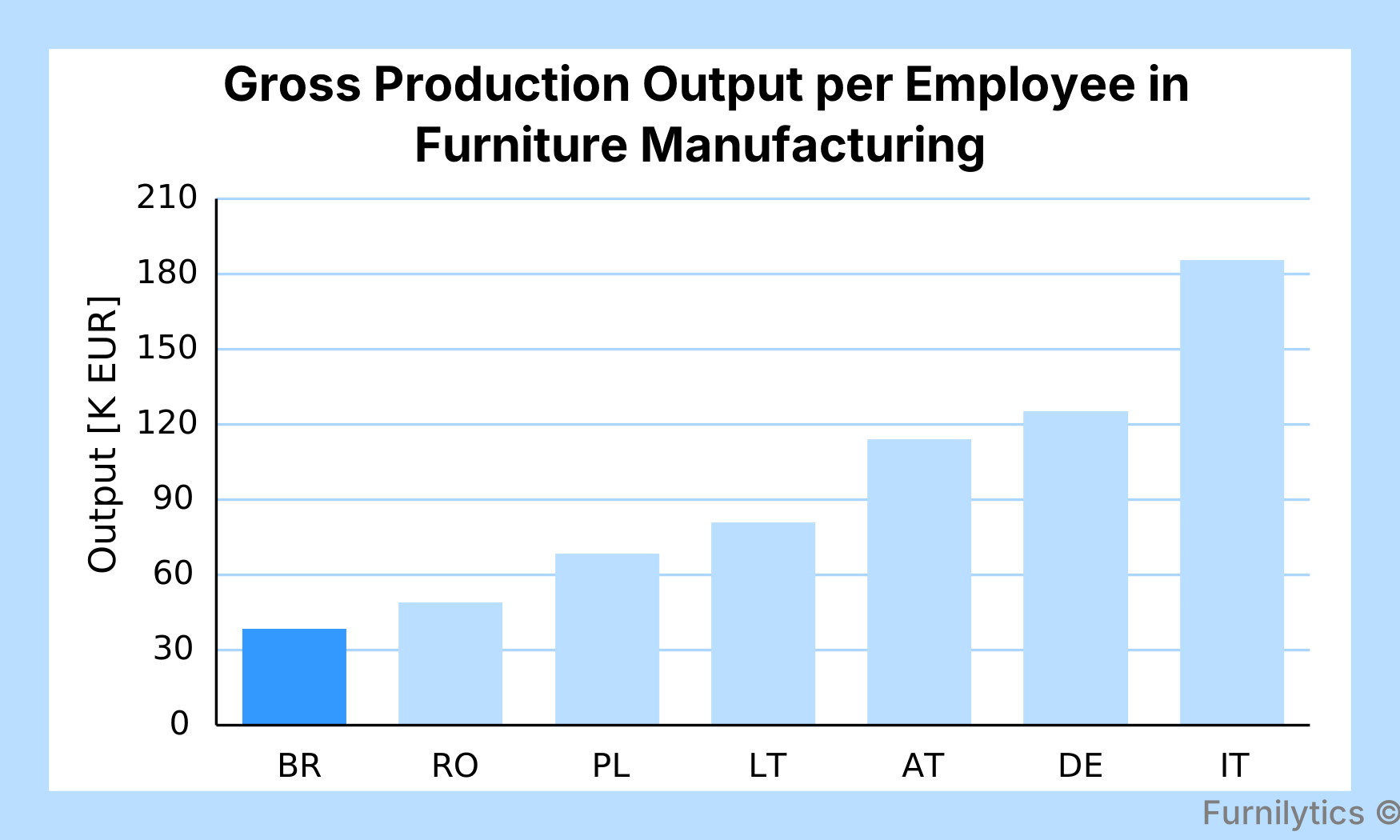
Despite its relatively large total production size, Brazil’s furniture industry shows significantly lower output per employee than European producers. Brazilian manufacturers generate roughly EUR 35–40k per employee, compared with EUR 60–80k in Central and Eastern Europe and well above EUR 120k in countries such as Germany and Italy.
This highlights the high labour intensity of Brazil’s furniture industry, reflecting lower automation, different product mixes, and cost structures. Brazil’s competitiveness therefore relies more on labour availability and cost advantages than on productivity-driven efficiency, which helps explain its strong domestic base but limited export competitiveness.
Conclusion
Brazil’s furniture industry combines large production scale with a strong domestic orientation. While nominal output has grown steadily, much of this expansion is driven by inflation and currency effects, rather than real volume growth. High producer price inflation since 2020 helps explain the widening gap between local and international valuations of the market.
Structurally, the industry is concentrated, domestically focused, and labour intensive. Limited trade exposure means performance is shaped primarily by local demand and cost dynamics, even as export destinations gradually shift from the U.S. toward Europe following the Mercosur–EU agreement. In an international comparison, Brazil stands out for its scale, but lower productivity highlights the structural challenge of competing with highly efficient European producers, particularly in export-driven markets.
Sources:
Brasileiro de Geografia e Estatística (IBGE) -regional production output Table 1848
Brasileiro de Geografia e Estatística (IBGE) - PPI table 6903
Brasileiro de Geografia e Estatística (IBGE) - IPI table 8888
Brasileiro de Geografia e Estatística (IBGE) - employment table 1841
Ministério do Desenvolvimento, Indústria, Comércio e Serviços (MDIC) - trade data query 143439 via comexstat
European Union Eurostat - Table STS_INPPD_M
National Bureau of Statistics of China (NBS) - Table A010B
United States Federal Reserve - Table PCU337337
Methodology & limitations:
For production value, this analysis combines annual official statistics with short-term indicators using standard temporal disaggregation. Annual furniture manufacturing data are disaggregated to monthly frequency using industrial production indices, with monthly values constrained to annual totals. Nominal production is derived using producer price indices, while value added is deflated using implicit value-added deflators interpolated to monthly frequency. Conversion from BRL to USD are done using IMF average annual FX rates.
Producer price indices are re-indexed to a 2018 annual average = 100. Data cover the furniture industry as defined by the UN ISIC classification (NAICS 337, NACE 31, GB/T 4754). Minor methodological differences exist across sources.
All trade-related variables are expressed in US dollars to ensure comparability across years. Import penetration is measured as imports relative to apparent consumption, while export orientation is measured as exports relative to domestic production. The data from the benchmark of European countries comes from previous analytics Furniture Manufacturing in Europe.

Brazil Furniture Industry 2025: Market Size, Exports and Productivity
Brazil’s furniture industry enters 2025 as one of the world’s larger manufacturing markets, shaped by strong domestic demand, elevated inflation, and limited exposure to international trade. While the industry has historically been inward-looking, recent shifts in export patterns and the Mercosur–EU agreement point to the possibility of a gradual change in strategic focus.
The sections that follow explore how market growth has been influenced by price effects, how Brazil’s domestic dominance contrasts with evolving export destinations, and how the industry’s scale compares with its productivity in an international context—highlighting both the strengths and structural challenges facing Brazilian furniture manufacturers.
Market Size and Inflation Effects
Brazil has one of the largest furniture manufacturing industries globally, showing steady growth in production value over the past decade, aside from a brief Covid-related disruption in 2020. Overall output has since recovered and continued to expand. The industry is highly concentrated geographically. About 85% of total production is located in just six states: Minas Gerais, Rio de Janeiro, São Paulo, Paraná, Santa Catarina, and Rio Grande do Sul. As a result, national market dynamics are largely driven by developments in Brazil’s South and Southeast regions.
When looking at production values by currency, a clear post-Covid divergence emerges. Output measured in BRL rises strongly, while values expressed in EUR remain largely flat. This widening gap points to inflation and currency effects as key drivers of nominal growth, rather than a comparable increase in real production—an issue explored further in the inflation comparison that follows.
The split between BRL and EUR production values is mirrored in producer price inflation. Since 2020, Brazil’s furniture PPI has increased far more sharply than in the EU, the US, or China. While cost pressures in the EU and US have risen at a moderate pace, Brazil stands out with significantly higher inflation, helping to explain the strong nominal growth in BRL terms. This reinforces that recent growth in Brazil’s furniture market is driven largely by price effects rather than real output expansion.
Domestic Focus and Trade Patterns
Brazil’s furniture industry is strongly domestically oriented, with imports and exports typically accounting for only 6–8% of total market size. This is well below the EU average export share of around 20%, highlighting Brazil’s limited integration into international furniture trade.
Both import and export shares remain low even at their peaks, pointing to a structurally low reliance on cross-border flows. Industry performance is therefore driven mainly by domestic demand and cost conditions, setting the context for a closer look at export destinations and recent trade shifts.
Brazil’s furniture exports remain limited in absolute terms, but their regional composition is changing. North America, primarily the United States, was the dominant export destination until 2020, when it accounted for around 40% of total exports. Since then, the U.S. share has declined steadily, falling to roughly 23% by 2025. The most recent year shows a particularly sharp drop in export value to the U.S., from around USD 250 million to USD 200 million, reflecting the impact of tariffs and less favourable trade conditions.
At the same time, exports to Europe and South America have gained relative importance. The Brazilian Furniture Manufacturers Association ABIMÓVEL has highlighted this shift as part of a broader strategic reorientation toward Europe following the Mercosur–EU agreement. While this change is visible in export shares, it is important to note that, in absolute terms, total export volumes remain modest within Brazil’s largely domestic-focused furniture industry.
Brazil in International Comparison
When compared with major European furniture producers, Brazil stands out as a large manufacturing country by total output. In value terms, Brazilian furniture production is comparable to that of Spain and exceeds several established EU producers, placing Brazil just behind Poland among the countries shown.
This highlights that, despite its strong domestic focus and limited export exposure, Brazil operates at a meaningful industrial scale within the global furniture landscape. However, production value alone does not reflect differences in efficiency or industrial structure, which become evident when output is measured on a per-employee basis.
Despite its relatively large total production size, Brazil’s furniture industry shows significantly lower output per employee than European producers. Brazilian manufacturers generate roughly EUR 35–40k per employee, compared with EUR 60–80k in Central and Eastern Europe and well above EUR 120k in countries such as Germany and Italy.
This highlights the high labour intensity of Brazil’s furniture industry, reflecting lower automation, different product mixes, and cost structures. Brazil’s competitiveness therefore relies more on labour availability and cost advantages than on productivity-driven efficiency, which helps explain its strong domestic base but limited export competitiveness.
Conclusion
Brazil’s furniture industry combines large production scale with a strong domestic orientation. While nominal output has grown steadily, much of this expansion is driven by inflation and currency effects, rather than real volume growth. High producer price inflation since 2020 helps explain the widening gap between local and international valuations of the market.
Structurally, the industry is concentrated, domestically focused, and labour intensive. Limited trade exposure means performance is shaped primarily by local demand and cost dynamics, even as export destinations gradually shift from the U.S. toward Europe following the Mercosur–EU agreement. In an international comparison, Brazil stands out for its scale, but lower productivity highlights the structural challenge of competing with highly efficient European producers, particularly in export-driven markets.
Sources:
Brasileiro de Geografia e Estatística (IBGE) -regional production output Table 1848
Brasileiro de Geografia e Estatística (IBGE) - PPI table 6903
Brasileiro de Geografia e Estatística (IBGE) - IPI table 8888
Brasileiro de Geografia e Estatística (IBGE) - employment table 1841
Ministério do Desenvolvimento, Indústria, Comércio e Serviços (MDIC) - trade data query 143439 via comexstat
European Union Eurostat - Table STS_INPPD_M
National Bureau of Statistics of China (NBS) - Table A010B
United States Federal Reserve - Table PCU337337
Methodology & limitations:
For production value, this analysis combines annual official statistics with short-term indicators using standard temporal disaggregation. Annual furniture manufacturing data are disaggregated to monthly frequency using industrial production indices, with monthly values constrained to annual totals. Nominal production is derived using producer price indices, while value added is deflated using implicit value-added deflators interpolated to monthly frequency. Conversion from BRL to USD are done using IMF average annual FX rates.
Producer price indices are re-indexed to a 2018 annual average = 100. Data cover the furniture industry as defined by the UN ISIC classification (NAICS 337, NACE 31, GB/T 4754). Minor methodological differences exist across sources.
All trade-related variables are expressed in US dollars to ensure comparability across years. Import penetration is measured as imports relative to apparent consumption, while export orientation is measured as exports relative to domestic production. The data from the benchmark of European countries comes from previous analytics Furniture Manufacturing in Europe.