
China Furniture Exports Shift from US to Europe
Global furniture trade has entered a period of transition following the exceptional demand seen during the pandemic years. As markets normalise, shifts in trade policy and sourcing strategies are starting to reshape how and where furniture is traded.
This analysis examines how China’s furniture exports are evolving in this new environment, with a focus on what these changes mean for European markets. It reviews overall export development, the changing balance between the United States and Europe, and the country-level shifts driving recent trends.
To set the context, we first look at the long-term development of China’s total furniture exports and how momentum has changed.
Note: Trade values are reported in USD. EUR–USD exchange rate movements can influence the observed trends, particularly when comparing European markets over time
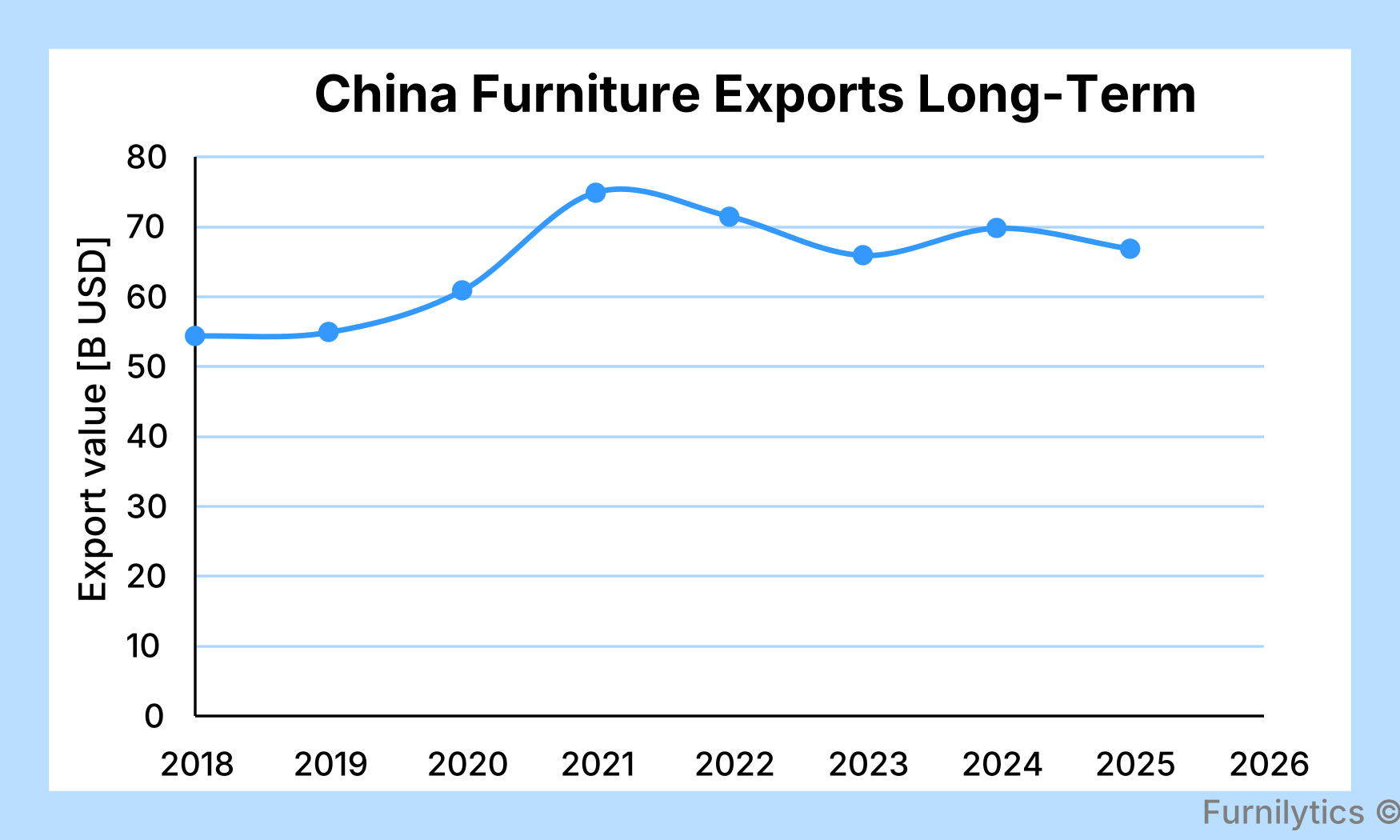
China furniture exports: post-peak stagnation
China’s furniture exports expanded strongly during the pandemic, reaching a peak of $74.9B in 2021. Since then, growth has stalled and gradually reversed. Export values declined to $69.8B in 2024 and further to $66.9B in 2025, a -4.3% year-on-year decrease.
This reflects both the normalisation of COVID-driven demand and increasing structural pressure on global trade. In particular, US trade policy has become more influential. Higher tariffs and broader trade tensions have reduced the competitiveness of Chinese exports in the US market, contributing to a decline in shipments.
As a result, overall export growth has weakened and trade flows have started to rebalance across regions. While the decline is gradual rather than sharp, it signals a clear shift in momentum and sets the stage for changes in destination markets.
China furniture exports: US demand decline shifts focus to Europe
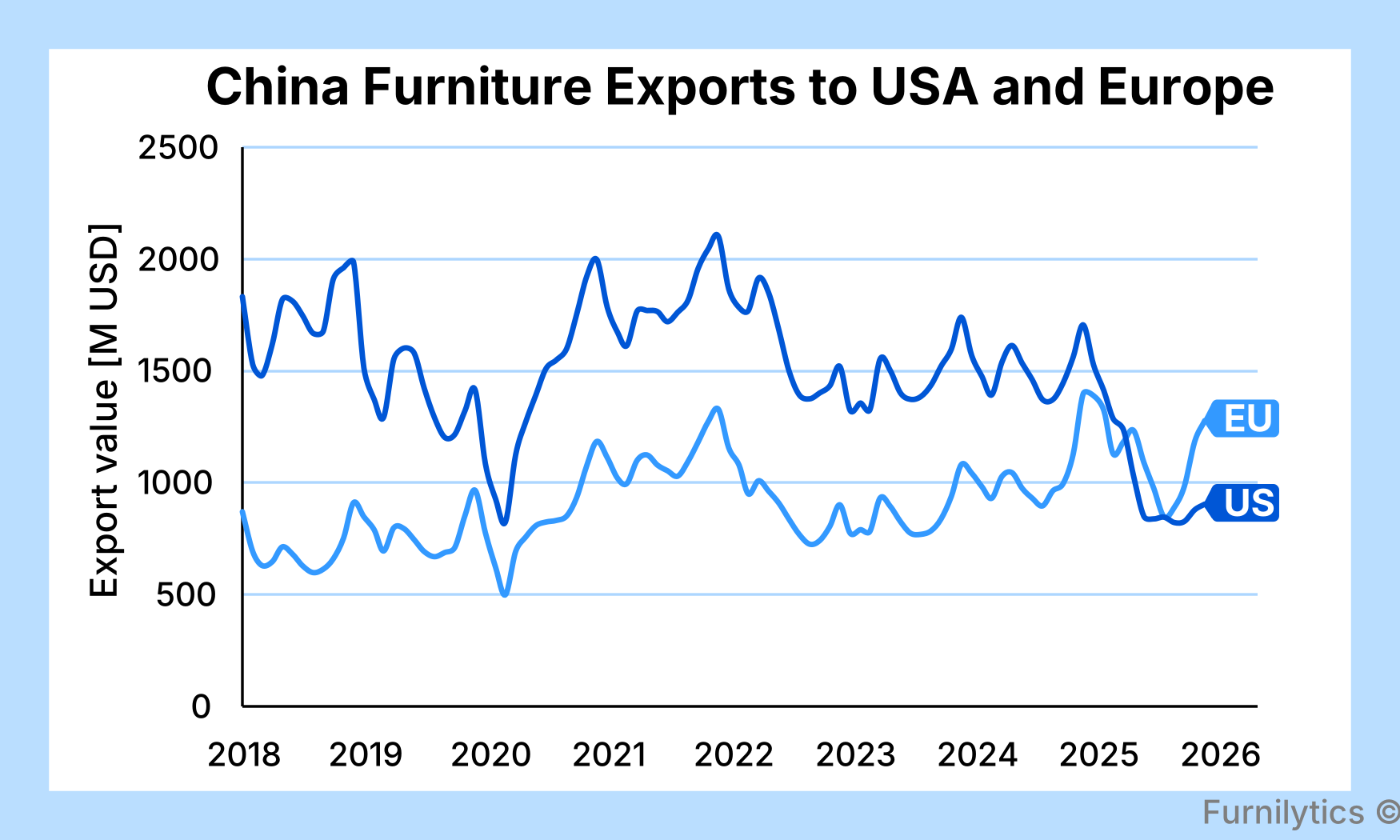
China’s furniture exports have historically been dominated by the US, which has long been the largest destination market, with average monthly imports of around $1.6B, compared to roughly $1.0B for Europe.
This has changed in the latest data. Exports to the US have declined sharply over the past year and are now below $1B per month, while exports to Europe have remained more stable and are trending toward $1.2B per month. As a result, the EU has overtaken the US as the largest destination for Chinese furniture exports.
This shift reflects weaker US demand and the continued impact of tariffs and supply chain diversification. As exports are redirected, Europe is becoming the primary outlet for Chinese furniture, increasing its exposure to global trade rebalancing.
US decline drives broad-based increase in European imports
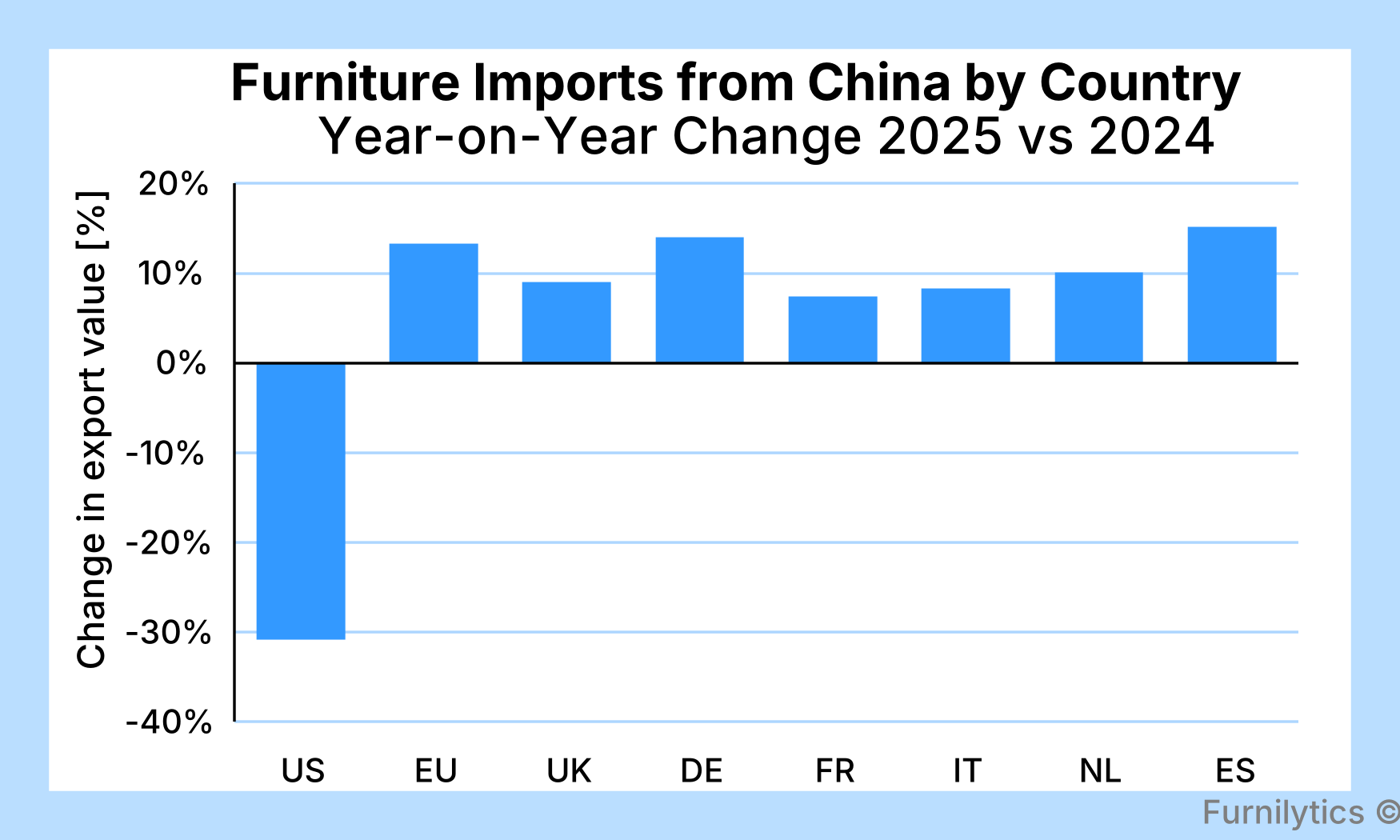
The latest year-on-year data shows a clear divergence between the US and Europe. US imports from China declined sharply by -30.8% in 2025, marking a significant contraction in what has historically been the largest market for Chinese furniture exports.
In contrast, European markets are expanding across the board. Total EU imports from China increased by +13.3%, with strong growth in Germany (+14.0%), Spain (+15.2%), the Netherlands (+10.1%) and the UK (+9.0%), while France (+7.4%) and Italy (+8.3%) also posted solid gains.
This is notable as underlying furniture markets are not growing significantly. The data instead points to a shift in sourcing toward China, with exports being redirected from the US to Europe. This suggests that Europe is not only gaining share, but may face increasing import pressure if this trend continues.
Conclusion
China’s furniture exports are no longer driven by broad demand growth, but increasingly by shifts in regional trade dynamics. After peaking in 2021, exports have stagnated and declined, reflecting weaker global demand and growing structural pressures.
At the same time, the role of the US as the dominant market has diminished. A sharp drop in imports, driven by tariffs and supply chain adjustments, has reduced China’s position in the US and triggered a redistribution of trade flows.
Europe has emerged as the main destination for these redirected exports, with imports rising across major markets despite limited underlying demand growth. This indicates a shift in sourcing rather than consumption. If these dynamics persist, European markets should expect continued inflows of Chinese furniture, increasing competitive pressure across the value chain.
Sources:
UN Comtrade – International Trade Statistics
Eurostat – Comext database DS-045409
European Central Bank – Exchange rates
Methodology & limitations:
China’s furniture exports (HS 9401–9403) to the EU27, the United Kingdom and the United States are primarily based on China-reported export data from UN Comtrade, which serves as the main reference for bilateral trade flows. In the charts, these flows are often described as “imports from China,” although the underlying data is based on China’s reported exports to each destination.
Where recent months are missing due to reporting lags, values are nowcasted using year-on-year growth rates derived from partner-reported import data from UN Comtrade. For EU27 countries, Eurostat Comext import data is used as an additional fallback, with values converted from euros to U.S. dollars using ECB exchange rates. This approach assumes that import trends reflect underlying export dynamics, which may not fully hold due to reporting differences, timing effects, and valuation methods (e.g. CIF vs. FOB). Differences between Comtrade and Comext data may also occur, and HS categories can include some non-furniture or mixed-use items.