
EU Furniture Retail Data: France, Germany, and Italy Compared
The European furniture retail landscape continues to evolve, driven by changing consumer habits, economic conditions, and competitive pressures. This article begins by identifying the largest national markets within Europe and then narrows the focus to the top three—highlighting their individual trajectories and relative performance. The journey across these markets aims to uncover how furniture turnover evolves over time and what that implies for the broader industry.
European Market Structure Based on SBS
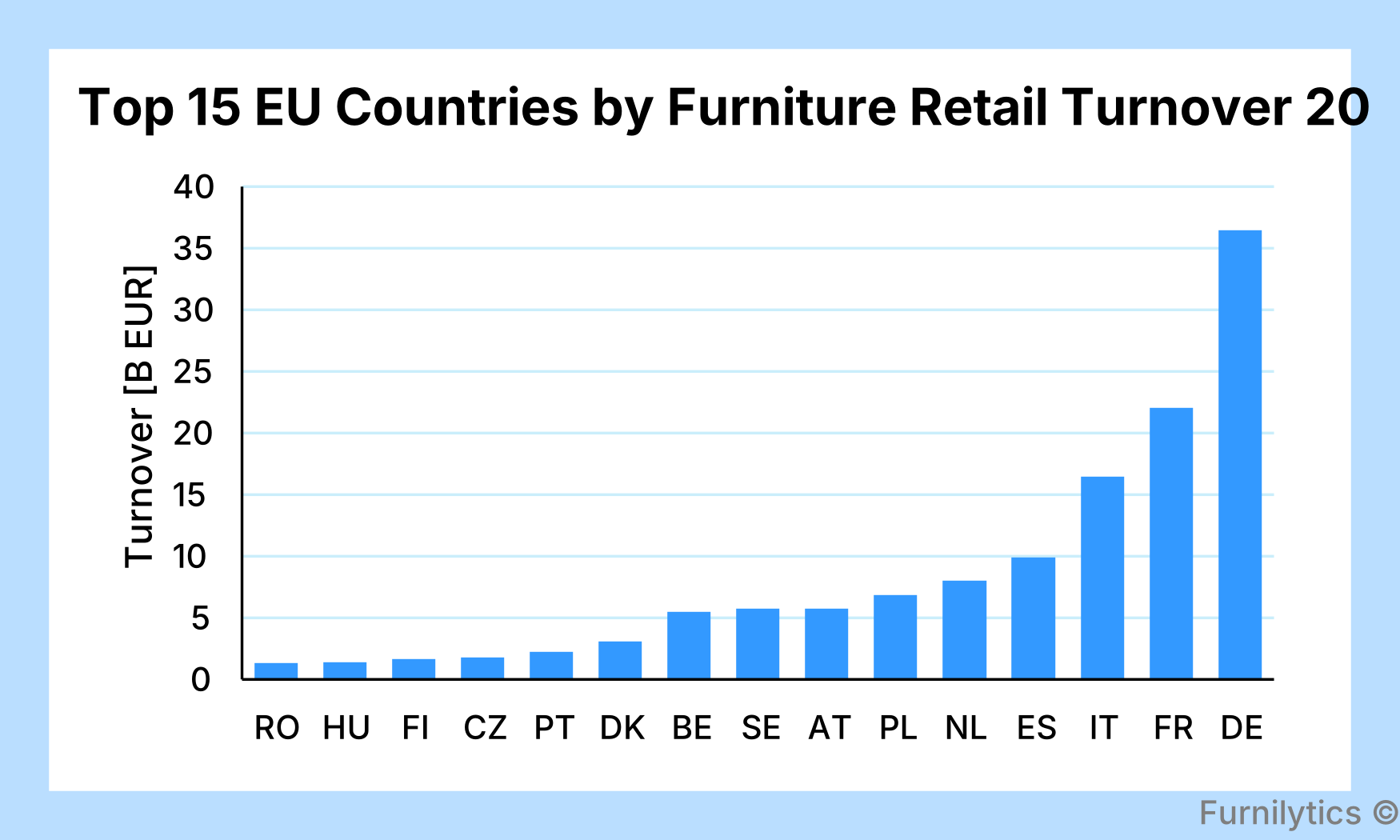
The chart below presents the latest Structural Business Statistics (SBS) from Eurostat, offering a concise view of the relative size of furniture retail markets across Europe. SBS provides harmonised, annually reported turnover data, making it the most reliable basis for cross-country comparison.
The figure also reflects the inherent delay of SBS releases, with 2023 being the most recent year currently available. It shows that Germany, France, and Italy together account for roughly half of the European furniture retail market, underscoring their central role in shaping overall sector dynamics.
Retail Turnover Trends
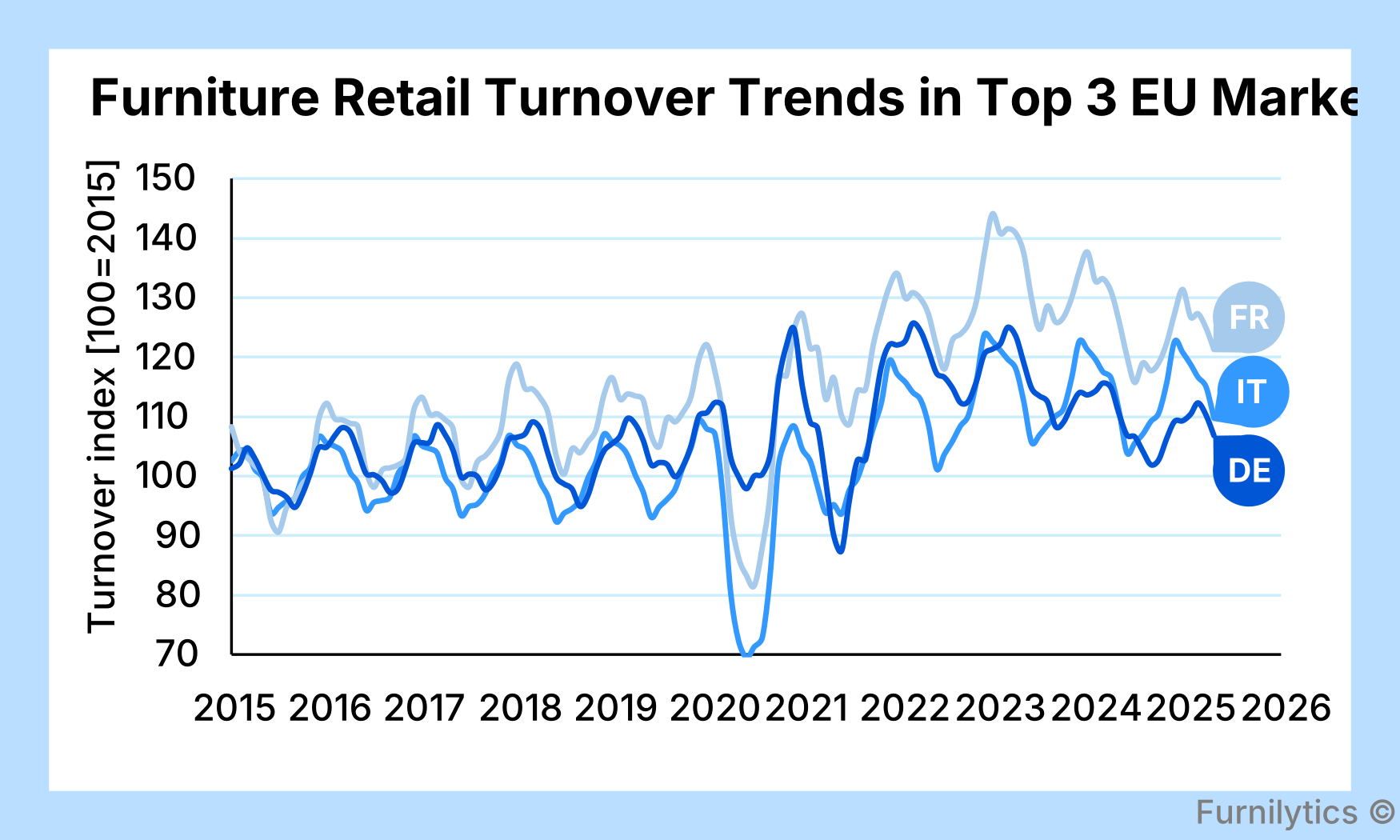
The latest monthly trends for Italy, France, and Germany are shown using a six-month moving average of furniture retail turnover, helping to reveal underlying dynamics beyond short-term fluctuations. All values shown represent nominal turnover, meaning they are not adjusted for inflation. As a result, part of the observed growth may reflect price increases rather than changes in real sales volumes.
The effects of the COVID-19 lockdowns remain evident, with sharp contractions across all three countries; in Germany, the second lockdown resulted in a deeper and more prolonged downturn than the first due to its longer duration. France has recorded the strongest overall growth since 2015—both before and after the pandemic—while more recent data show declining turnover in France and Germany from 2023 onward, contrasted by a comparatively stable trajectory in Italy.
Conclusion
Taken together, the structural data and monthly turnover trends provide a coherent view of a sector still adjusting to post-pandemic realities, inflationary pressures, and evolving consumer behaviour. The dominance of Germany, France, and Italy—representing half of Europe’s furniture retail market—means that shifts in these three economies heavily influence the overall trajectory of the industry.
While France has shown the most sustained long-term growth, the recent downturns in both France and Germany highlight emerging headwinds, contrasted by Italy’s relative stability. As these dynamics unfold, monitoring both structural indicators and high-frequency turnover data remains essential for understanding the direction of the European furniture retail market.
Sources:
Eurostat - structural business statistics
German Federal Statistical Office - Destatis
French National Institute of Statistics and Economic Studies - INSEE
Italian National Institute of Statistics - ISTAT
Methodology & limitations:
Furniture-store retail turnover is compared across countries by extracting each national statistical institute’s monthly nominal turnover index for NACE Rev.2 G47.59 (specialised furniture and household-articles retail). The series—sourced from ISTAT, Destatis, and INSEE—are accessed through their respective SDMX-compliant APIs, ensuring consistent structure and harmonised activity coding. Because each index is expressed relative to its own base year, the comparison focuses on relative trend movements, allowing cross-country analysis independent of market size or price levels.
Note that differences arise between SBS and national sources. SBS reports annual net turnover (€, ex-VAT) for enterprises mainly in furniture retail (NACE 47.59), while ISTAT measures the monthly value of furniture sales across all retail channels, and Destatis and INSEE publish monthly turnover indices for 47.59 at current prices.