
European Woodworking Machinery: Industry and Export Trends
EUMABOIS—the European Federation of Woodworking Machinery Manufacturers—represents the major national associations and companies in Europe’s woodworking-machinery sector, including leading producers such as Germany and Italy. This report provides a concise overview of how the industry has developed over the past decade by combining production figures from VDMA Holz and Acimall with harmonised trade data from UN Comtrade and Eurostat Comext.
The analysis examines long-term production growth, export performance across EUMABOIS member countries, developments in key markets such as Asia and North America, and the widening gap between export value and quantity. Together, these insights offer a clear view of how Europe’s woodworking-machinery industry is evolving in an increasingly competitive global environment.
Production Value Growth Over Time
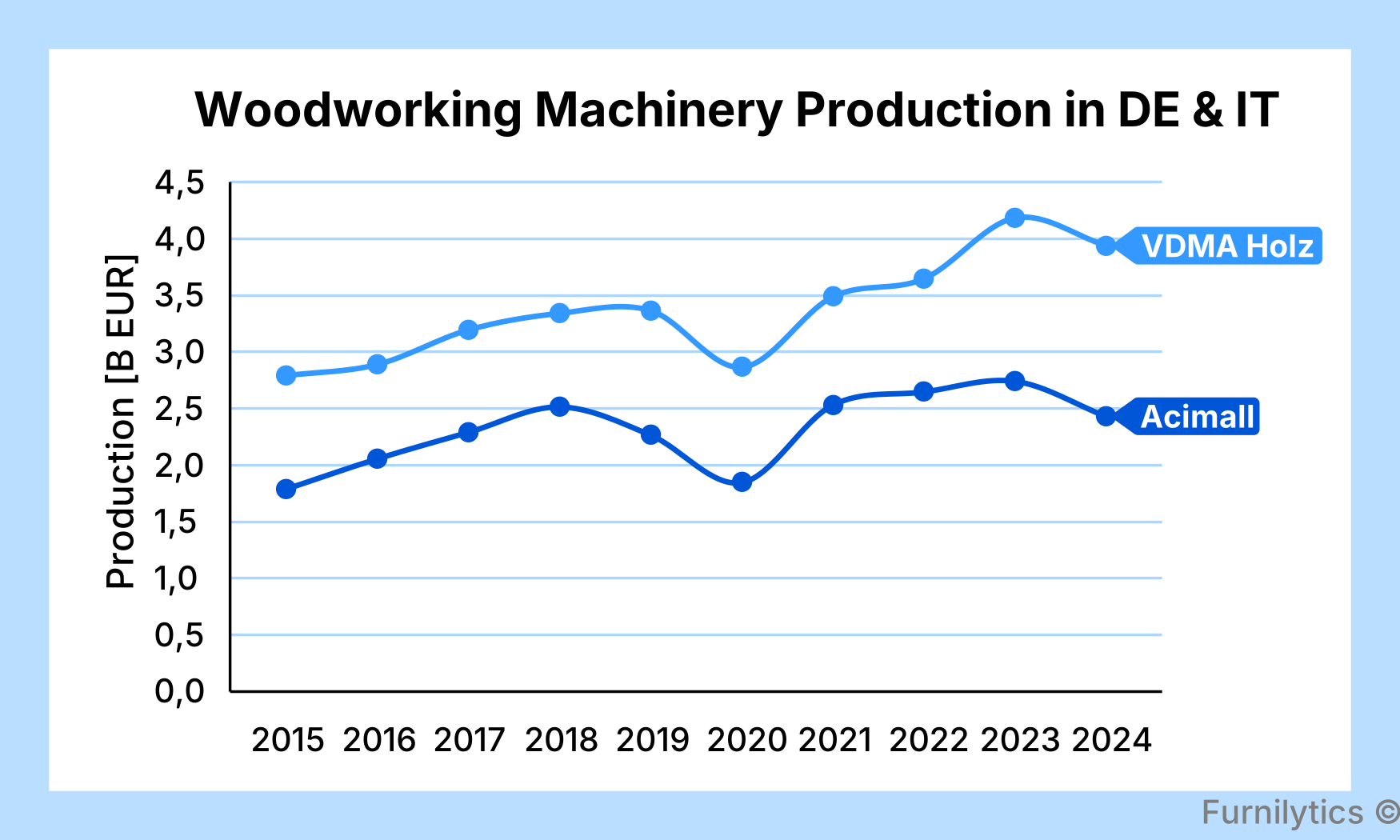
Germany and Italy remain the leading woodworking-machinery producers in Europe, and both show a clear long-term rise in production value based on annual figures from VDMA Holz and Acimall. After steady growth, both countries experienced a temporary decline during the COVID-19 disruption in 2020, followed by a strong rebound in 2021–2022. The data also indicate a mild downturn in 2024, suggesting a market cooling after several years of exceptional expansion.
European Woodworking Machinery Exports Regions
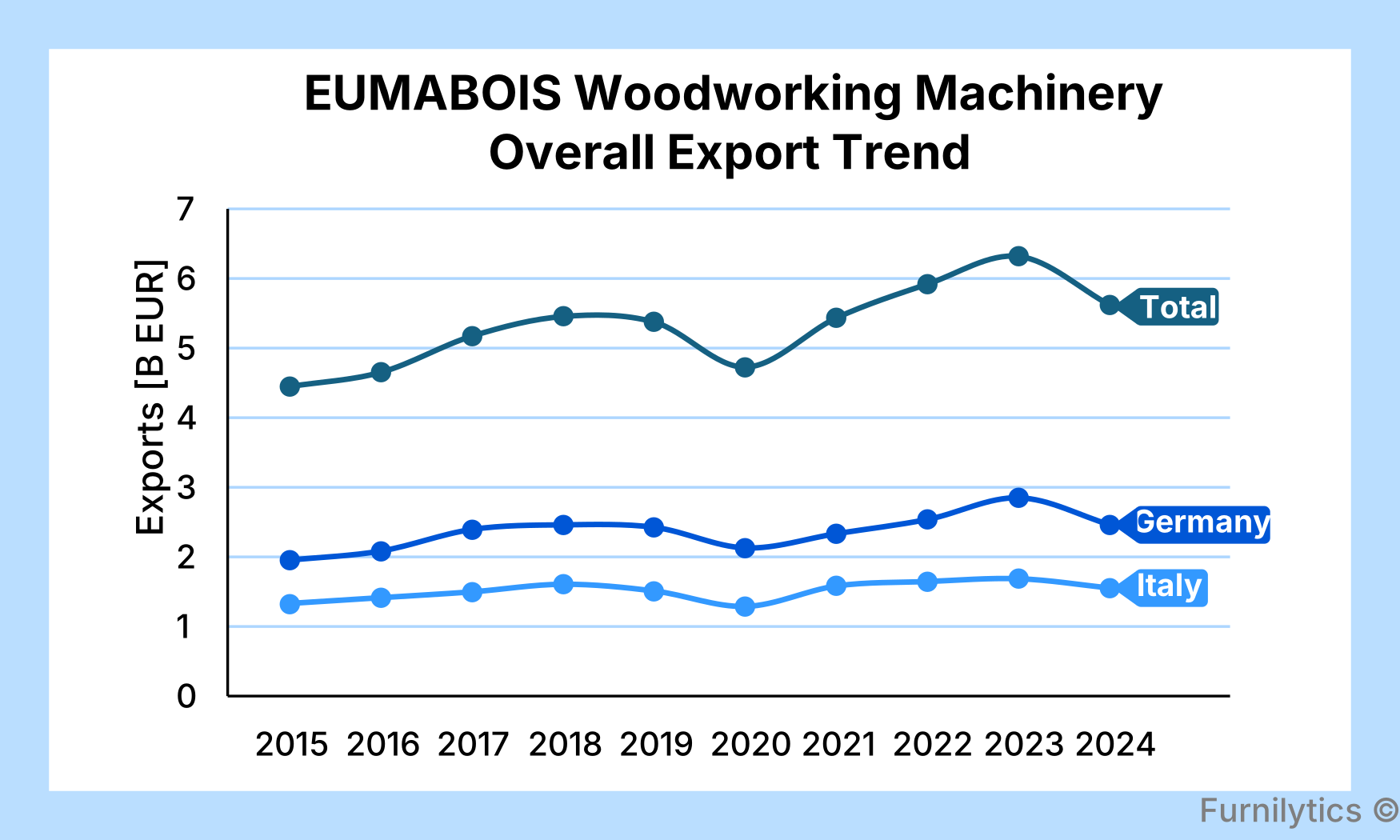
Expanding the scope to the export performance of Europe’s major woodworking-machinery producers—represented by EUMABOIS—shows a trend that closely aligns with the production patterns reported by Acimall and VDMA. Export volumes have generally increased over time, reflecting sustained global demand. Throughout the period, Germany and Italy consistently account for around 75% of total European exports, highlighting their central role within the sector.
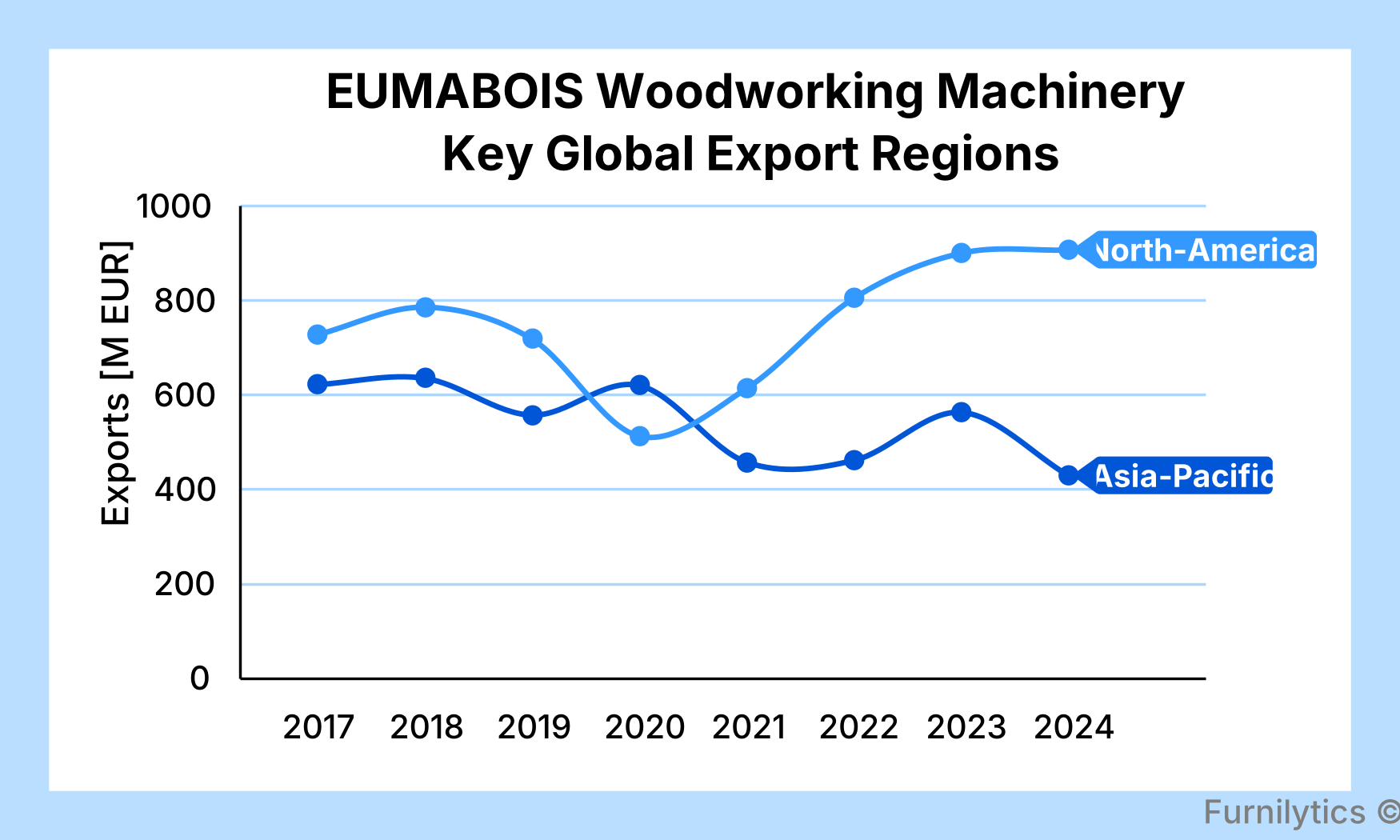
The graph below shows how exports from EUMABOIS countries have evolved in their two key external markets. North America—driven largely by the United States—experienced a few softer years but has expanded strongly since the 2020 downturn, returning to a solid growth path.
Exports to Asia have shown a gradual downward trend over the past decade, indicating a cooling of demand compared with the strong growth seen in earlier years. This softer trajectory likely reflects increasing competition from local manufacturers, especially in China and other rapidly industrialising Asian economies, which now supply a larger share of machinery to their domestic markets.
Diverging Trends in Export Value and Quantity
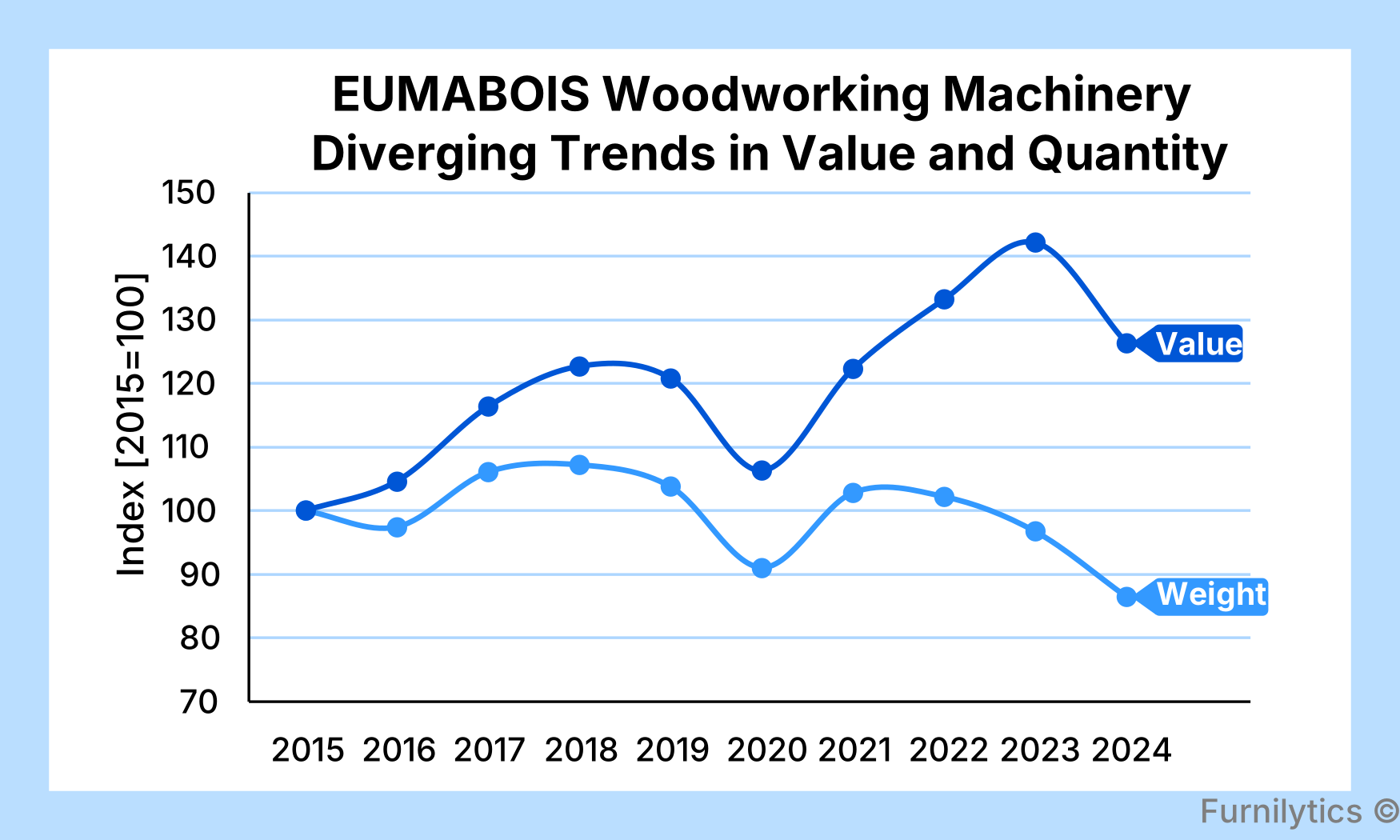
Another clear trend emerging from the data is the gradual divergence between the quantity and value of European woodworking-machinery exports. While export values have continued to rise, reaching an index level of 126 in 2024 (2015 = 100), the physical quantity—measured in net weight—has declined to an index of 86 over the same period. This widening gap indicates that European exporters are shipping less machinery by weight, yet achieving higher overall value, which may reflect a combination of increasingly advanced machinery, rising unit prices, or both. Overall, the data point to a structural change in the product mix: fewer kilograms exported, but at significantly greater value per unit.
Conclusion
Taken together, the data show a woodworking-machinery industry that remains strongly anchored in Europe, led by Germany and Italy both in production and exports. While overall export values have continued to rise, regional dynamics are shifting: North America has regained momentum in recent years, whereas Asia shows signs of cooling amid growing local competition. At the same time, the widening gap between export value and physical quantity indicates a structural move toward higher-value, more technologically advanced machinery. These trends highlight both the resilience and the ongoing transformation of the European woodworking-machinery sector as it adapts to changing global market conditions.
Sources:
United Nations Commodity Trade Statistics Database – UN Comtrade
European Union (Eurostat) Comext Trade Data – DS-045409
European Federation of Woodworking Machinery Manufacturers (EUMABOIS)
Italian Woodworking Technology Association (Acimall)
VDMA-Fachverband Holzbearbeitungsmaschinen
Methodology & limitations:
Industry baseline data was taken from Acimall and VDMA Holz annual reports. The trade-analysis section follows the EUMABOIS 2020 methodology, including the standardized selection of woodworking-machinery HS codes. These codes were checked across HS2012, HS2017, and HS2022 to ensure consistency for the 2015–2024 period. Note that Türkiye is also part of EUMABOIS.
Trade data was retrieved mainly from UN Comtrade (Comtrade+ API) and cross-checked with Eurostat Comext for EU member states. Values represent annual exports and imports in nominal USD and net weight in kilograms. All trade values were converted into EUR using the ECB’s annual average USD/EUR exchange rates. Partner-group definitions (EU27, Asia, MX–CA–US) follow the EUMABOIS framework. Minor differences between Eurostat, Comtrade, and historical EUMABOIS reports were observed, largely due to exchange-rate assumptions and HS classification changes, but these did not materially affect the identified trends.

European Woodworking Machinery: Industry and Export Trends
EUMABOIS—the European Federation of Woodworking Machinery Manufacturers—represents the major national associations and companies in Europe’s woodworking-machinery sector, including leading producers such as Germany and Italy. This report provides a concise overview of how the industry has developed over the past decade by combining production figures from VDMA Holz and Acimall with harmonised trade data from UN Comtrade and Eurostat Comext.
The analysis examines long-term production growth, export performance across EUMABOIS member countries, developments in key markets such as Asia and North America, and the widening gap between export value and quantity. Together, these insights offer a clear view of how Europe’s woodworking-machinery industry is evolving in an increasingly competitive global environment.
Production Value Growth Over Time
Germany and Italy remain the leading woodworking-machinery producers in Europe, and both show a clear long-term rise in production value based on annual figures from VDMA Holz and Acimall. After steady growth, both countries experienced a temporary decline during the COVID-19 disruption in 2020, followed by a strong rebound in 2021–2022. The data also indicate a mild downturn in 2024, suggesting a market cooling after several years of exceptional expansion.
European Woodworking Machinery Exports Regions
Expanding the scope to the export performance of Europe’s major woodworking-machinery producers—represented by EUMABOIS—shows a trend that closely aligns with the production patterns reported by Acimall and VDMA. Export volumes have generally increased over time, reflecting sustained global demand. Throughout the period, Germany and Italy consistently account for around 75% of total European exports, highlighting their central role within the sector.
The graph below shows how exports from EUMABOIS countries have evolved in their two key external markets. North America—driven largely by the United States—experienced a few softer years but has expanded strongly since the 2020 downturn, returning to a solid growth path.
Exports to Asia have shown a gradual downward trend over the past decade, indicating a cooling of demand compared with the strong growth seen in earlier years. This softer trajectory likely reflects increasing competition from local manufacturers, especially in China and other rapidly industrialising Asian economies, which now supply a larger share of machinery to their domestic markets.
Diverging Trends in Export Value and Quantity
Another clear trend emerging from the data is the gradual divergence between the quantity and value of European woodworking-machinery exports. While export values have continued to rise, reaching an index level of 126 in 2024 (2015 = 100), the physical quantity—measured in net weight—has declined to an index of 86 over the same period. This widening gap indicates that European exporters are shipping less machinery by weight, yet achieving higher overall value, which may reflect a combination of increasingly advanced machinery, rising unit prices, or both. Overall, the data point to a structural change in the product mix: fewer kilograms exported, but at significantly greater value per unit.
Conclusion
Taken together, the data show a woodworking-machinery industry that remains strongly anchored in Europe, led by Germany and Italy both in production and exports. While overall export values have continued to rise, regional dynamics are shifting: North America has regained momentum in recent years, whereas Asia shows signs of cooling amid growing local competition. At the same time, the widening gap between export value and physical quantity indicates a structural move toward higher-value, more technologically advanced machinery. These trends highlight both the resilience and the ongoing transformation of the European woodworking-machinery sector as it adapts to changing global market conditions.
Sources:
United Nations Commodity Trade Statistics Database – UN Comtrade
European Union (Eurostat) Comext Trade Data – DS-045409
European Federation of Woodworking Machinery Manufacturers (EUMABOIS)
Italian Woodworking Technology Association (Acimall)
VDMA-Fachverband Holzbearbeitungsmaschinen
Methodology & limitations:
Industry baseline data was taken from Acimall and VDMA Holz annual reports. The trade-analysis section follows the EUMABOIS 2020 methodology, including the standardized selection of woodworking-machinery HS codes. These codes were checked across HS2012, HS2017, and HS2022 to ensure consistency for the 2015–2024 period. Note that Türkiye is also part of EUMABOIS.
Trade data was retrieved mainly from UN Comtrade (Comtrade+ API) and cross-checked with Eurostat Comext for EU member states. Values represent annual exports and imports in nominal USD and net weight in kilograms. All trade values were converted into EUR using the ECB’s annual average USD/EUR exchange rates. Partner-group definitions (EU27, Asia, MX–CA–US) follow the EUMABOIS framework. Minor differences between Eurostat, Comtrade, and historical EUMABOIS reports were observed, largely due to exchange-rate assumptions and HS classification changes, but these did not materially affect the identified trends.