
Europe’s High-Growth Furniture Markets: Macroeconomic Trends and Outlook
Furniture retail markets in Europe are evolving unevenly, with Central, Baltic, and South-East European regions showing much faster expansion than Western Europe. To understand this shift, the analysis examines two key drivers—disposable income and housing investment—and models their impact using a simple forecasting approach. This provides a clear basis for comparing regional growth dynamics and assessing how Europe’s high-growth markets are strengthening their position within the broader furniture retail landscape.
Country scope
In this analysis we refer to the following regional groupings. The naming is used for analytical convenience and may not perfectly reflect all geopolitical or geographical classifications, but it provides a practical structure for comparing countries across the study.
Baltics: Estonia, Latvia, and Lithuania.
Central EU: Czech Republic, Hungary, Poland, and Slovakia
Non-EU Balkan: Albania, Bosnia and Herzegovina, Montenegro, North Macedonia, and Serbia.
South East EU: Bulgaria, Croatia, Romania, and Slovenia.
EU total: all EU27 member countries.
Macroeconomic Drivers of Furniture Demand
Housing investment and disposable income are closely linked to furniture retail demand. More construction and renovation activity creates immediate needs for furnishing new or improved living spaces, while higher disposable income increases households’ ability to spend on furniture upgrades or replacements. Together, these indicators provide a useful basis for understanding why some regions show stronger furniture market growth than others.
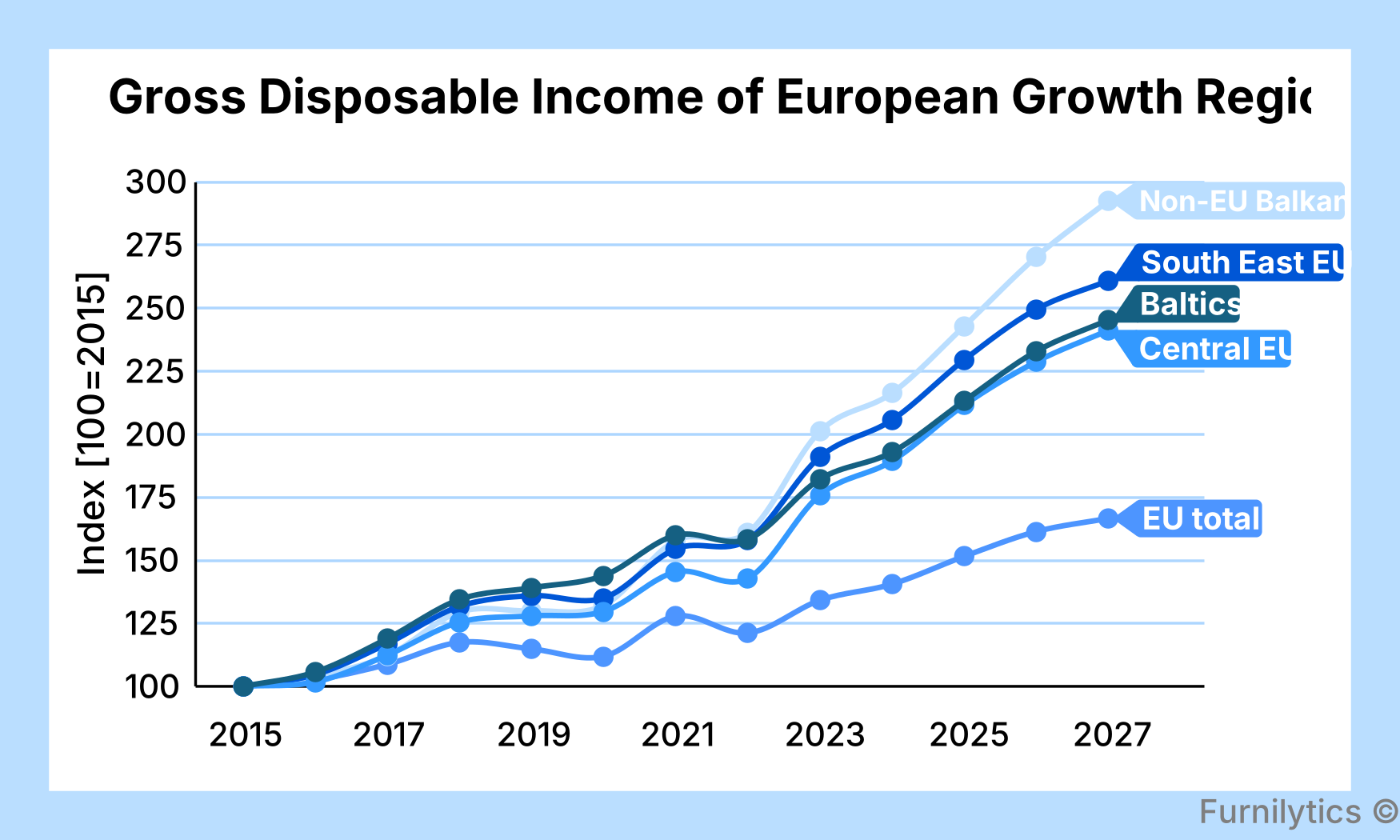
Disposable income has grown faster in all high-growth European regions than in the EU27 overall, with the Baltics and Central EU showing the strongest long-term convergence. The current GNDI levels illustrate the gap: the EU total stands around 40K, compared with 26K in the Baltics, 24K in Central EU, 18K in South East EU, and just 10K in the Non-EU Balkans. Since the Covid period, South East EU and especially the Non-EU Balkans have accelerated and even outpaced the other regions, strengthening their catching-up dynamic. Despite this momentum, the lower absolute income levels highlight how much room for convergence remains—providing substantial headroom for further growth in household spending, including on furniture.
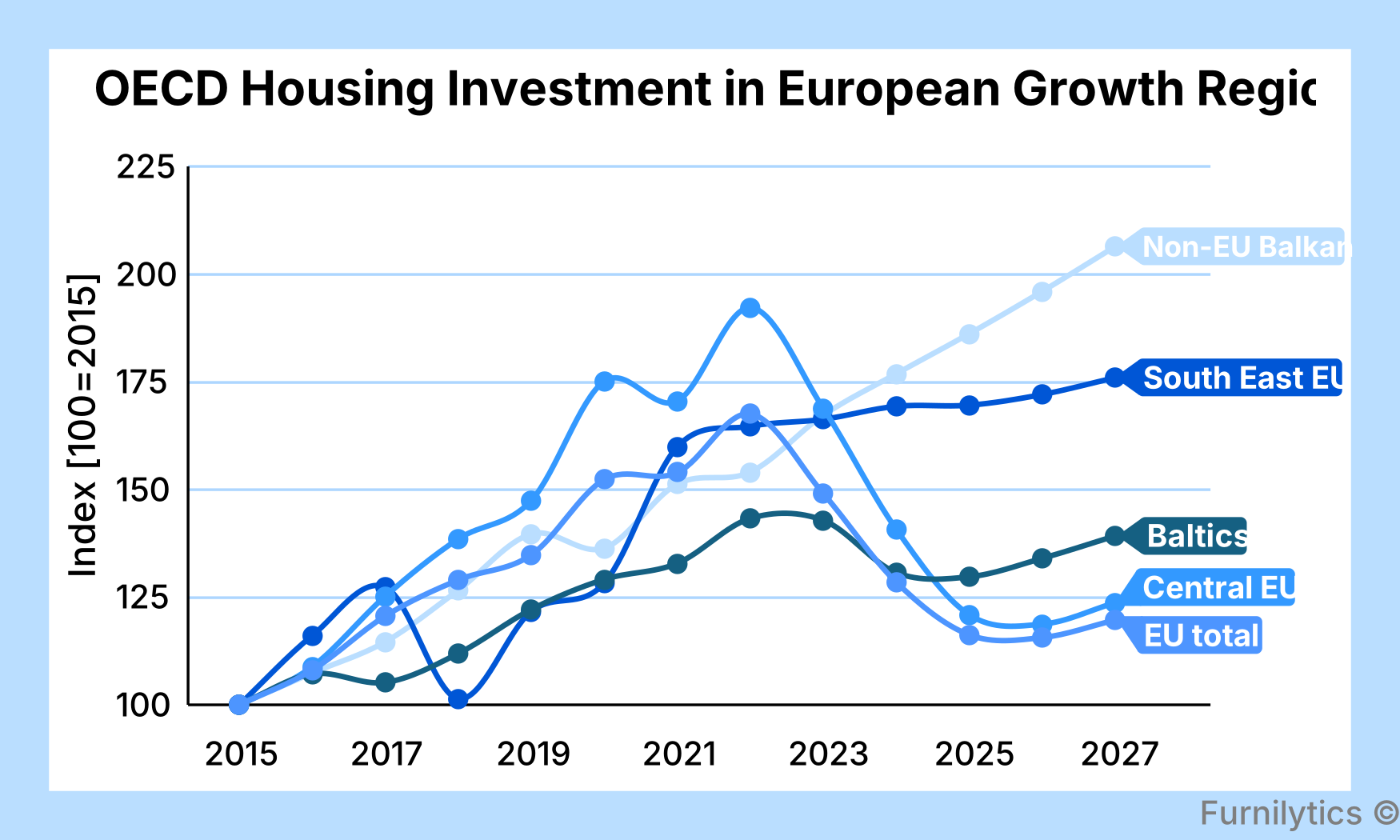
Alongside income growth, housing investment offers a second lens on the conditions shaping furniture demand. According to OECD data, housing investment surged across Europe and peaked around 2022, but has since declined in the EU total, Central EU, and—more moderately—the Baltics. This drop largely reflects sharply higher interest rates, rising construction costs, and tighter credit conditions after the post-Covid boom. In contrast, South East EU and the Non-EU Balkans have not experienced the same downturn, showing more resilient or still-advancing investment trends. Looking ahead, as financing conditions gradually stabilise and underlying housing needs remain strong, housing investment is expected to improve again across most regions.
Furniture Retail Forecast and Trend
With the macro indicators established, the next step is to consider their significance for furniture retail. The strong income convergence and resilient housing investment trends in Eastern Europe provide the foundation for forecasting retail turnover up to 2027, using a simple multi-model approach described in the methodology section. This allows the broader economic developments to be translated into expected market performance.
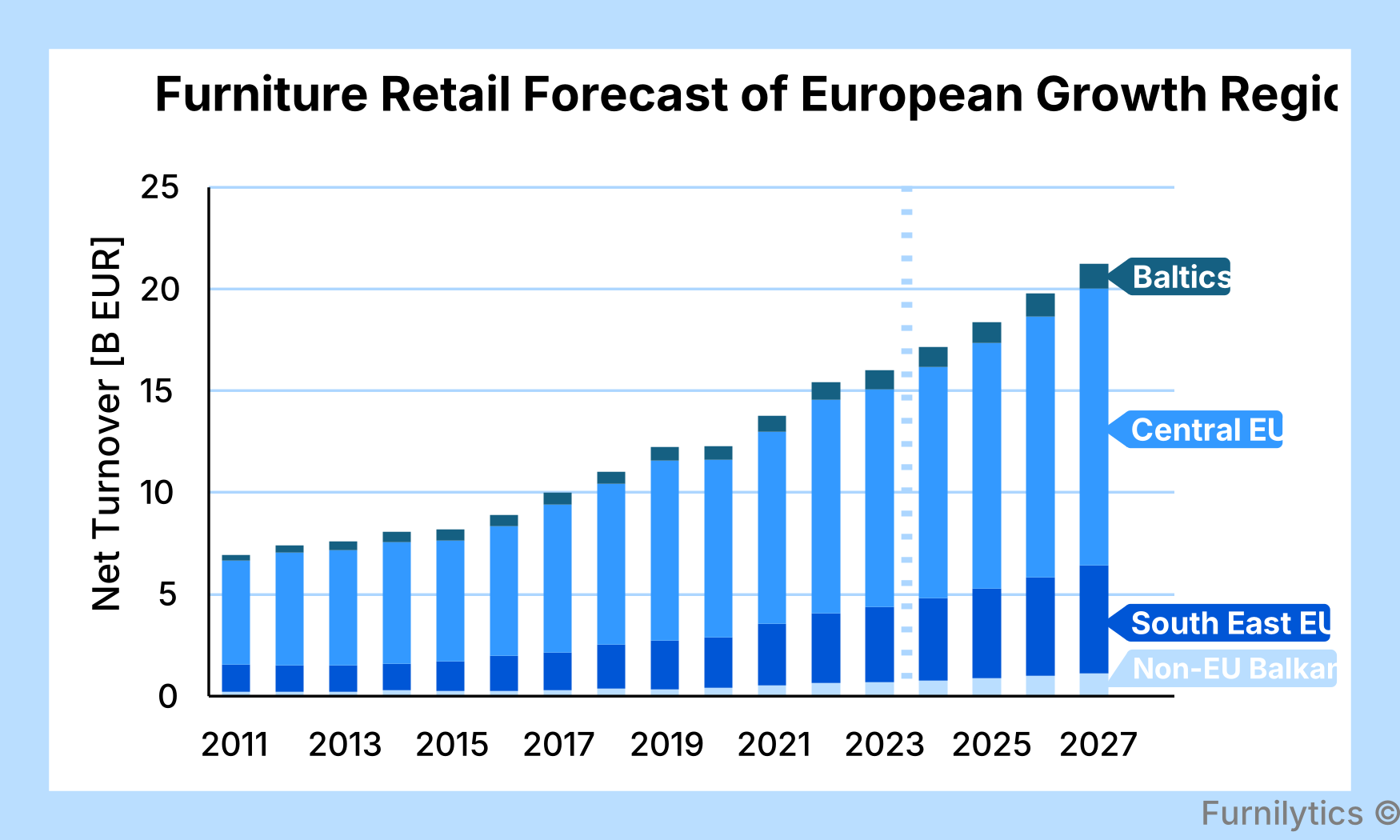
Central Europe—comprising Czech Republic, Hungary, Poland, and Slovakia and largely driven by Poland—is the dominant group when looking at absolute market size, which serves as the starting point before assessing relative growth. South East Europe (Bulgaria, Croatia, Romania, and Slovenia) also shows a rising presence as its markets expand. The Baltics remain smaller mainly due to population size, while the Non-EU Balkans still represent the smallest share but are rapidly advancing, indicating significant long-term potential.
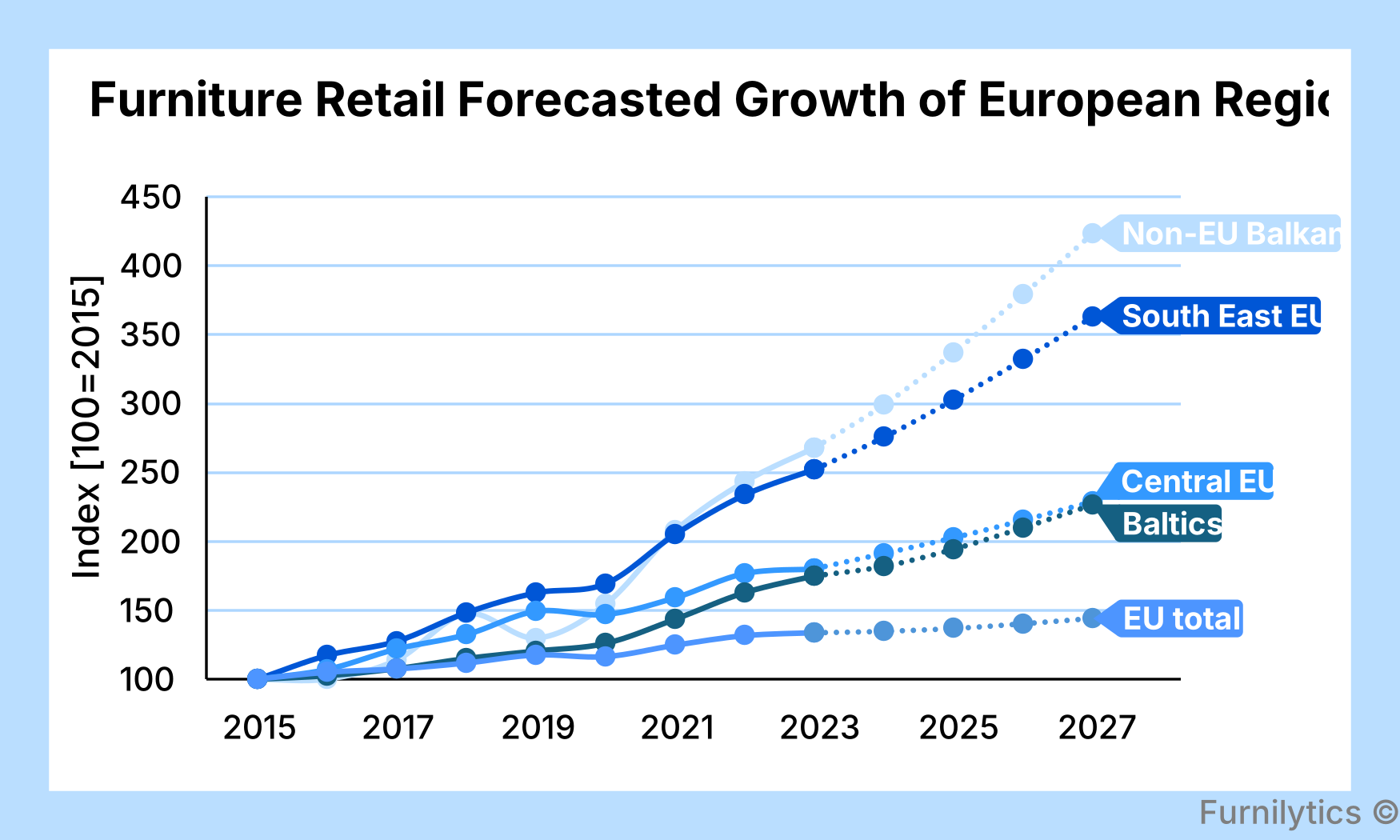
Relative growth patterns show a clear gap between the EU total, which grows only modestly, and the high-growth regions in Eastern Europe. The Baltics and Central Europe expand at a similar pace, reflecting steady convergence. In contrast, South East Europe and the Non-EU Balkans display the strongest acceleration, clearly outpacing both the EU average and the other regions. This highlights not only ongoing catch-up dynamics but also the emergence of these two groups as the fastest-growing parts of the European furniture retail market.
Growing Regional Share in European Furniture Retail
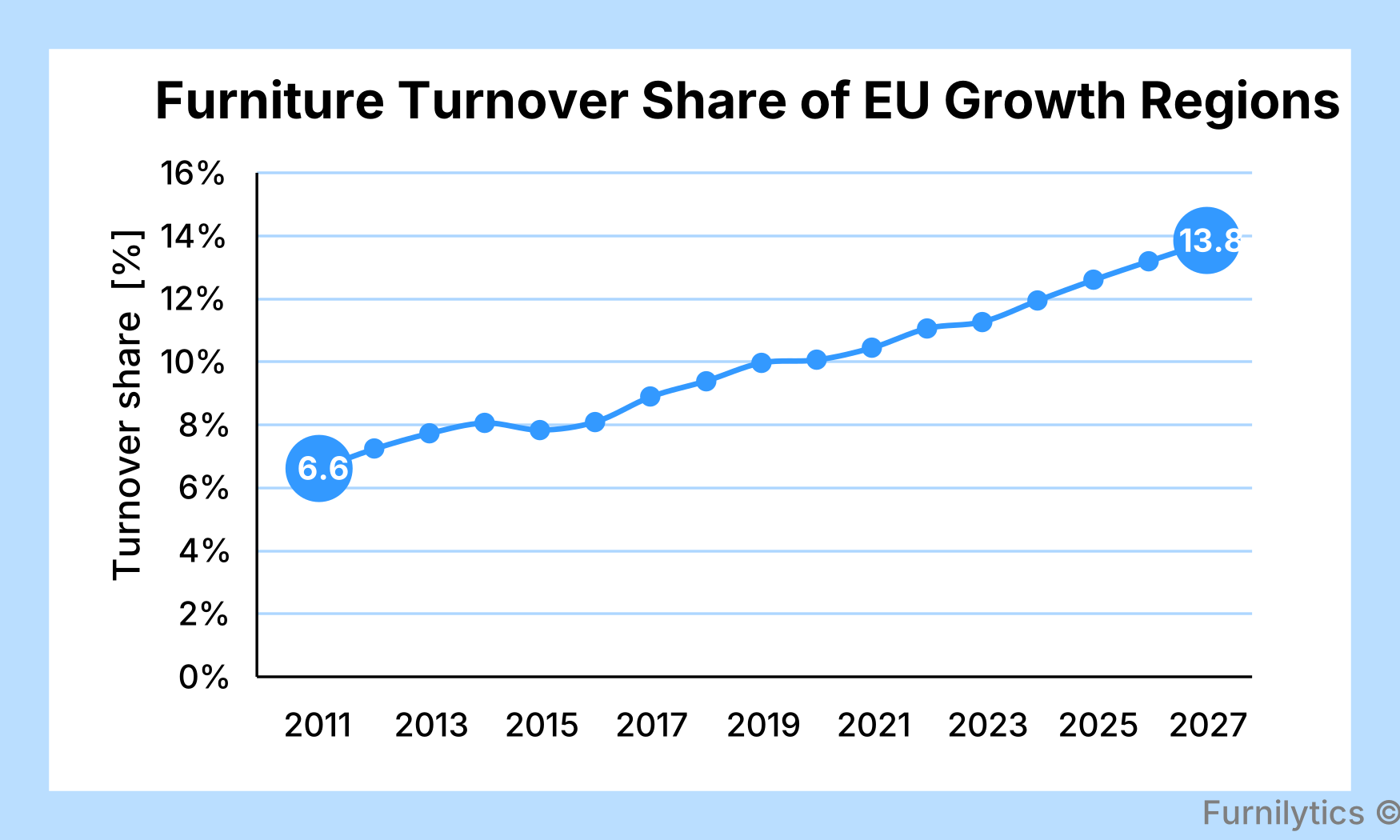
The growing share of South East Europe and the Non-EU Balkans shows how these high-growth regions are gaining importance within European furniture retail. Their combined contribution rises from 6.6% in 2011 to an expected 13.8% in 2027, reflecting faster income gains, resilient housing activity, and expanding retail demand. While Central Europe remains the largest high-growth block, the strong momentum in South East Europe and the Balkans suggests that a substantial share of future growth in the European furniture market will originate from these rapidly advancing regions.
Conclusion
Overall, the interplay of rising disposable incomes and gradually improving housing investment provides a strong foundation for continued furniture retail expansion in Eastern Europe. Although these regions still operate below Western Europe in absolute income terms, their faster growth rates, strengthening consumer demand, and increasing market scale point to a sustained catch-up trajectory. Central Europe remains the largest contributor among the high-growth markets, but South East Europe and the Non-EU Balkans are gaining prominence quickly, nearly doubling their share of EU furniture turnover between 2011 and 2027. Taken together, the evidence suggests that these high-growth regions will play an increasingly central role in shaping the future development of Europe’s furniture retail sector.
Sources:
European Union Eurostat - furniture retail turnover via sbs_ovw_act
International Monetary Fund World Economic Outlook (IMF WEO) - GNDI
Organisation for Economic Co-operation and Development (OECD) - IHV via SDMX API
World Bank Group - GFCF growth
Serbian Statistical Office - New Dwellings via OpenData API
Methodology & limitations:
Net turnover in furniture retail was taken from Eurostat (sbs_ovw_act, G4759), available through 2023. Forecasts were generated using two macro proxies: GNDI (constructed from IMF NGDPD, BCA, and population data) and housing investment using IHV from the OECD Economic Outlook. For Non-EU Balkan countries without OECD housing data, World Bank gross capital formation was used as a proxy and cross-checked against national new-dwelling data. Countries were grouped into regional clusters and modelled for 2011–2027 using a simple AR(1) and OLS multi-model forecast, with p-values and R² statistics reviewed to ensure basic model adequacy.
Limitations include gaps and inconsistencies across data sources, the need to substitute proxies for Non-EU Balkan countries, and the effects of aggregating countries into broader regions. The simplicity of the AR(1) and OLS models also limits their ability to capture structural shifts or volatility, adding uncertainty to the forecast results.