
Furniture Web Search Trends in UK: Demand, Products and Retailers
Web search data provides a real-time indicator of consumer demand in the furniture market and can reveal shifts in consumer interest earlier than traditional market statistics. By tracking search interest across product categories and retailers, it is possible to identify shifts in consumer attention earlier than traditional market statistics.
This analysis examines furniture-related Google search trends in Great Britain since 2018. The data highlights overall market demand, product category dynamics, and retailer visibility in consumer searches. Together, these indicators provide insight into how consumer interest in the UK furniture market has evolved before, during and after the COVID-driven demand surge. The analysis below first reviews overall demand trends, before examining developments across furniture product categories and major retailers.
This analysis of the Italian furniture industry was prepared for Big Furniture Group, as part of its collaboration with Furnilytics.
Overall Furniture Search Demand in Great Britain
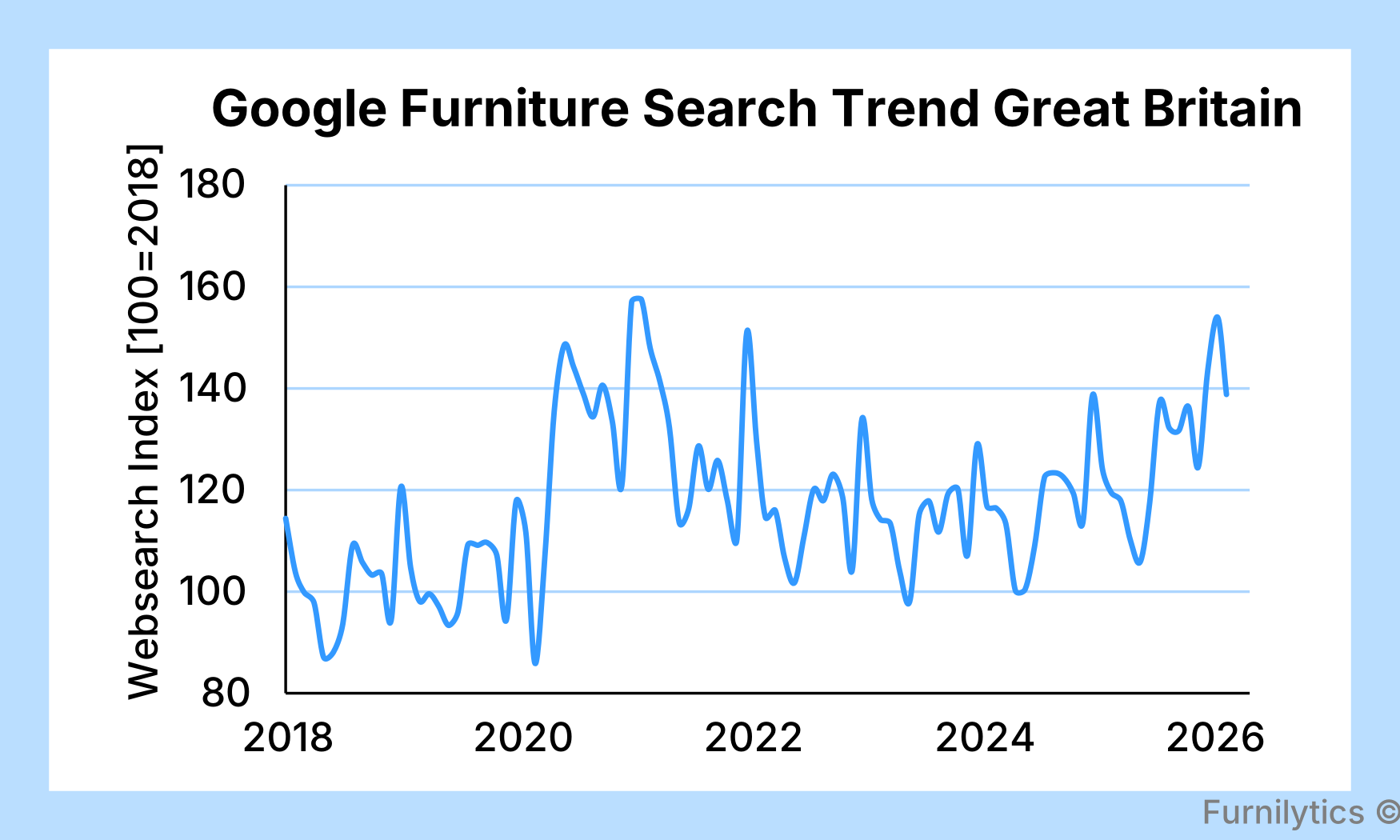
Great Britain has experienced the largest decline in furniture-related web search interest among the major Western markets since the pandemic peak. Compared with the 2021 high, search activity is down about 12.5%, a noticeably steeper drop than in Germany (-2.3%), France (+1.2%) and the United States (-7.4%).
However, momentum has shifted more recently. Since the second half of 2025, search interest in Great Britain has started to recover strongly. While overall demand still remains slightly below the average of its peer markets (-4.7% vs. +1.3%), the short-term trend is clearly more positive. Over the latest three months, web search interest has increased by +14.2% year-on-year, compared with +2.9% across the peer markets, suggesting that the UK market may be closing part of the post-pandemic demand gap.
Furniture Product Search Trends
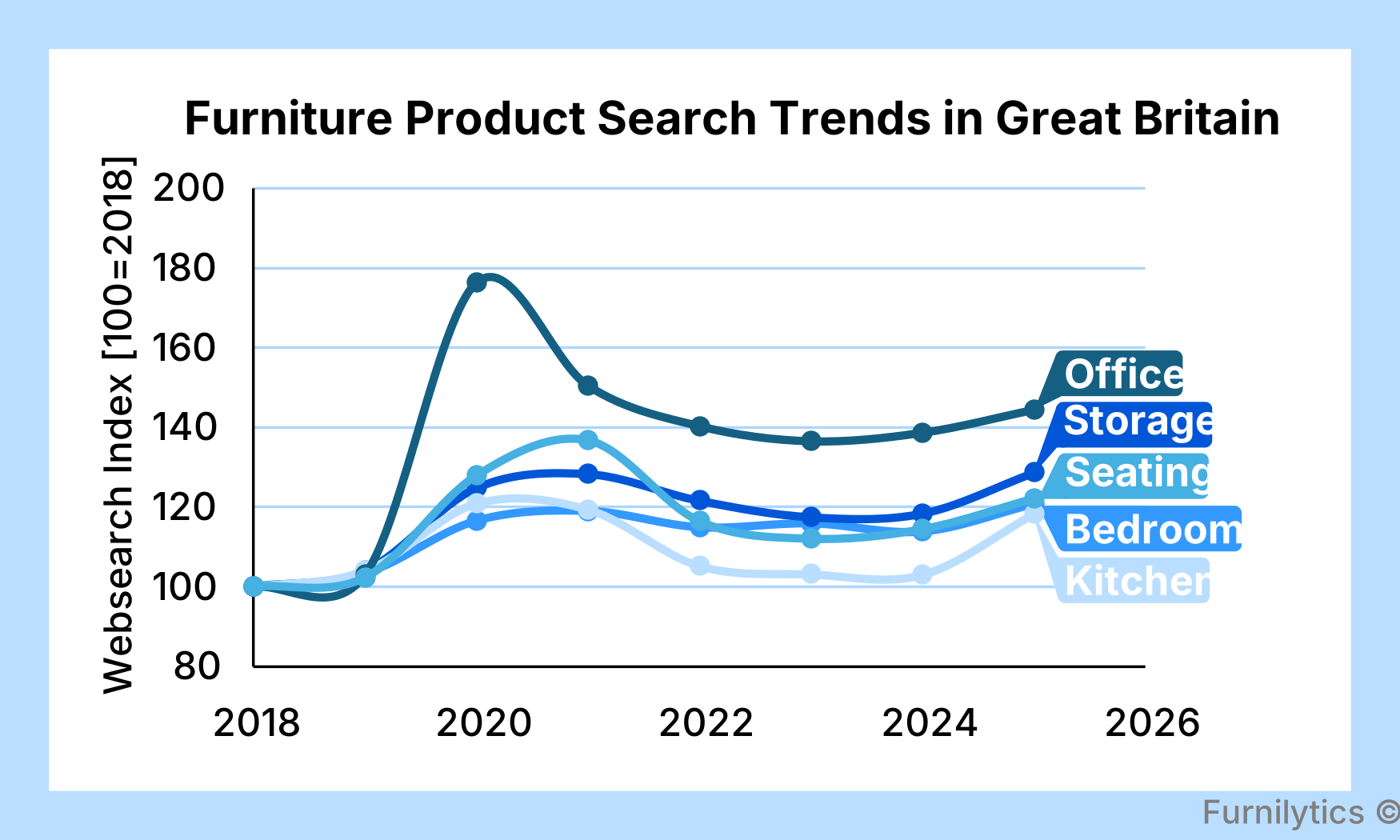
Among furniture product categories, office furniture has been the clear winner since the COVID period. Search interest increased sharply during the pandemic as remote and hybrid work drove demand for home office setups. Although the peak has moderated somewhat since 2021, office furniture continues to show the strongest structural growth compared with other product groups.
At the same time, kitchen furniture has experienced a more prolonged decline in search interest. This partly reflects the slowdown in housing activity and renovation markets, which typically drive demand for kitchen installations.
More recently, the past year has marked a broad recovery in consumer search interest across most furniture categories. Storage furniture such as chests of drawers, wardrobes and bookcases has been particularly resilient, maintaining relatively strong and stable demand over time and benefiting from the recent uptick in overall furniture-related searches.
Furniture Retailer Search Trends
Web search trends broadly mirror the competitive landscape suggested by clickstream-based core web visitation data, where IKEA and Wayfair capture the largest share of online consumer attention in the UK. During the COVID period, Wayfair in particular experienced a strong surge in search interest, reflecting the boom in online furniture demand, but this visibility has declined markedly since 2021 as market conditions normalised.
In contrast, Habitat has maintained relatively solid search performance since the late pandemic period, remaining above its pre-COVID levels. More recently, the clearest upward momentum is visible at JYSK and Furniture Village, both of which have seen a notable increase in search interest over the last two years, suggesting growing consumer visibility in the UK market.
Conclusion
Overall, the UK furniture market shows a gradual recovery in online consumer interest following the sharp post-pandemic decline. While search demand fell more strongly than in most comparable markets after the 2021 peak, recent data suggests momentum is improving.
At the product level, office furniture continues to benefit from the structural shift toward hybrid work, while categories linked to housing activity, such as kitchens, have seen weaker demand. Storage furniture has remained relatively resilient. Among retailers, IKEA and Wayfair still dominate consumer attention, although the strongest recent gains in search visibility are visible at JYSK and Furniture Village.
Sources:
Google Trends
Furniture retailer web search
Furniture product web search trends by group
Methodology & limitations:
This analysis is based on Google Trends data for Great Britain, capturing relative consumer search interest across furniture product categories and major retailer brands using local-language keyword baskets and brand-related queries. Weekly data is aggregated to monthly frequency and indexed to a 2018 baseline, allowing consistent tracking of demand dynamics before and after the COVID-driven peak.
The indicators reflect relative search interest rather than absolute demand and should be interpreted as directional proxies for consumer attention, not sales or market size. Results are sensitive to keyword selection, brand mappings, and Google Trends sampling, while the fixed 2018 base limits direct comparison of absolute levels across categories or retailers.