
Growing Imports Reshape the EU Furniture Trade Balance
This article examines recent developments in EU furniture trade, with the aim of identifying key structural trends in exports, imports, and sourcing patterns. It covers the evolution of trade balances, changes in import penetration, and the concentration of export and import partners, placing recent movements in a longer-term context. The analysis focuses on how the EU’s position in global furniture trade is evolving, particularly in light of rising imports and persistent supplier concentration. This article serves as the European counterpart to the earlier analysis of US furniture imports, applying the same analytical framework to highlight similarities and differences between the two markets.
Stable Exports, Rising Imports
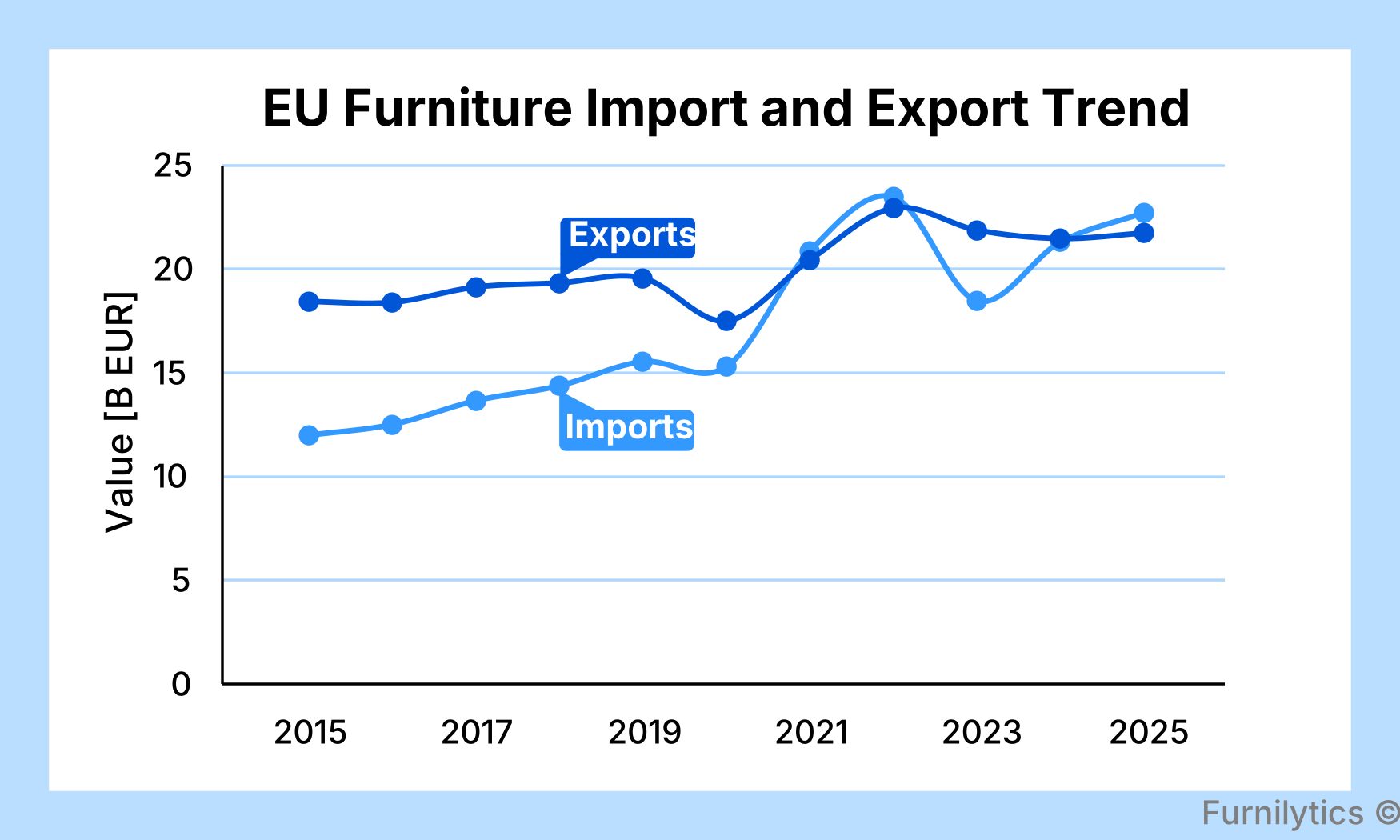
EU furniture trade has undergone a gradual but important shift over time. Exports have remained relatively stable for many years, showing limited long-term growth, while imports have expanded steadily. This contrasting development has progressively narrowed the EU’s trade surplus and has brought the region close to becoming a net importer of furniture. The trend suggests a structural change in the market, with increasing reliance on external suppliers to satisfy demand as export performance has largely plateaued.
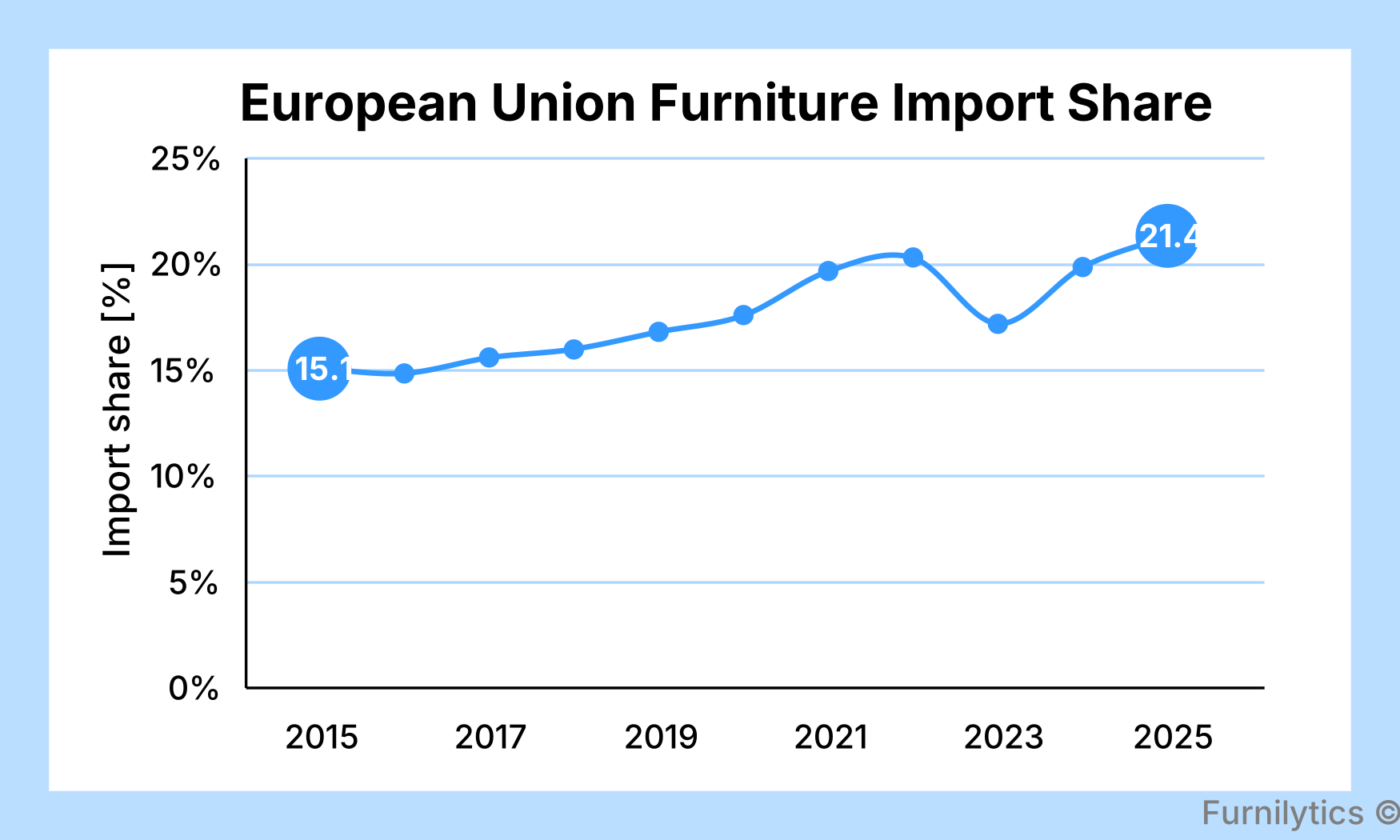
As imports have grown, their role in the EU furniture market has increased accordingly. The import share of apparent consumption has risen steadily, from around 15% to approximately 21%, reflecting the expanding presence of foreign-produced furniture in the EU market. Despite this upward trend, the EU remains relatively less dependent on imports compared with other major markets. Using the same methodology, the United States records an import share of around 40%, underscoring that, although rising, the EU’s import penetration is still modest by international comparison.
Key Export Markets for EU Furniture
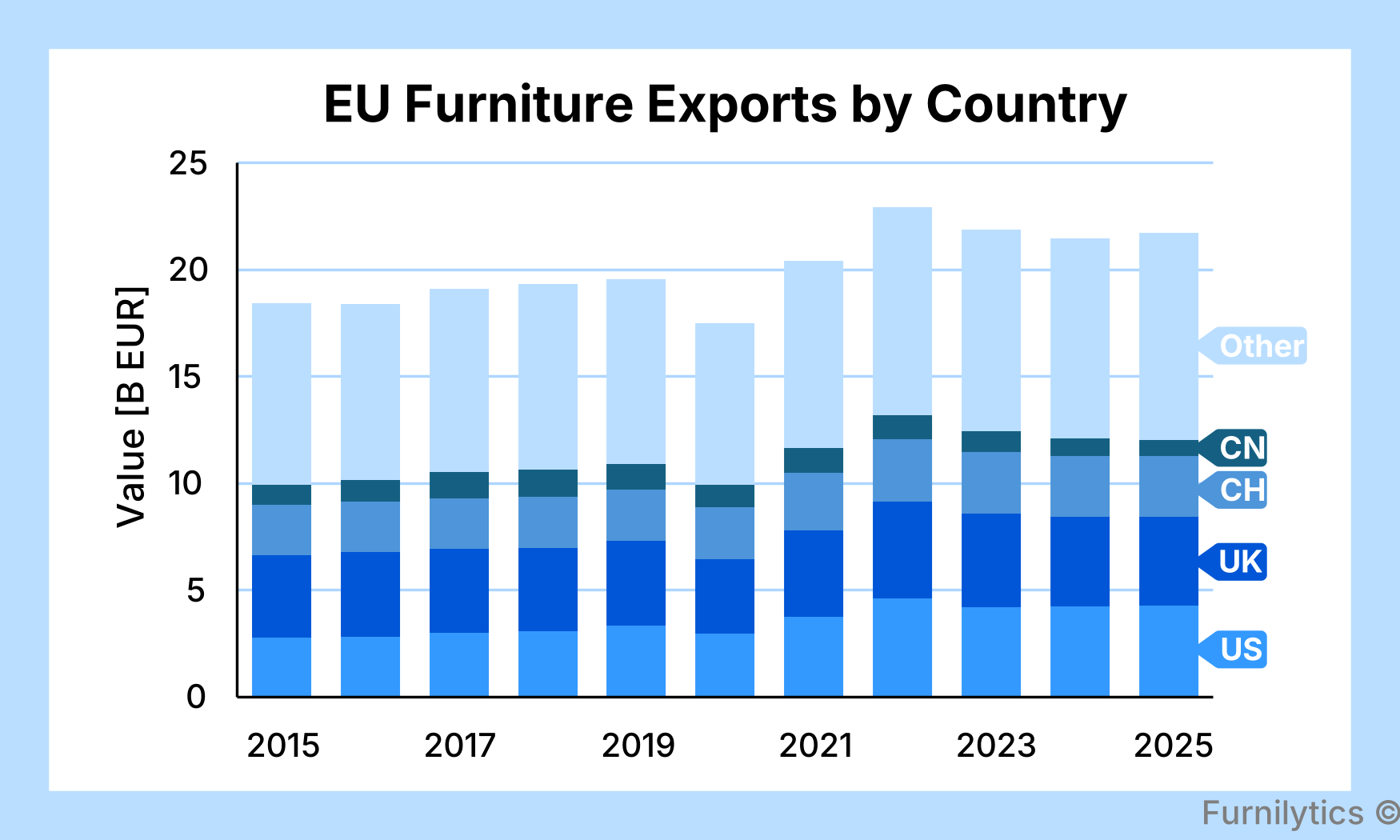
EU furniture exports are concentrated among a small number of key partner countries, with the United States standing out as the main export destination. Switzerland and the United Kingdom also rank among the largest partners, reflecting their close geographic and economic ties to the EU and their strong reliance on EU furniture production. Overall, export shares among the leading partners have remained broadly stable over time. Beyond these main destinations, exports are spread across many smaller markets, each accounting for only a limited share of total EU furniture exports, underscoring the fragmented structure of the remaining export landscape.
China-Centric Structure of EU Furniture Imports
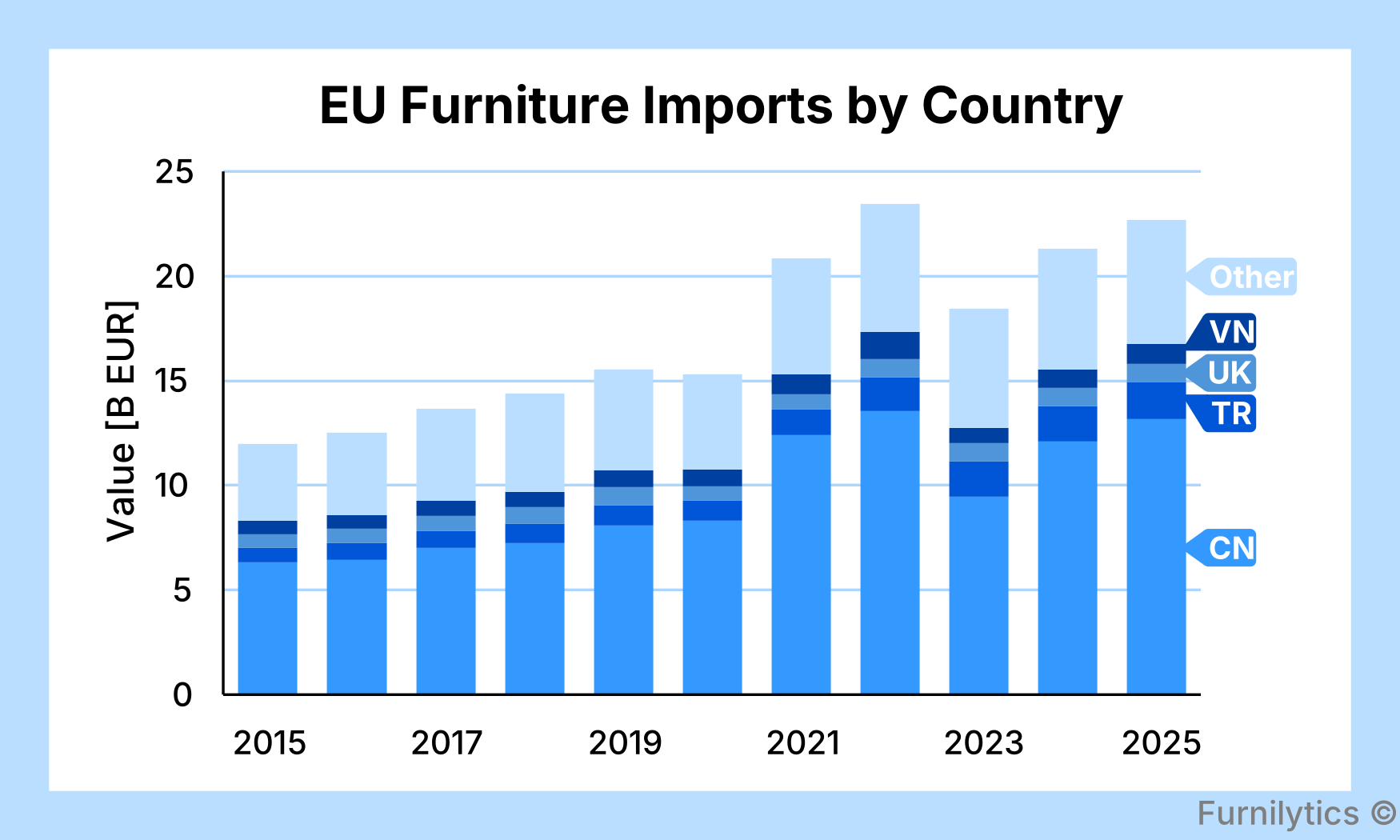
EU furniture imports are highly concentrated, with China remaining by far the dominant supplier. Although 2023 shows a noticeable decline in imports from China, this appears to be temporary and largely driven by a decline in price inflation following the exceptional post-pandemic period, rather than a structural shift. Looking ahead, there is no clear indication of a sustained reduction in the EU’s dependency on Chinese furniture imports. This stands in contrast to the United States, where sourcing has increasingly shifted away from China toward suppliers such as Vietnam. Unlike the US, see US trade patterns, the EU’s import structure remains firmly centered on China, with limited diversification visible so far.
Conclusion
Overall, the analysis shows that EU furniture trade is at a turning point. Stable export performance combined with steadily rising imports has significantly narrowed the trade surplus and brought the EU close to becoming a net importing region. While import penetration remains lower than in the United States, it is clearly increasing, and import sourcing remains highly concentrated in China with little sign of sustained diversification. Together, these trends point to a gradual structural shift in the EU furniture market, raising important questions about future competitiveness, supply chain resilience, and the strategic position of EU producers in an increasingly globalized market.
Sources:
European Union (Eurostat) - structural business statistics
European Union (Eurostat) - short term business statistics
European Union (Eurostat) Comext Trade Data – DS-045409
Methodology & limitations:
Trade data are sourced from Eurostat Comext for HS codes 9401–9403, with the final months of 2025 extrapolated using indexed projections from 2024. Import shares are calculated using the apparent consumption method (domestic production plus imports minus exports), with imports divided by apparent consumption, all in current euros. Furniture production is based on Eurostat SBS data for NACE 31, with values beyond 2023 extrapolated using the Industrial Production Index from STS.
Limitations include reliance on extrapolations that may not reflect recent market changes, sensitivity to price and inflation effects due to the use of current euros, and potential inconsistencies between SBS and STS data. The apparent consumption method also does not account for inventory changes.

Growing Imports Reshape the EU Furniture Trade Balance
This article examines recent developments in EU furniture trade, with the aim of identifying key structural trends in exports, imports, and sourcing patterns. It covers the evolution of trade balances, changes in import penetration, and the concentration of export and import partners, placing recent movements in a longer-term context. The analysis focuses on how the EU’s position in global furniture trade is evolving, particularly in light of rising imports and persistent supplier concentration. This article serves as the European counterpart to the earlier analysis of US furniture imports, applying the same analytical framework to highlight similarities and differences between the two markets.
Stable Exports, Rising Imports
EU furniture trade has undergone a gradual but important shift over time. Exports have remained relatively stable for many years, showing limited long-term growth, while imports have expanded steadily. This contrasting development has progressively narrowed the EU’s trade surplus and has brought the region close to becoming a net importer of furniture. The trend suggests a structural change in the market, with increasing reliance on external suppliers to satisfy demand as export performance has largely plateaued.
As imports have grown, their role in the EU furniture market has increased accordingly. The import share of apparent consumption has risen steadily, from around 15% to approximately 21%, reflecting the expanding presence of foreign-produced furniture in the EU market. Despite this upward trend, the EU remains relatively less dependent on imports compared with other major markets. Using the same methodology, the United States records an import share of around 40%, underscoring that, although rising, the EU’s import penetration is still modest by international comparison.
Key Export Markets for EU Furniture
EU furniture exports are concentrated among a small number of key partner countries, with the United States standing out as the main export destination. Switzerland and the United Kingdom also rank among the largest partners, reflecting their close geographic and economic ties to the EU and their strong reliance on EU furniture production. Overall, export shares among the leading partners have remained broadly stable over time. Beyond these main destinations, exports are spread across many smaller markets, each accounting for only a limited share of total EU furniture exports, underscoring the fragmented structure of the remaining export landscape.
China-Centric Structure of EU Furniture Imports
EU furniture imports are highly concentrated, with China remaining by far the dominant supplier. Although 2023 shows a noticeable decline in imports from China, this appears to be temporary and largely driven by a decline in price inflation following the exceptional post-pandemic period, rather than a structural shift. Looking ahead, there is no clear indication of a sustained reduction in the EU’s dependency on Chinese furniture imports. This stands in contrast to the United States, where sourcing has increasingly shifted away from China toward suppliers such as Vietnam. Unlike the US, see US trade patterns, the EU’s import structure remains firmly centered on China, with limited diversification visible so far.
Conclusion
Overall, the analysis shows that EU furniture trade is at a turning point. Stable export performance combined with steadily rising imports has significantly narrowed the trade surplus and brought the EU close to becoming a net importing region. While import penetration remains lower than in the United States, it is clearly increasing, and import sourcing remains highly concentrated in China with little sign of sustained diversification. Together, these trends point to a gradual structural shift in the EU furniture market, raising important questions about future competitiveness, supply chain resilience, and the strategic position of EU producers in an increasingly globalized market.
Sources:
European Union (Eurostat) - structural business statistics
European Union (Eurostat) - short term business statistics
European Union (Eurostat) Comext Trade Data – DS-045409
Methodology & limitations:
Trade data are sourced from Eurostat Comext for HS codes 9401–9403, with the final months of 2025 extrapolated using indexed projections from 2024. Import shares are calculated using the apparent consumption method (domestic production plus imports minus exports), with imports divided by apparent consumption, all in current euros. Furniture production is based on Eurostat SBS data for NACE 31, with values beyond 2023 extrapolated using the Industrial Production Index from STS.
Limitations include reliance on extrapolations that may not reflect recent market changes, sensitivity to price and inflation effects due to the use of current euros, and potential inconsistencies between SBS and STS data. The apparent consumption method also does not account for inventory changes.