
JYSK Growth and Market Share in Europe’s High-Growth Furniture Markets
JYSK’s retail performance across Europe’s high-growth regions has evolved significantly over the past decade, shaped by both market conditions and company-specific developments. Building on earlier analysis of macroeconomic trends and market outlooks in Europe’s high-growth furniture markets, this analysis examines regional turnover development, store network expansion, average turnover per store, and the changing contribution of growth regions to JYSK’s total revenue. In addition, JYSK’s performance is assessed relative to overall furniture retail market developments to evaluate changes in market share over time. Together, these perspectives provide a structured view of how JYSK’s growth in selected European markets aligns with broader sector dynamics.
Country scope
In this analysis we refer to the following regional groupings, the same as previous analysis. The naming is used for analytical convenience and may not perfectly reflect all geopolitical or geographical classifications, but it provides a practical structure for comparing countries across the study.
Baltics: Estonia, Latvia, and Lithuania.
Central EU: Czech Republic, Hungary, Poland, and Slovakia
Non-EU Balkan: Albania, Bosnia and Herzegovina, Montenegro, North Macedonia, and Serbia.
South East EU: Bulgaria, Croatia, Romania, and Slovenia.
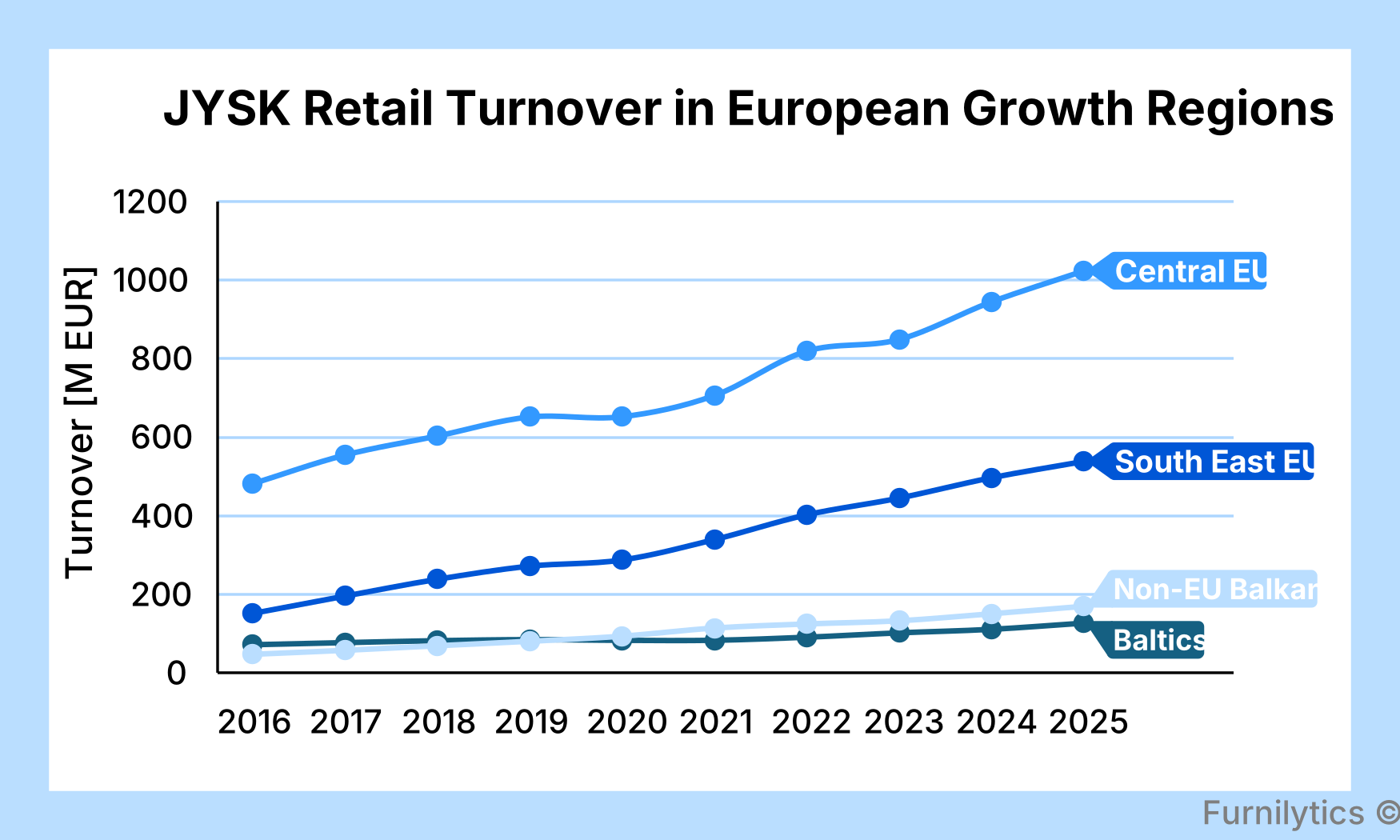
Regional Turnover Development
JYSK retail turnover across European growth regions has increased steadily over the period, with the majority of both turnover and absolute growth concentrated in Central EU and South East EU markets. Central EU consistently accounts for the largest share of total turnover and remains the primary driver of overall growth, reflecting its scale and maturity. South East EU also shows strong and sustained growth, contributing an increasing proportion of total turnover over time.
The Baltics and Non-EU Balkan regions, while smaller in absolute terms, continue to expand steadily, indicating ongoing market development. Overall growth is supported by two key dynamics: the continued expansion of the store network and increasing average turnover per store. These factors are analysed in detail in the following sections.
Store Count Development by Region
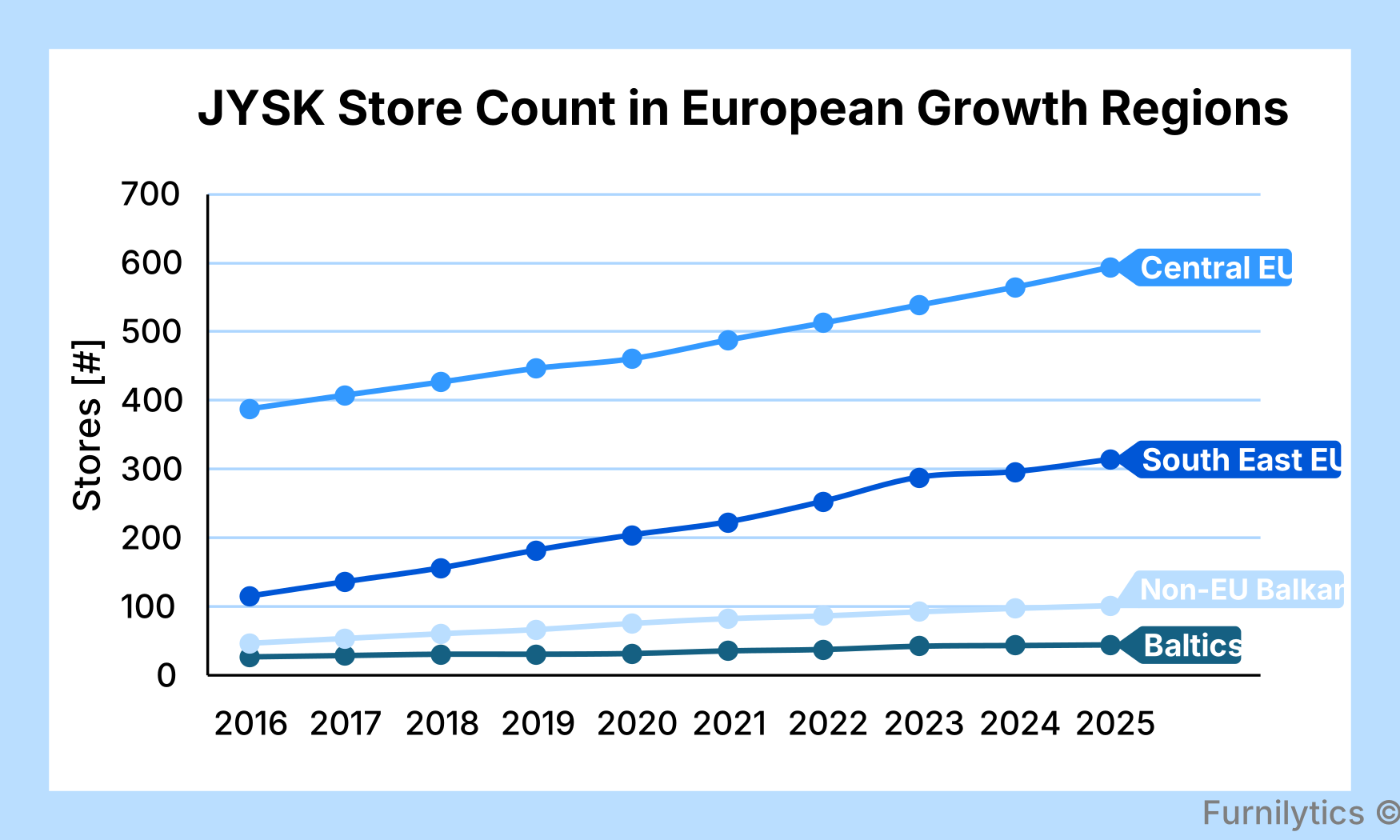
Store network expansion across European growth regions closely mirrors overall turnover development. Central EU and South East EU show the largest absolute increases in store count, reinforcing their role as the main drivers of growth and aligning with their strong contribution to total turnover.
In smaller regions, differences between store count and turnover are more evident. The Baltics generate relatively higher turnover with fewer stores, indicating stronger average turnover per store, while the Non-EU Balkan region operates a larger store base relative to its turnover, reflecting earlier-stage market development.
Turnover per Store Development
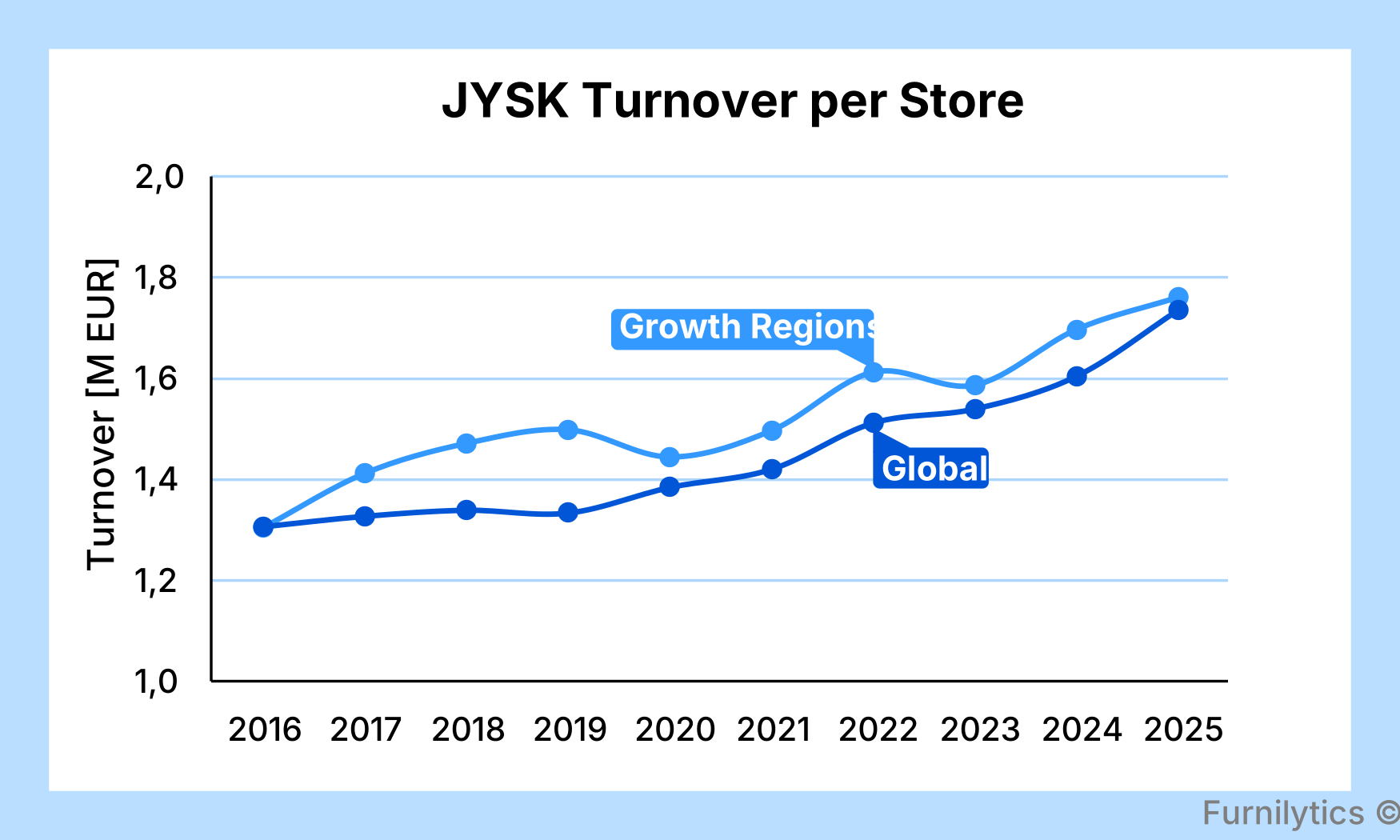
In addition to expansion, improving store-level performance has emerged as a second key driver of growth. Average turnover per store has increased steadily over recent years, confirming that growth is not driven by expansion alone. The upward trajectory indicates rising productivity across the network, with temporary fluctuations not altering the overall positive trend.
At the same time, turnover per store in the growth regions broadly follows the overall JYSK development, suggesting that improvements in store productivity are largely in line with global performance rather than driven by region-specific outperformance.
Contribution of Growth Regions
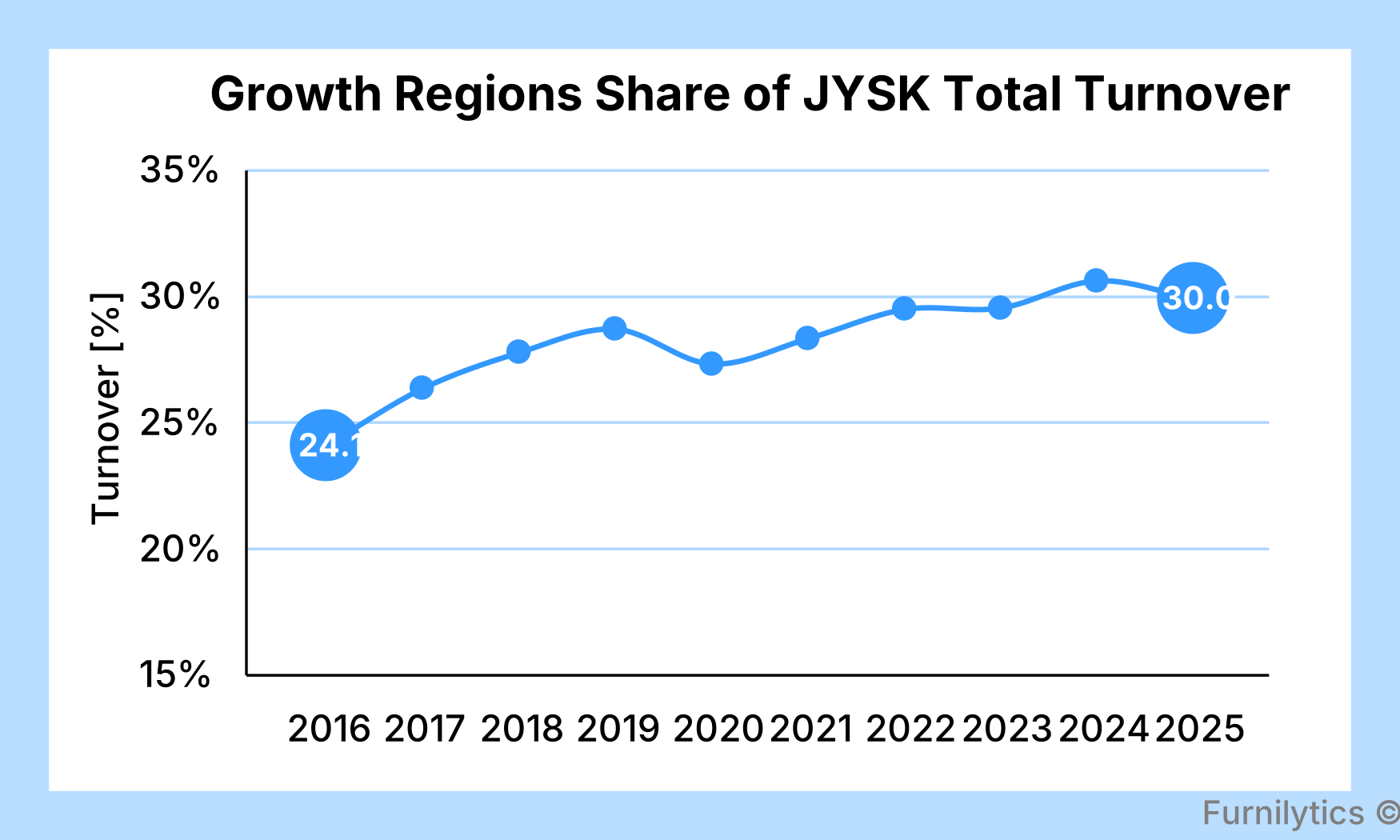
JYSK’s reliance on its European growth regions has increased over time, with their share of total turnover rising steadily from around 25% in the mid-2010s to approximately 30% in recent years. While this reflects a clear long-term increase in importance, the trajectory has moderated in the most recent period, with the contribution of growth regions stabilising at around 30% over the last four years. This suggests that, after a phase of rapid expansion, growth regions have reached a more mature and balanced role within JYSK’s overall revenue mix, continuing to support growth without materially increasing their relative share.
Market Share Development in Growth Regions
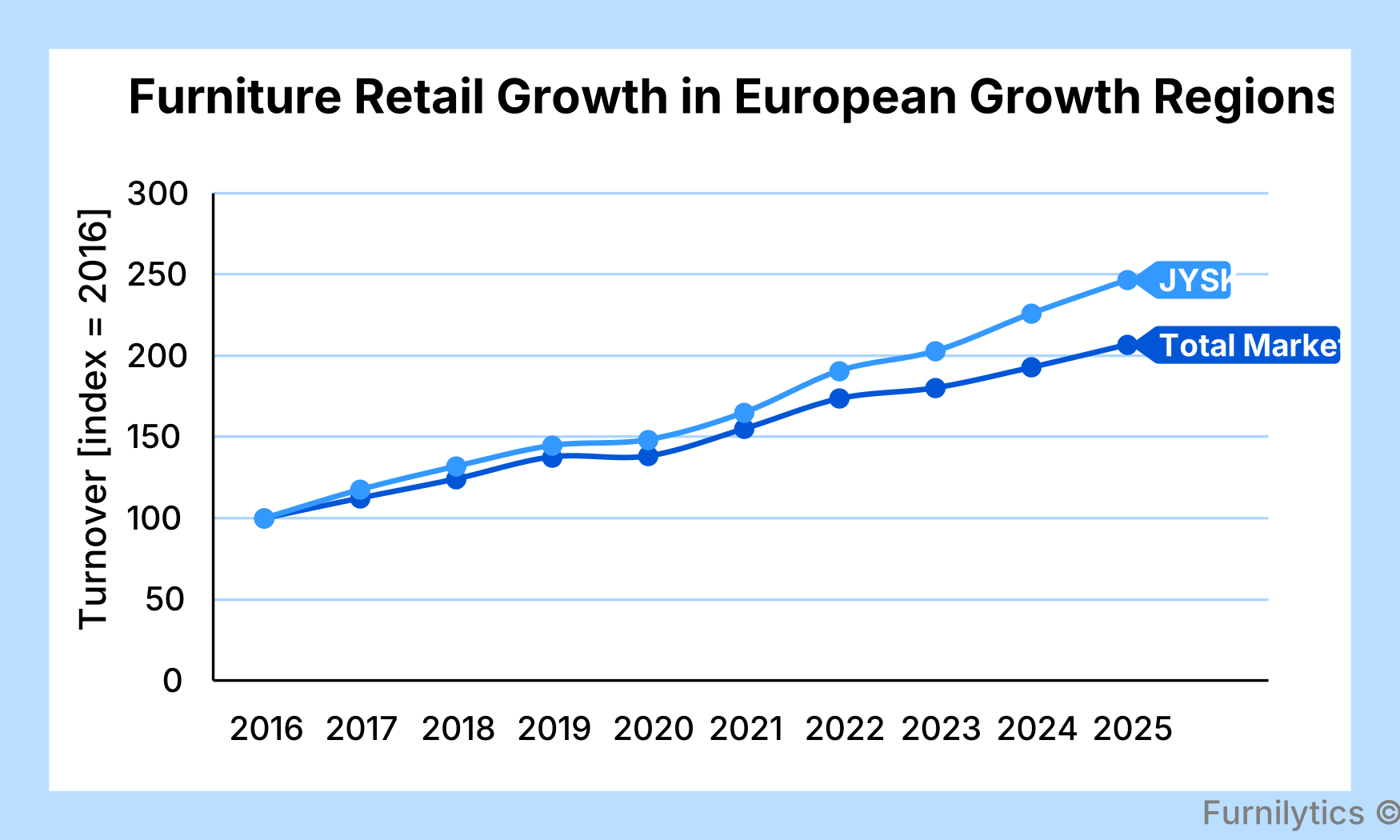
JYSK’s net turnover in the European growth regions has grown more rapidly than the overall furniture retail market, as reflected in the diverging turnover indices over time. While the total furniture retail market shows steady growth, JYSK’s turnover increases at a faster pace, resulting in a gradual rise in its share of total furniture retail turnover from approximately 8.5% in 2016 to 10.1% in 2025, based on Eurostat net turnover data for furniture retail (G4759).
At a regional level, market share gains are most pronounced in South East EU, where JYSK’s share increased from around 8.9% to 12.2% over the period, indicating stronger relative growth compared with the overall market. In contrast, JYSK holds a consistently high and stable position in the Non-EU Balkan region, with a market share of approximately 19% throughout the period, suggesting a more mature presence where turnover growth has broadly followed overall market development rather than reflecting significant additional share gains.
Conclusion
Overall, the analysis indicates that JYSK’s development across European growth regions reflects both general market dynamics and company-level developments within the furniture retail sector. Turnover growth has been supported by both store network expansion and improving turnover per store, while outpacing overall market development has resulted in a steady increase in market share over time. This effect is most evident in South East EU, where JYSK’s share of furniture retail turnover has increased materially, while a stable and high share in Non-EU Balkan markets points to a more mature market position. Together, these developments indicate that growth regions have become an increasingly important and structurally embedded component of JYSK’s European performance, even as their relative contribution to total turnover has stabilised in recent years.
Sources:
National Court Register (KRS) – Poland
Rekvizitai Business Information Database – Lithuania
Commercial Register of Estonia (Äriregister)
Czech Justice Register / Collection of Deeds
Register of Financial Statements – Slovakia
Hungarian Electronic Financial Statements System (e-Beszámoló)
Agency of the Republic of Slovenia for Public Legal Records and Related Services (AJPES)
Croatian Financial Agency – Public Financial Statements Register (FINA RGFI)
Romanian Ministry of Public Finance – Legal Entities Financial Information
Bulgarian Commercial Register and Register of Non-Profit Legal Entities
Serbian Business Registers Agency (APR)
National Business Center – Albania (QKB)
Methodology & limitations:
Retail turnover by country is derived from publicly available financial statements, with intercompany transactions excluded to ensure the focus remains on external retail activity. Global turnover and store count data are sourced from JYSK annual reports. Turnover figures for 2025 are estimated using reputable media publications and industry sources and validated against historical trends. Data for Latvia and Bosnia and Herzegovina is based on consistent media reporting, while turnover in Montenegro and Kosovo is estimated using average regional turnover per store due to limited market presence. Market share is approximated by comparing JYSK turnover with Eurostat net turnover data for furniture retail (SBS, G4759), See previous analytics for methodology. All figures are converted to euros using average annual exchange rates published by the European Central Bank (ECB).
The analysis is subject to limitations related to differences in reporting standards and consolidation practices between company financial statements and Eurostat statistics, the use of secondary and estimated data for 2025, reliance on regional averages in smaller markets, and currency conversions based on annual averages, which do not reflect intra-year exchange rate volatility.