
Mapping the World’s Largest Furniture groups
The global furniture industry is characterised by a vast number of mid- and large-sized companies, yet only a handful surpass the €5 billion revenue mark. This overview highlights seven of the world’s largest furniture-centric companies, spanning diverse ownership structures and business models—from pure retail to OEM-driven hybrid approaches.
While some, such as IKEA and JYSK, command Europe’s mass-market segment, others like Ashley Furniture and Williams-Sonoma define the North American landscape. Japanese and online specialists, including Nitori and Wayfair, demonstrate how cultural and digital strategies are reshaping global distribution. Together, these groups illustrate the evolving balance between manufacturing, retail integration, and omni-channel sales.
Overview of the Featured Companies
The table summarises seven of the world’s largest furniture-focused business groups, chosen for their scale, geographic reach, and strategic importance. Together, they illustrate the sector’s key operating models—from OEM-integrated production (Ashley Furniture Industries) to retail-driven structures (IKEA, JYSK, XXXLutz, Nitori, and Williams-Sonoma), and online specialisation (Wayfair).
Geographically, the group reflects the dominance of Europe and North America, with Asia represented by Nitori’s strong domestic presence in Japan. Ownership models vary between private and publicly traded entities, underlining different growth paths within the same sector. Collectively, these companies offer a representative snapshot of how the global furniture industry balances manufacturing integration, brand control, and multichannel retail strategies.
| Company | Names / brands | Main markets | Core business | Sales channel | Ownership |
| Ashley Furniture Industries | Ashley HomeStore | Global 67 countries, 80% in NA | Largely OEM, with retail | Omni-channel | Privately held |
| INGKA Group | IKEA | Global 31 countries, 72% in Europe | Pure retailer | Omni-channel | Privately held |
| Lars Larsen Group | JYSK, ILVA, Bolia | Global 50 countries, >80% in Europe | 94% retail | Omni-channel | Privately held |
| Nitori Holdings Co., Ltd. | Nitori, DECO HOME, Shimachu, N+ | 95% in Japan | Pure retailer | Omni-channel | Public |
| Wayfair Inc. | Wayfair, Joss & Main, AllModern, Birch Lane | 87% in USA, also in Canada, UK, Ireland | Pure retailer | Online only | Public |
| Williams-Sonoma, Inc. | Williams Sonoma, Pottery Barn, West Elm | 95% in North America | Pure retailer | Omni-channel | Public |
| XXXLutz KG | XXXLutz, Möbelix, Mömax, POCO | Europe, focus on AT, DE & CEE | Pure retailer | Omni-channel | Privately held |
Global Scale of Leading Furniture Groups
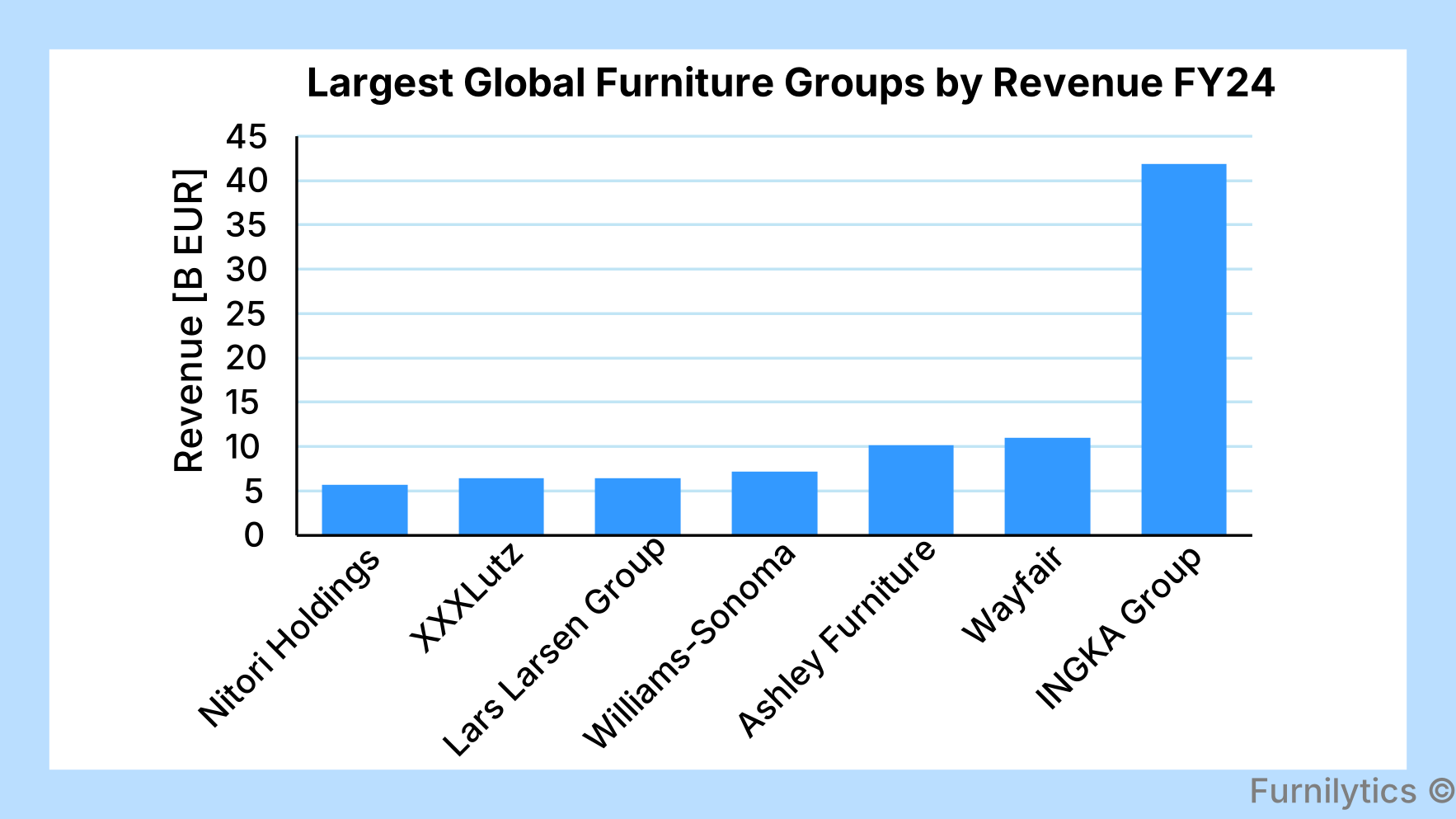
The chart below compares the world’s leading furniture groups by annual revenue. IKEA (Ingka Group) remains the undisputed global leader, maintaining a wide margin over its competitors. Wayfair and Ashley Furniture follow as the principal North American players, while XXXLutz and JYSK (Lars Larsen Group) operate at comparable scales within the highly competitive European market. Nitori Holdings stands out as Japan’s dominant domestic leader, underscoring the regional concentration of market power across continents.
Revenue Development 2018–2024
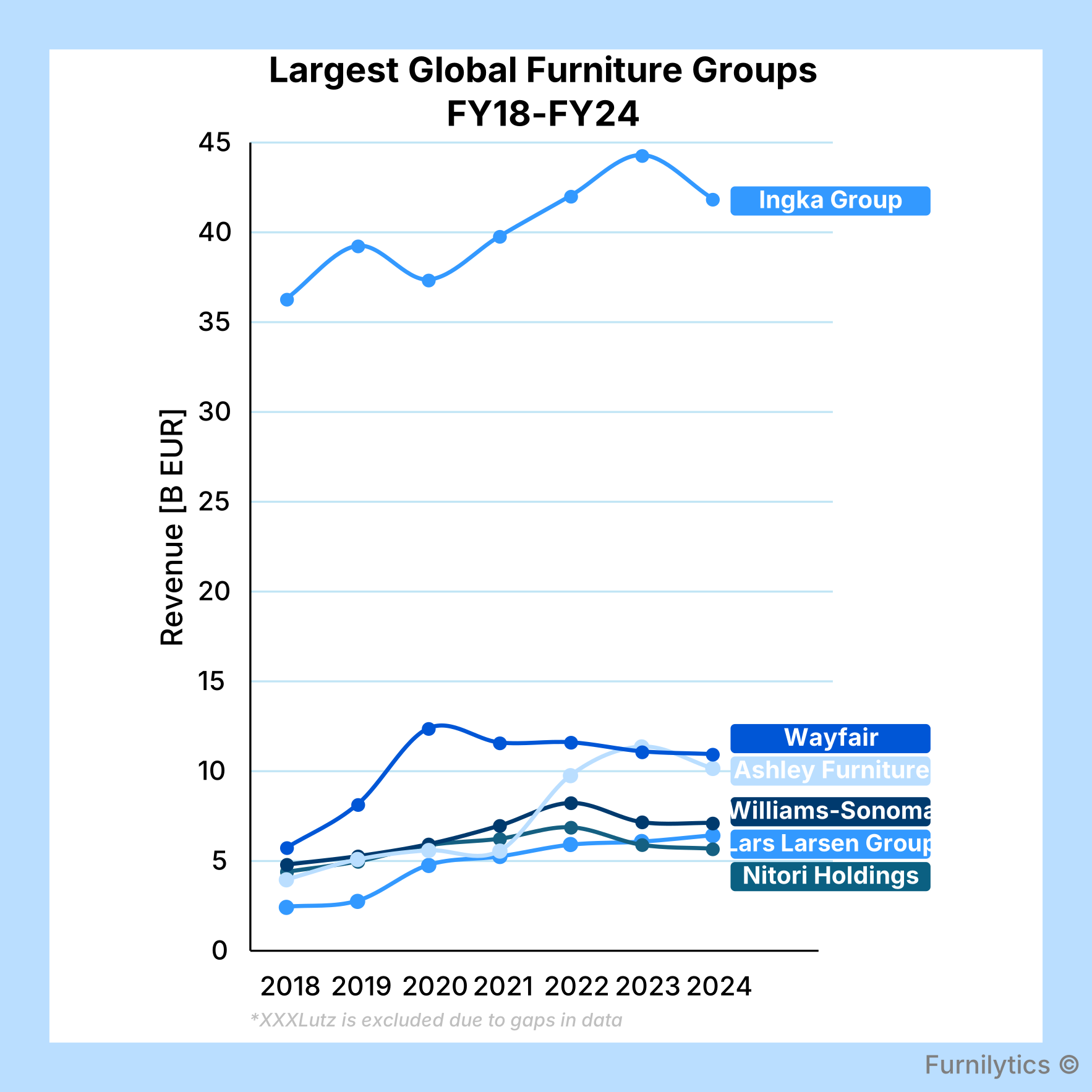
The next graph highlights shifting dynamics among the leading furniture groups between 2018 and 2024. During the COVID-19 pandemic in 2020, Wayfair saw a sharp surge in revenue as online sales spiked, while Ingka experienced a temporary decline due to store closures and supply disruptions. Other major players, including Ashley, JYSK, and XXXLutz, show a stable growth patterns, reflecting resilient demand in traditional retail formats.
Conclusion
While many manufacturers and retailers operate in the €1–5 billion range, only a few exceed this threshold. Among them, Ingka continues to dominate through unmatched integration and reach, while Wayfair, Ashley, and Lars Larsen Group show that efficiency, online scale, and focused retail models can still carve out strong positions.
The pandemic further reinforced the sector’s divide—favouring digital and flexible operators over traditional store networks. In essence, the global furniture industry remains broad in participation but narrow in leadership, concentrated around a small group of companies that set the pace for innovation and growth.
Sources:
INGKA, LLG, Nitori, Wayfair, and Williams-Sonoma, Inc. – audited financial reports.
Wayfair – supplementary data from Forbes.
XXXLutz – company-published figures and reputable media reports.
European Central Bank – Euro foreign exchange reference rates (daily and annual averages).
Methodology & limitations:
Reported figures represent consolidated group revenues, expressed in euros (EUR), for fiscal years ending in FY2018 and FY2024. Currency conversions are based on average annual exchange rates published by the European Central Bank (ECB). Revenues include all business segments—manufacturing, franchising, and wholesale—where applicable.
Cross-country variations in generally accepted accounting principles (GAAP) have not been reconciled. Fiscal year-end timing differs across firms, although most follow a comparable 12-month reporting cycle.
The focus is on furniture-centric business groups, i.e., organizations for which furniture product or retail constitutes the core activity. Only consolidated groups with total revenue exceeding EUR 5 billion are included; the list may not be exhaustive.