
Online Sales, Search Trends, and Web Traffic in European Furniture Retail
Digital channels have become an increasingly important part of furniture retail in Europe, with COVID acting as a major acceleration point. The key question today is how much of this shift has persisted and what it reveals about current consumer behaviour.
In this article, we analyse digital engagement in European furniture retail across three dimensions: online sales shares, search interest, and web visitation. By combining these perspectives, we assess how digital behaviour has evolved from the COVID peak toward a more stable, post-pandemic structure and how this differs across markets.
Structural Growth of Online Sales in European Furniture Retail
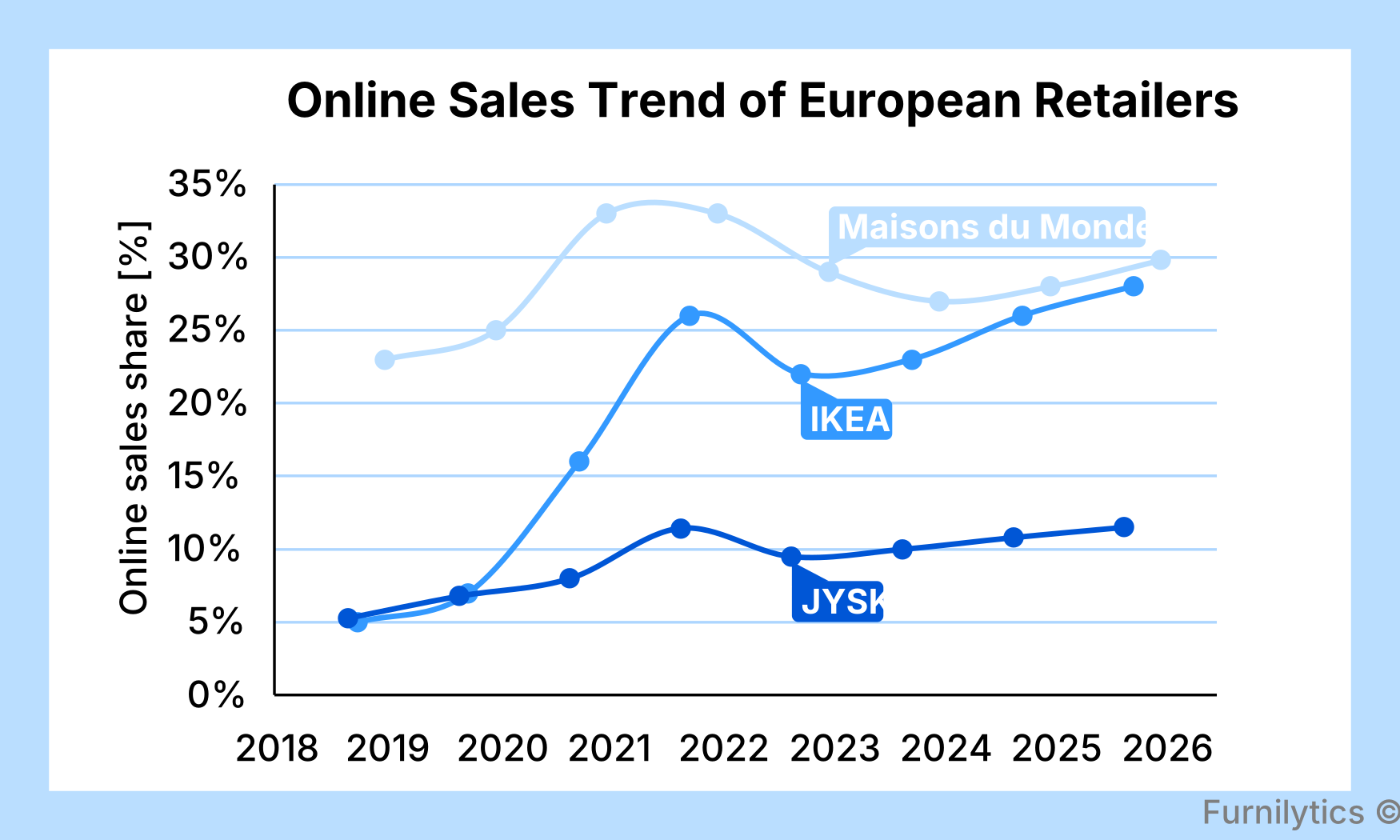
Online sales have become an increasingly important part of furniture retail in Europe, and recent years have marked a clear step change in digital adoption. The development shown for a selection of major players, including IKEA, JYSK, and Maisons du Monde, is indicative of a much broader market trend.
The COVID-19 period acted as a catalyst, triggering a rapid increase in online purchasing as store access was limited. Although online sales shares eased slightly once physical retail recovered, they did not revert to pre-pandemic levels. Instead, online penetration stabilised at a higher baseline and has since increased again, with recent years approaching the elevated levels seen during COVID.
While absolute online sales shares differ between retailers due to variations in business models and channel strategies, the direction of travel is consistent. Across the sector, online sales have increased significantly, confirming that digital channels now play a structurally larger role in European furniture retail.
Google Search Trends in Furniture Retail Demand
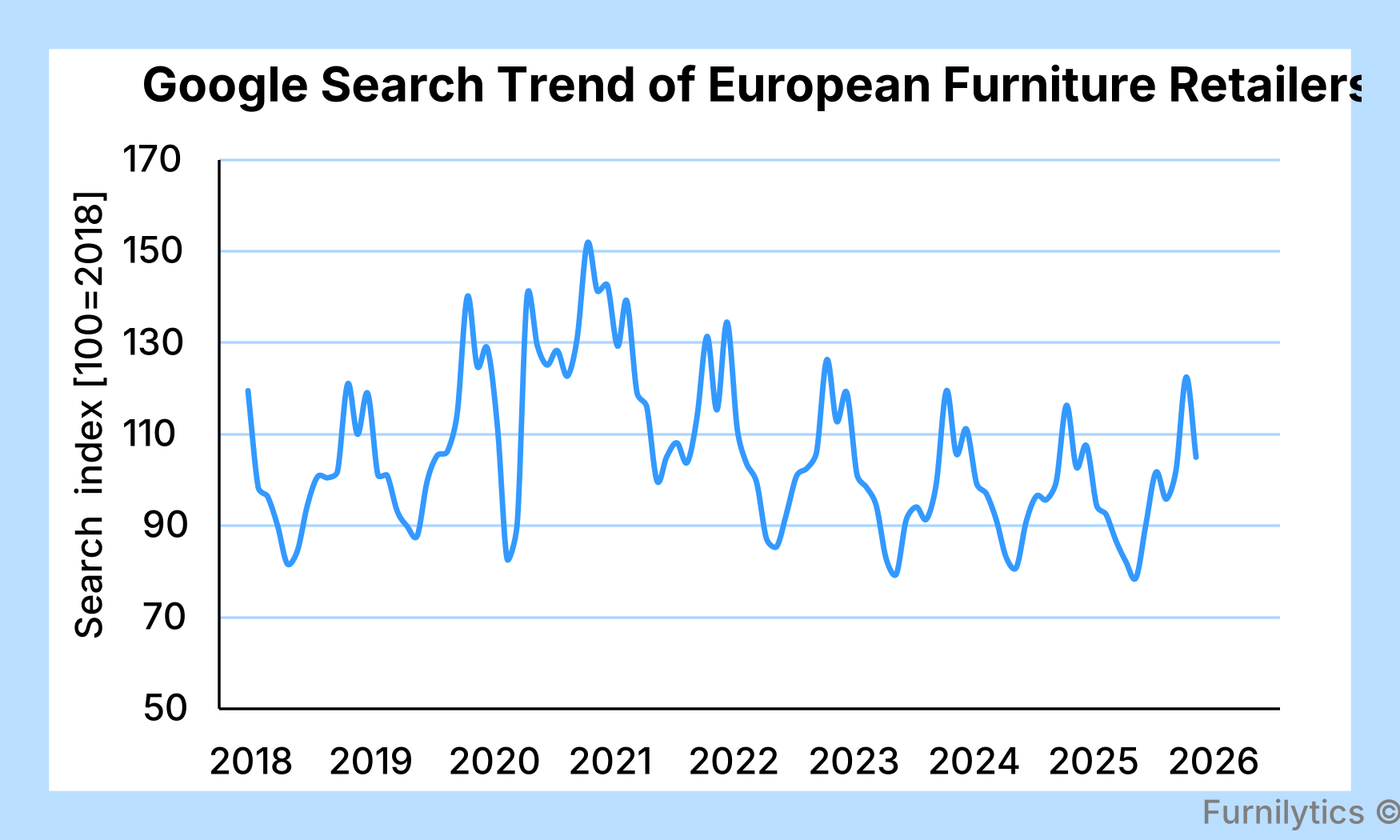
Search trends provide an early signal of consumer interest in furniture retail. The data shown reflects Google search activity for the websites of the eight largest furniture retailers in each country, aggregated across Germany, Poland, France, and Italy. The full list of retailers included in this analysis is provided in the methodology section at the end of the page.
During COVID, search interest rose sharply as consumers actively researched furniture while spending more time at home. Since then, search volumes have steadily declined from their pandemic highs. This normalisation was particularly visible throughout 2024 and into early 2025, when search levels fell back to roughly pre-COVID values, indicating a cooling in overall consumer interest after the exceptional pandemic period.
At the same time, this decline in search activity has not reversed the structural increase in online sales shares observed across major retailers. This suggests that while fewer consumers may be actively searching for furniture, a larger share of those who do engage are completing their journey online. From the second half of 2025 onward, search activity shows early signs of recovery, pointing to renewed interest that could further support online channels.
Rising Web Visitation in European Furniture Retail
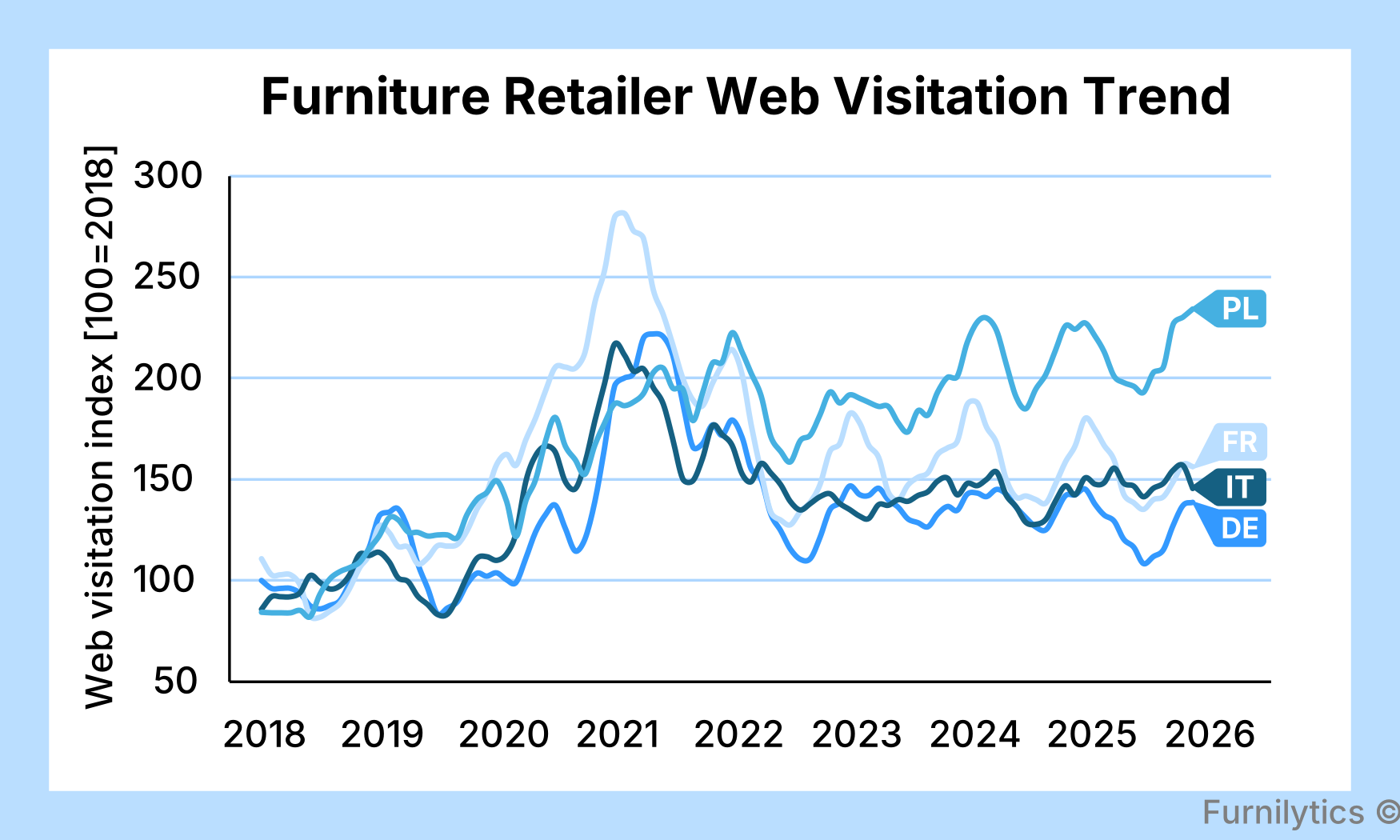
Web visitation data provides insight into consumer browsing behaviour prior to purchase. The figures shown are based on anonymised clickstream data. The analysis covers the same group of retailers as in the previous sections; the full list of companies is detailed in the methodology at the bottom of the page.
Across all markets, web visitation rose sharply during COVID, reflecting the sudden shift toward digital channels. France stands out in particular, with the strongest peak in online traffic during the pandemic period. While visitation declined after the reopening of physical stores, levels have remained structurally higher than before COVID.
Compared with 2018-2019, web browsing activity across the analysed countries is now roughly 40-50% higher. This points to a lasting change in shopping behaviour: consumers increasingly use retailer websites for inspiration, assortment comparison, and price checks, even when the final purchase may still take place offline. Online browsing has become a core part of the furniture shopping journey rather than a purely transactional channel.
Among the countries analysed, Poland shows the most pronounced increase in web visitation over time. This reflects not only rising digital engagement but also the stronger expansion of the Polish furniture retail market itself. In contrast, Germany and Italy show more moderate but still structurally elevated traffic levels, reinforcing the view that increased online browsing is a pan-European trend with varying intensity by market.
Web usage intensity across countries
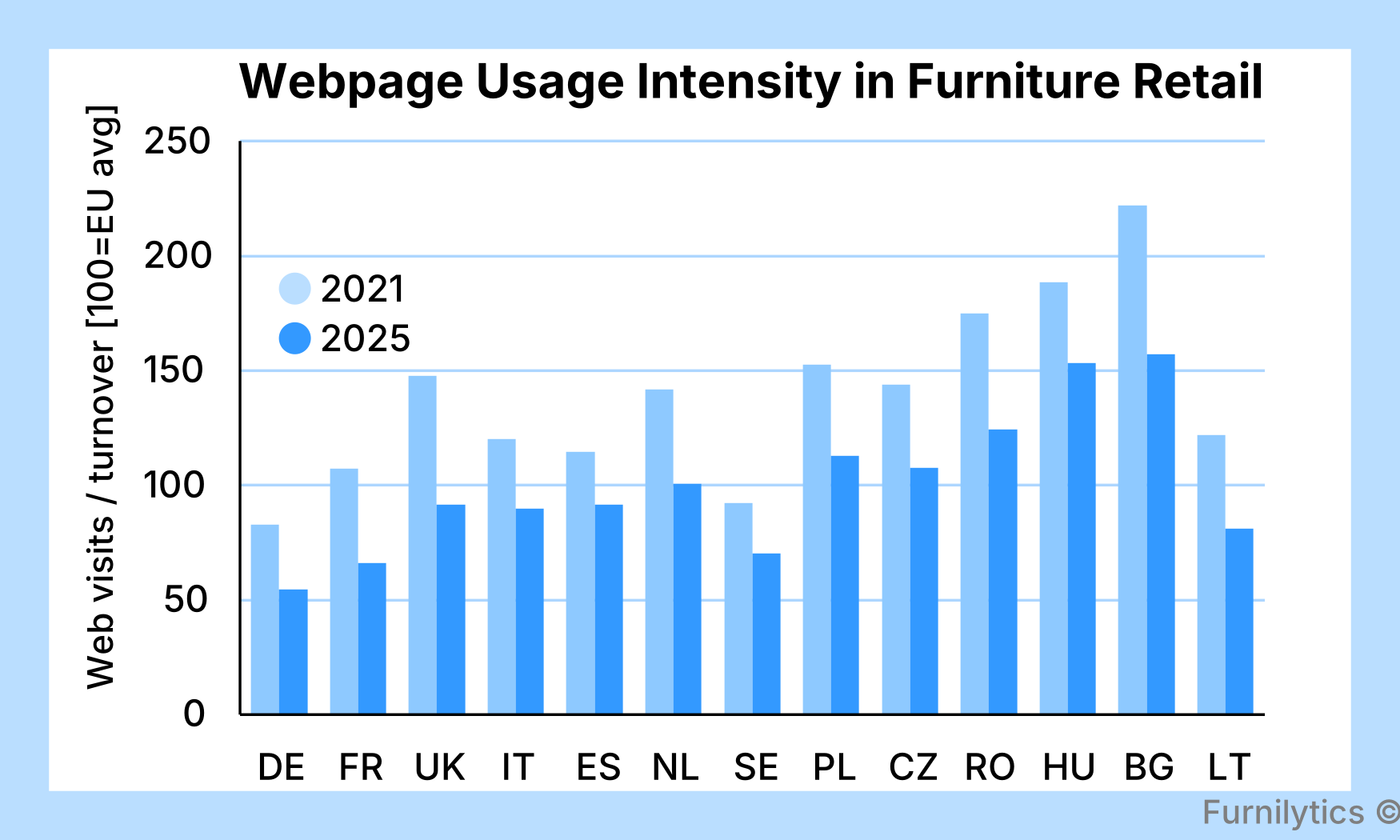
Web usage intensity is measured here as web visits relative to turnover, allowing a comparison of how intensively consumers rely on retailer websites across countries. To ensure consistency, the analysis focuses on IKEA and JYSK, which operate comparable store-based models across Europe.
Looking at 2025, the differences between countries are pronounced. Several Central and Eastern European markets show significantly higher web visits per unit of turnover, indicating heavier use of retailer websites for browsing, research, and decision-making. In contrast, larger and more mature Western European markets display lower web usage intensity, suggesting more efficient conversion from visits to sales, higher in-store reliance, or stronger brand-driven purchasing with less online exploration.
Comparing 2025 with 2021 highlights a second structural shift. Across nearly all countries, web usage intensity has declined since the COVID peak, when restricted store access drove unusually high levels of online browsing relative to sales. By 2025, this intensity has normalised, even though absolute web traffic and online sales remain elevated. This points to improved digital efficiency and a more balanced role of online channels within the overall furniture shopping journey.
Conclusion
The data indicates that COVID acted as an accelerator rather than a one-off disruption for digital furniture retail in Europe. Online sales shares increased sharply during the pandemic and have since stabilised at levels well above those observed before 2020, confirming that online purchasing now plays a structurally larger role across major retailers.
Search and browsing behaviour has normalised from the exceptional COVID peaks. Search interest declined steadily after the pandemic and returned to roughly pre-COVID levels during 2024 and early 2025, while web usage intensity also decreased as physical stores reopened. At the same time, absolute web visitation remains around 40–50% higher than before COVID, underlining that online browsing has become a standard part of the furniture shopping journey.
Importantly, search trends have started to increase again from the second half of 2025, suggesting a renewed rise in consumer interest. Combined with structurally higher online sales shares and elevated web visitation, this points to a stable but increasingly important role for digital channels in European furniture retail, with clear differences in digital intensity across countries and retailer models.
Sources:
Google Trends
Undisclosed web traffic provider
Maisons du Monde - annual reports
Inter IKEA Group - annual reports
Methodology & limitations:
Online sales share is sourced from company annual reports; for JYSK, it is reconstructed from publicly available company communications. Search interest is measured using Google Trends for all included retailers and weighted by each retailer’s 2025 webpage visits. Webpage visitation data is obtained from an external provider using anonymised clickstream data, estimates are cross-checked against Google search trends.
The following companies are included in these analytics:
Germany: Höffner, Home24, IKEA, JYSK, Mömax, POCO, Wayfair, Westwing, and XXXLutz.
France: Alinea, BUT, Conforama, Home24, IKEA, JYSK, La Redoute, Miliboo, Westwing, and Maisons du Monde.
Italy: Beliani, Conforama, IKEA, JYSK, Westwing, Maisons du Monde, Mondo Convenienza, and Sklum.
Poland: Agata Meble, Bodzio, Black Red White, IKEA, JYSK, Kler, Meble Wójcik, Szynaka Meble, and VOX.
Sales turnover data used to calculate webpage usage intensity is sourced from financial reports, the time frames are aligned fiscal years. All visitation results are subject to typical limitations of traffic data; therefore, the analysis is restricted to direct and search traffic to improve robustness by focusing on the most consistently measured channels across markets.