Particleboard Prices in Poland: Trade-Based Price Trends

Raw particleboard is a key input material for the European furniture industry, and changes in panel prices directly affect manufacturing costs across the sector. Poland, one of Europe’s largest furniture producers, is closely integrated into the Central European wood panel market through both domestic production and cross-border trade.

This analysis uses international trade data to examine how particleboard prices supplying the Polish market have evolved over time. By analysing export prices from Poland and its main supplier countries, it is possible to construct a market-based view of particleboard price trends. These prices are now also tracked as a Furnilytics indicator, allowing users to follow developments in the Polish particleboard market on an ongoing basis.

Import structure of the Polish particleboard market

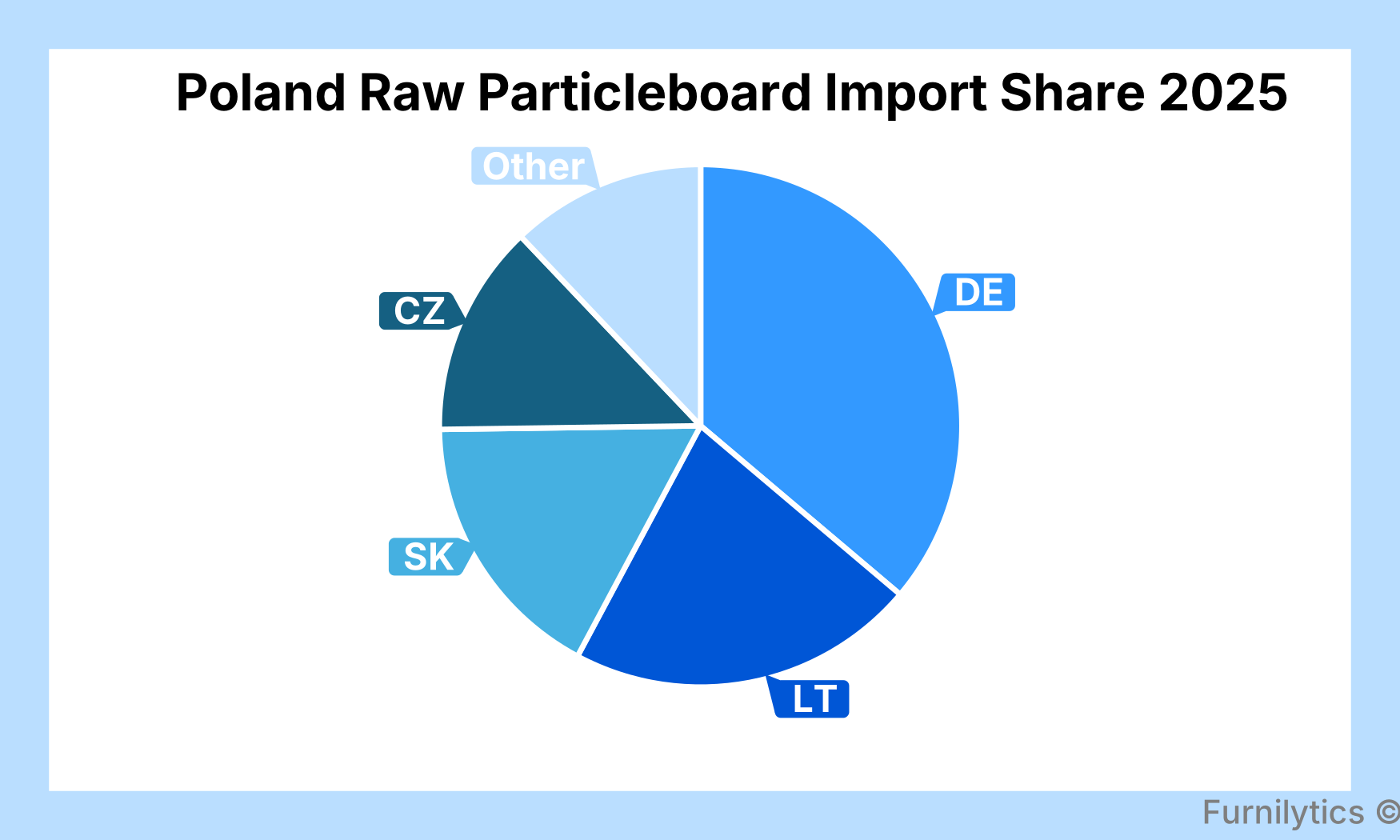
Poland’s particleboard prices are closely linked to trade within the Central European panel industry. Germany has consistently been the dominant supplier, accounting for roughly one third of imports in recent years, while Lithuania has steadily increased its role as a source of supply. Slovakia was historically another major partner, but its share has declined over time as the supplier structure gradually diversified.

This shift became more visible after 2022, when Lithuania and the Czech Republic increased their presence in the Polish market, reducing the relative weight of Slovak supply. Despite these changes, the overall structure remains strongly regional, with neighbouring producers supplying the majority of Poland’s particleboard imports.
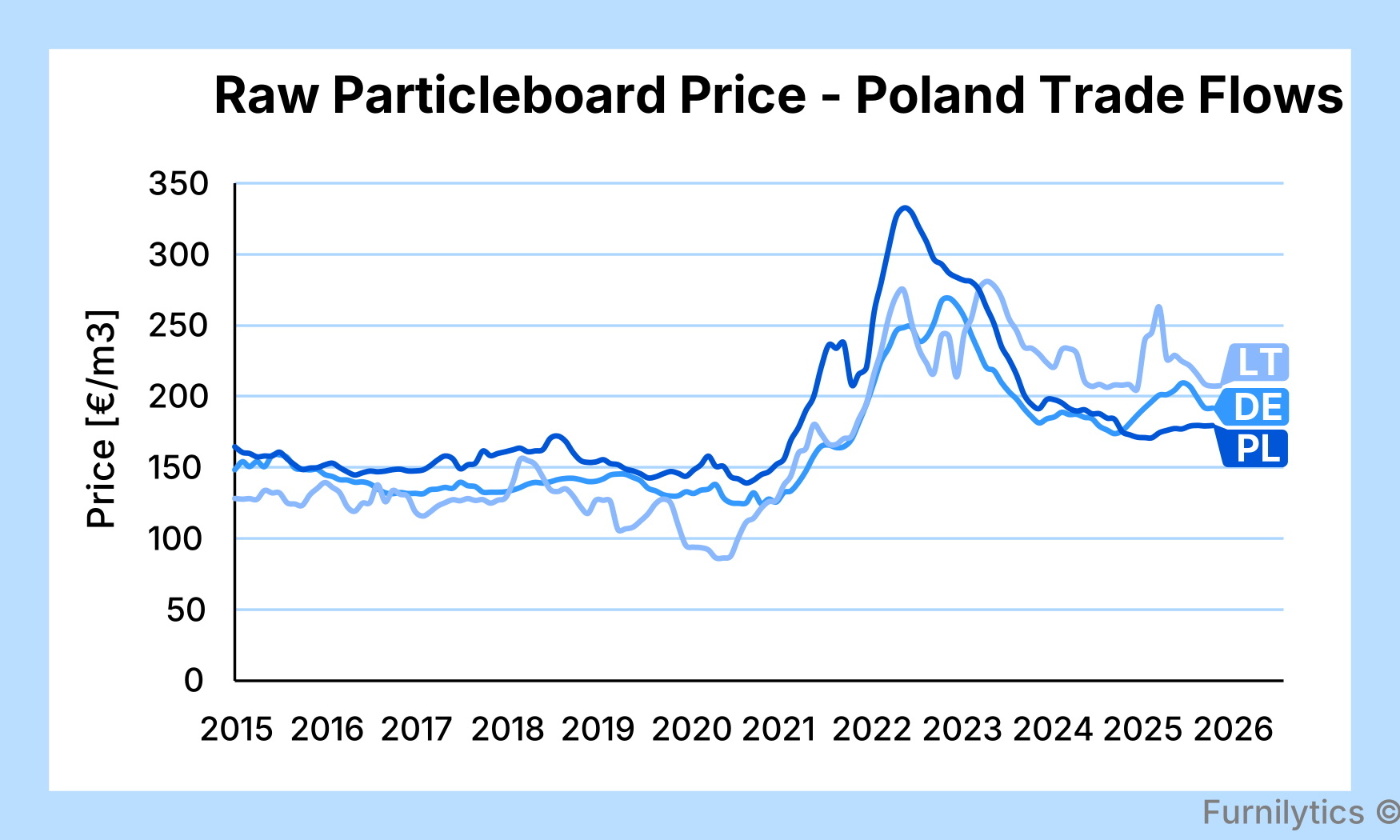
Trade-based price estimates indicate that raw particleboard prices supplying the Polish market remained relatively stable between 2015 and 2020, generally fluctuating in a range around €130–160 per m³. Export prices from Germany, Lithuania, and Poland itself moved largely in parallel during this period, suggesting broadly balanced supply and demand conditions within the regional panel market.

From 2021 onwards, prices increased rapidly across all suppliers, reflecting the broader surge in wood panel prices during the post-pandemic period. Export prices peaked during 2022, when Polish export prices temporarily exceeded €300 per m³, while other regional suppliers also reached historically elevated levels.

Since 2023, prices have gradually moderated as supply conditions improved and demand from furniture and construction markets weakened. By 2024–2025, export prices across the main suppliers converged again, generally stabilising at levels moderately above the pre-2020 range, with Lithuania showing somewhat higher and more volatile price movements.
Conclusion

Overall, Poland’s particleboard prices are closely shaped by trade within the Central European panel industry. The strong regional supplier structure means that export prices from neighbouring producers provide a useful signal of market developments. The sharp price surge in 2021–2022 and the subsequent normalisation since 2023 illustrate how closely the Polish market has followed broader cycles in the European wood panel industry.

To monitor these developments more closely, Furnilytics provides a live particleboard price indicator for Poland based on trade data, allowing users to track price movements across key suppliers over time. The indicator is available free of charge on the Furnilytics platform and is updated automatically as new trade data becomes available.

Sources:
Eurostat – Datasets

Methodology & limitations:
Prices are estimated using Eurostat international trade data (DS-045409) for raw particleboard (CN8 44101110). Monthly export values and quantities are converted to estimated volumes assuming a density of 650 kg/m³, and prices are calculated as value divided by volume (€/m³). To reduce volatility from small shipments, prices are computed using a centered three-month weighted moving average, where value and volume are first summed across the window before calculating the price.

Because the indicator is based on trade unit values, it may reflect changes in shipment composition (e.g., board thickness or quality) in addition to price movements. Export values are reported on an FOB basis, meaning they include domestic transport and handling costs within the exporting country but exclude international freight.

Last refresh:
Source:
Source description:

Get our latest data in your dashboard for FREE

No registration required

Particleboard Prices in Poland: Trade-Based Price Trends

Raw particleboard is a key input material for the European furniture industry, and changes in panel prices directly affect manufacturing costs across the sector. Poland, one of Europe’s largest furniture producers, is closely integrated into the Central European wood panel market through both domestic production and cross-border trade.

This analysis uses international trade data to examine how particleboard prices supplying the Polish market have evolved over time. By analysing export prices from Poland and its main supplier countries, it is possible to construct a market-based view of particleboard price trends. These prices are now also tracked as a Furnilytics indicator, allowing users to follow developments in the Polish particleboard market on an ongoing basis.

Import structure of the Polish particleboard market

Poland’s particleboard prices are closely linked to trade within the Central European panel industry. Germany has consistently been the dominant supplier, accounting for roughly one third of imports in recent years, while Lithuania has steadily increased its role as a source of supply. Slovakia was historically another major partner, but its share has declined over time as the supplier structure gradually diversified.

This shift became more visible after 2022, when Lithuania and the Czech Republic increased their presence in the Polish market, reducing the relative weight of Slovak supply. Despite these changes, the overall structure remains strongly regional, with neighbouring producers supplying the majority of Poland’s particleboard imports.

Trade-based price estimates indicate that raw particleboard prices supplying the Polish market remained relatively stable between 2015 and 2020, generally fluctuating in a range around €130–160 per m³. Export prices from Germany, Lithuania, and Poland itself moved largely in parallel during this period, suggesting broadly balanced supply and demand conditions within the regional panel market.

From 2021 onwards, prices increased rapidly across all suppliers, reflecting the broader surge in wood panel prices during the post-pandemic period. Export prices peaked during 2022, when Polish export prices temporarily exceeded €300 per m³, while other regional suppliers also reached historically elevated levels.

Since 2023, prices have gradually moderated as supply conditions improved and demand from furniture and construction markets weakened. By 2024–2025, export prices across the main suppliers converged again, generally stabilising at levels moderately above the pre-2020 range, with Lithuania showing somewhat higher and more volatile price movements.

Conclusion

Overall, Poland’s particleboard prices are closely shaped by trade within the Central European panel industry. The strong regional supplier structure means that export prices from neighbouring producers provide a useful signal of market developments. The sharp price surge in 2021–2022 and the subsequent normalisation since 2023 illustrate how closely the Polish market has followed broader cycles in the European wood panel industry.

To monitor these developments more closely, Furnilytics provides a live particleboard price indicator for Poland based on trade data, allowing users to track price movements across key suppliers over time. The indicator is available free of charge on the Furnilytics platform and is updated automatically as new trade data becomes available.

Sources:
Eurostat – Datasets

Methodology & limitations:
Prices are estimated using Eurostat international trade data (DS-045409) for raw particleboard (CN8 44101110). Monthly export values and quantities are converted to estimated volumes assuming a density of 650 kg/m³, and prices are calculated as value divided by volume (€/m³). To reduce volatility from small shipments, prices are computed using a centered three-month weighted moving average, where value and volume are first summed across the window before calculating the price.

Because the indicator is based on trade unit values, it may reflect changes in shipment composition (e.g., board thickness or quality) in addition to price movements. Export values are reported on an FOB basis, meaning they include domestic transport and handling costs within the exporting country but exclude international freight.