
Patterns in US Furniture Imports: Supply Shifts and Emerging Trade Pressures
US furniture imports have become an increasingly prominent topic, driven by shifting trade policies and evolving tariff regimes. To provide clarity amid these changes, this analysis draws exclusively on official US government data to examine both short- and long-term trends in furniture imports. Using consistent national sources also allows the identification of the latest import share for the year, offering a reliable benchmark for understanding how much of the US furniture market is supplied by foreign producers.
Top import countries
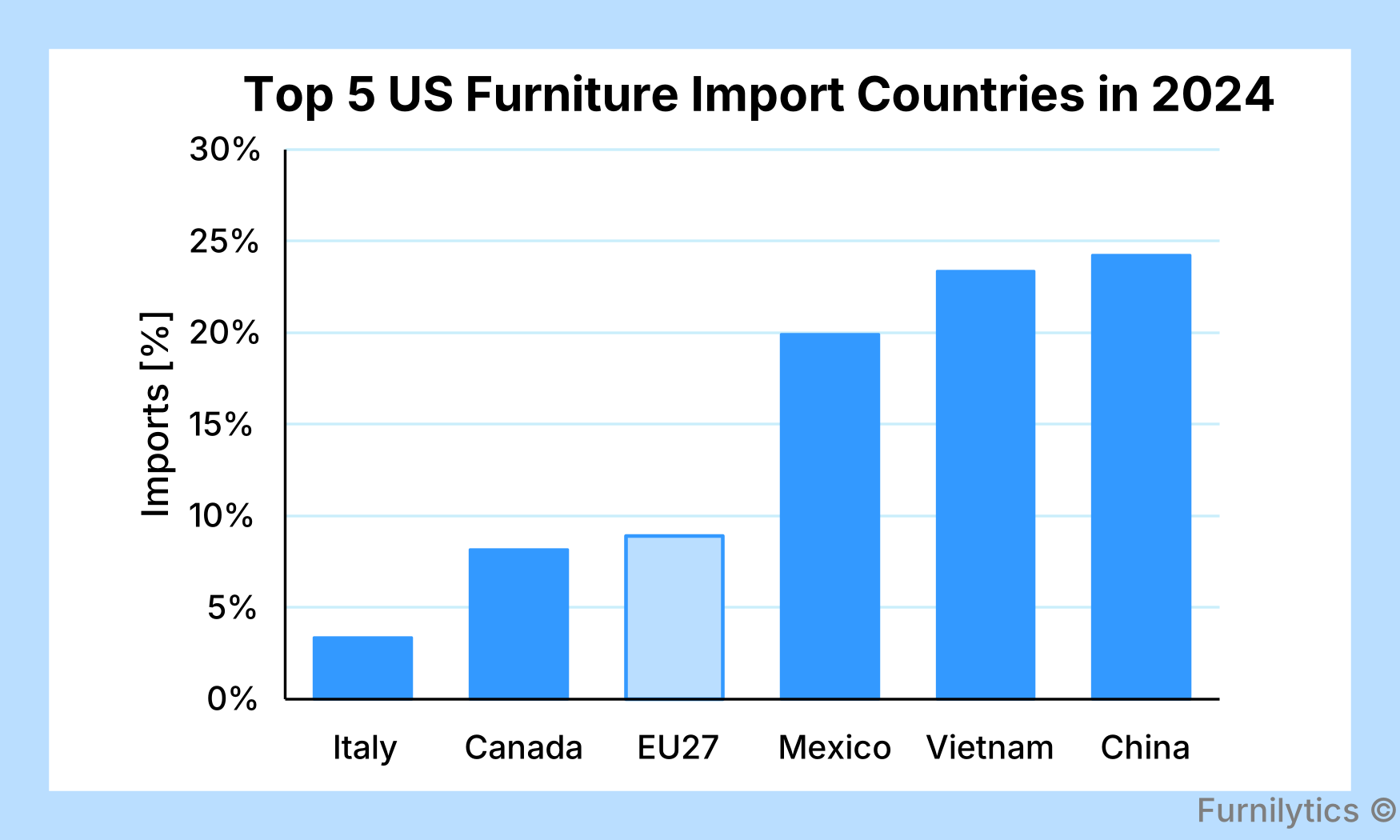
This is the first step in the analysis, providing a broad view of how US furniture imports are distributed across major trading partners. Vietnam and China stand out as the most significant suppliers, together accounting for a substantial share of all US furniture imports. In addition, neighbouring countries such as Mexico and Canada also play a major role, reflecting both geographic proximity and deeply integrated supply chains. The chart groups the EU27 as a single bloc to reflect its role as a unified customs area, but Italy is also shown separately due to its size.
Long-term import trend
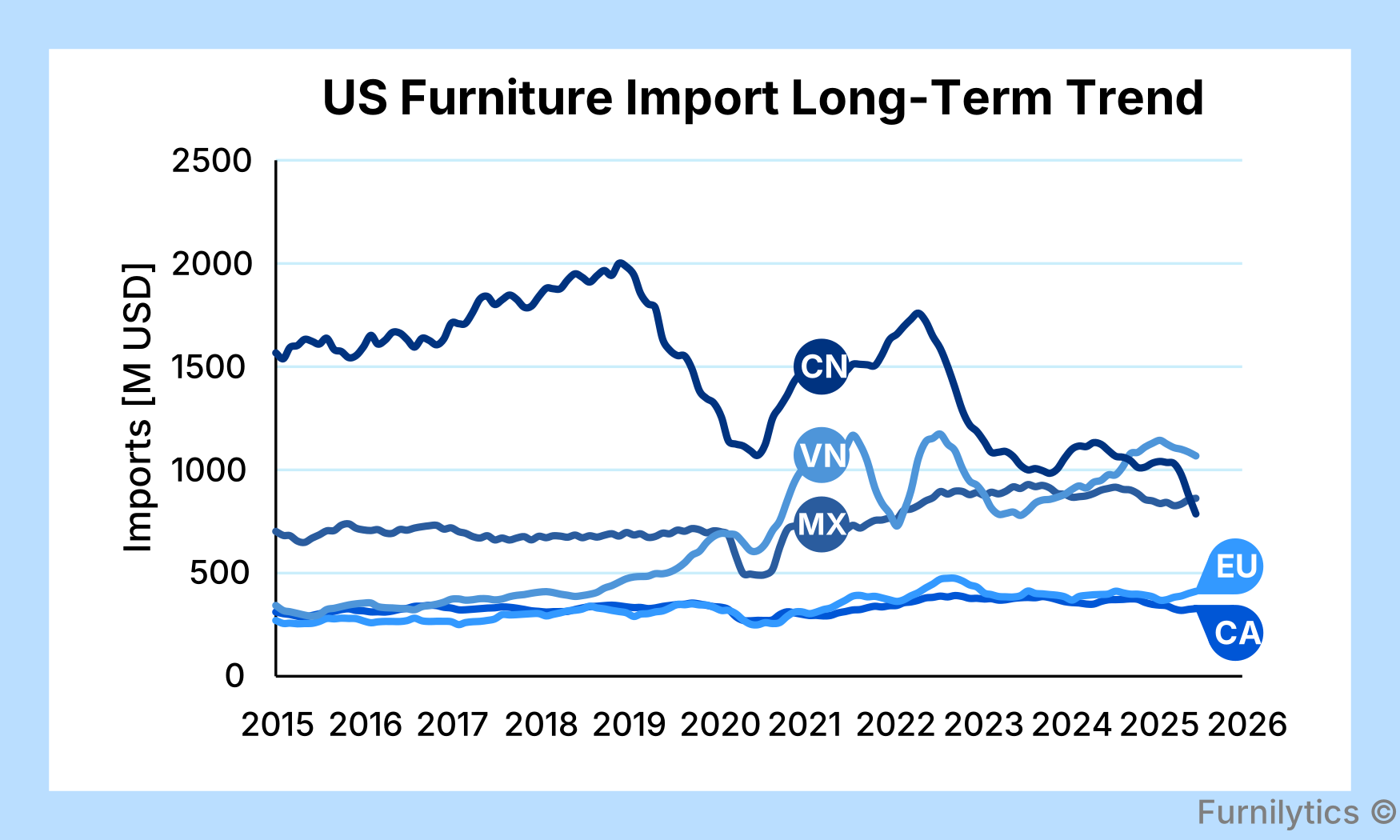
The next chart presents a 6-month moving average of monthly import values, smoothing short-term volatility to highlight underlying trends. The most striking development is the sustained decline in imports from China, which has allowed other suppliers—most notably Vietnam—to overtake China as the leading source of US furniture imports. In contrast, imports from Canada and the EU27 remain relatively stable over time, showing neither the sharp declines nor the rapid gains seen elsewhere.
Short-term import trend
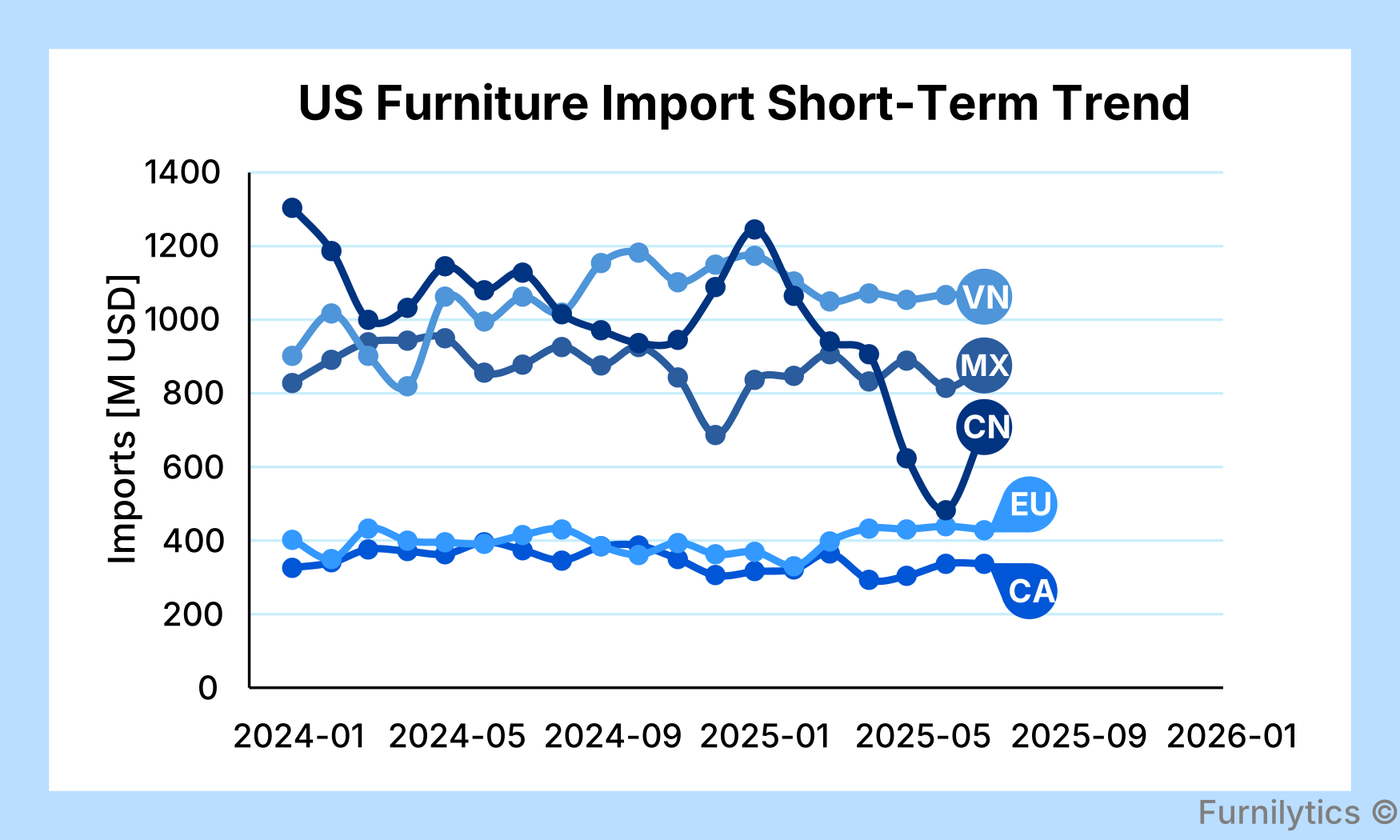
Now looking into the most recent period when the latest tariff rounds on furniture from Vietnam and China start to bite. The monthly data shows Chinese imports trending down from earlier peaks, while Vietnam holds onto its role as a leading supplier, reflecting the earlier shift in sourcing away from China even as both now face additional duties on key categories such as upholstered furniture and cabinets.
Recent briefings from the Home Furnishings Association on Section 232 furniture tariffs and US–Southeast Asia trade talks underline that these measures are still evolving, which helps explain the heightened volatility and uncertainty visible at the end of the series.
US import share
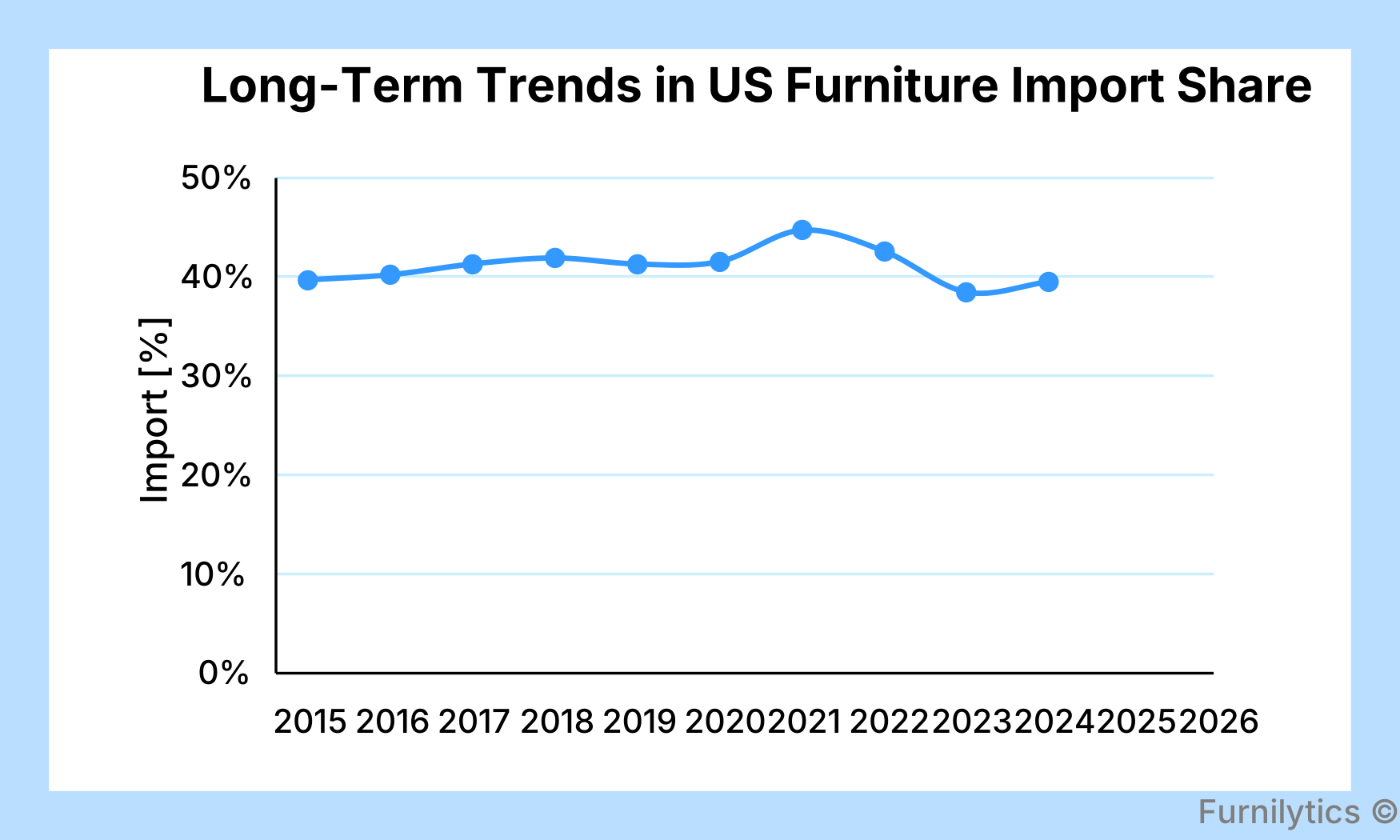
The import share of furniture in the US market shows a remarkably stable long-term pattern, despite year-to-year fluctuations. While the most recent data point for 2025 is not yet available, the existing series indicates that imported products consistently account for a large majority of total US furniture consumption.
Short-term movements—often tied to policy shifts, freight cycles, or supply-chain disruptions—create temporary rises or dips, but the overall trajectory has remained steady. This stability highlights the structural reliance of the US market on imported furniture, even as sourcing patterns shift across countries over time.
Conclusion
Overall, the findings point to a market that has undergone notable shifts in supplier composition but remains structurally stable in its broader import dependence. Long-term trends show steady reliance on foreign-made furniture, even as sourcing has gradually shifted from China toward Vietnam and, to a lesser extent, regional partners such as Mexico.
Recent tariff rounds have added short-term volatility, yet the underlying pattern suggests that imported furniture will continue to account for a substantial share of US consumption. Taken together, the data highlights a sector adapting to changing trade incentives rather than fundamentally reducing its exposure to global supply chains.
Sources:
US Bureau of Economic Analysis (BEA) ASM Furniture Production – NAICS 337
US Bureau of Economic Analysis (BEA) Gross Output – NAICS 337
US Census Bureau HS4 Imports / Exports 9401–9403
Methodology & limitations:
Import share for the US furniture market was estimated using official sources by combining Census trade data for HS 9401–9403 with domestic production data from the ASM /AIES series for NAICS 337. Apparent consumption was measured as domestic production plus imports minus exports, and import share as imports divided by apparent consumption, all in current dollars. Missing production years were filled using BEA GDP-by-Industry gross-output growth for NAICS 337, and results were compared against BEA Input–Output import ratios as a reasonableness check.
Key limitations include imperfect alignment between HS trade categories and NAICS production definitions, the inclusion of re-exports in total exports, limited availability of production data requiring interpolation, and the omission of inventory changes or price adjustments, which may introduce minor deviations from true market-level import penetration.