
Rising US Tariffs and Their Impact on Vietnam’s Furniture Exports
Recent US trade data are beginning to show the impact of rising tariffs on Vietnam’s furniture exports, building on the demand-side risks outlined in our earlier article, Vietnam’s Export-Driven Furniture Sector: Trends and Risks. As tariff effects become more visible in applied duty data, trade policy is emerging as a more important driver of export performance.
This shift matters given the central role of the US-Vietnam trade relationship in the furniture industry, with the US absorbing the majority of Vietnam’s furniture exports. The analysis below reviews recent export trends, examines the rise in applied US tariffs, highlights differences across furniture categories, and compares Vietnam’s tariff exposure with other major suppliers.
Vietnam Furniture Exports Face Growing US Trade Pressure
Vietnam’s furniture industry is highly export-dependent, with an estimated 82% of production sold abroad and the United States absorbing roughly 76% of total furniture exports. This concentration makes Vietnam particularly sensitive to changes in US trade conditions.
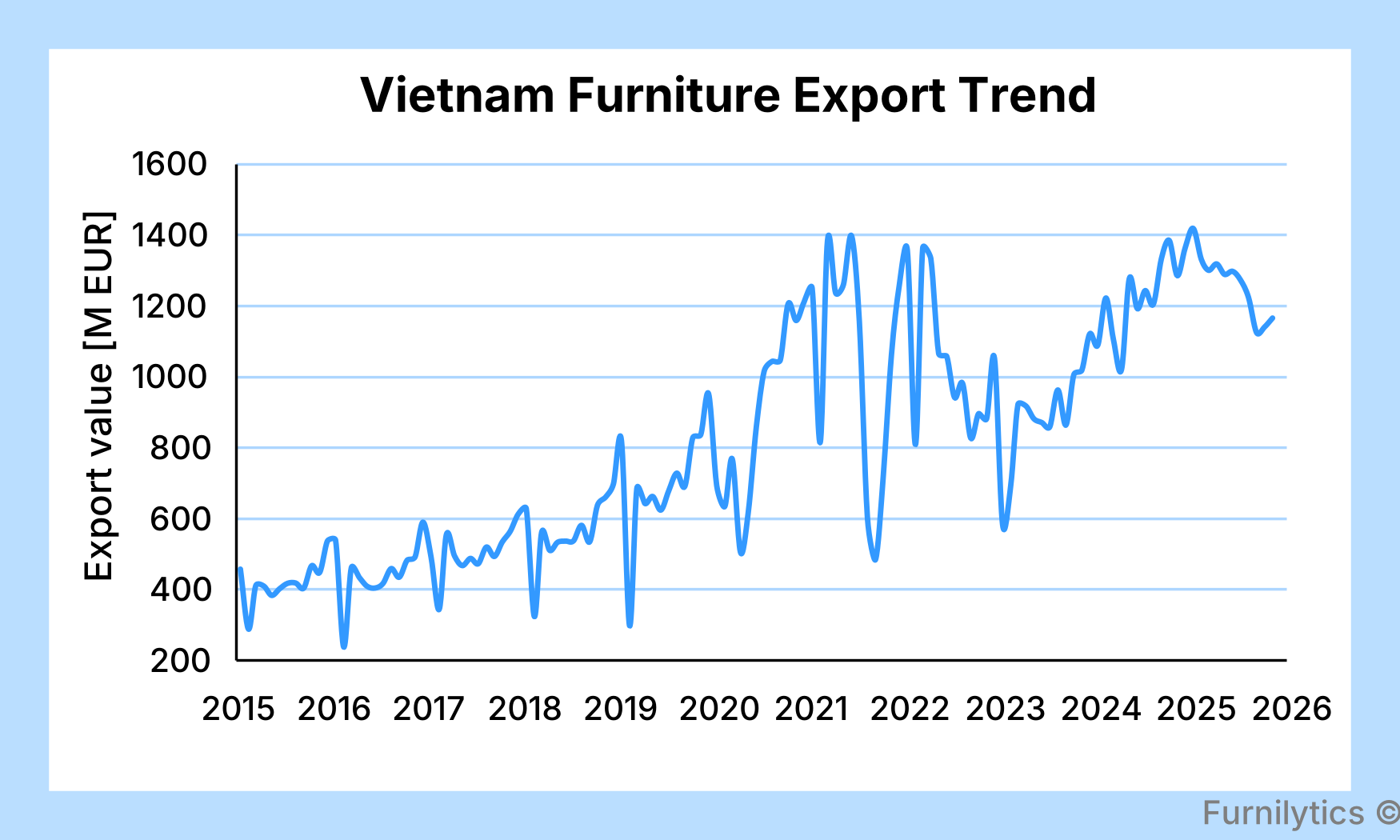
As shown in the chart, export values have softened in recent months. Between September and November, furniture exports declined by approximately 17% compared with the same period last year, marking a clear shift from the relative stability observed earlier in 2024. While the downturn remains moderate in absolute terms, its timing coincides with rising tariff exposure in the US. market, suggesting that trade frictions are beginning to weigh on export performance. This recent decline provides the context for the following sections, which examine how US tariff dynamics are increasingly shaping Vietnam’s furniture export outlook.
Applied US Tariff Rates on Vietnamese Furniture in 2025
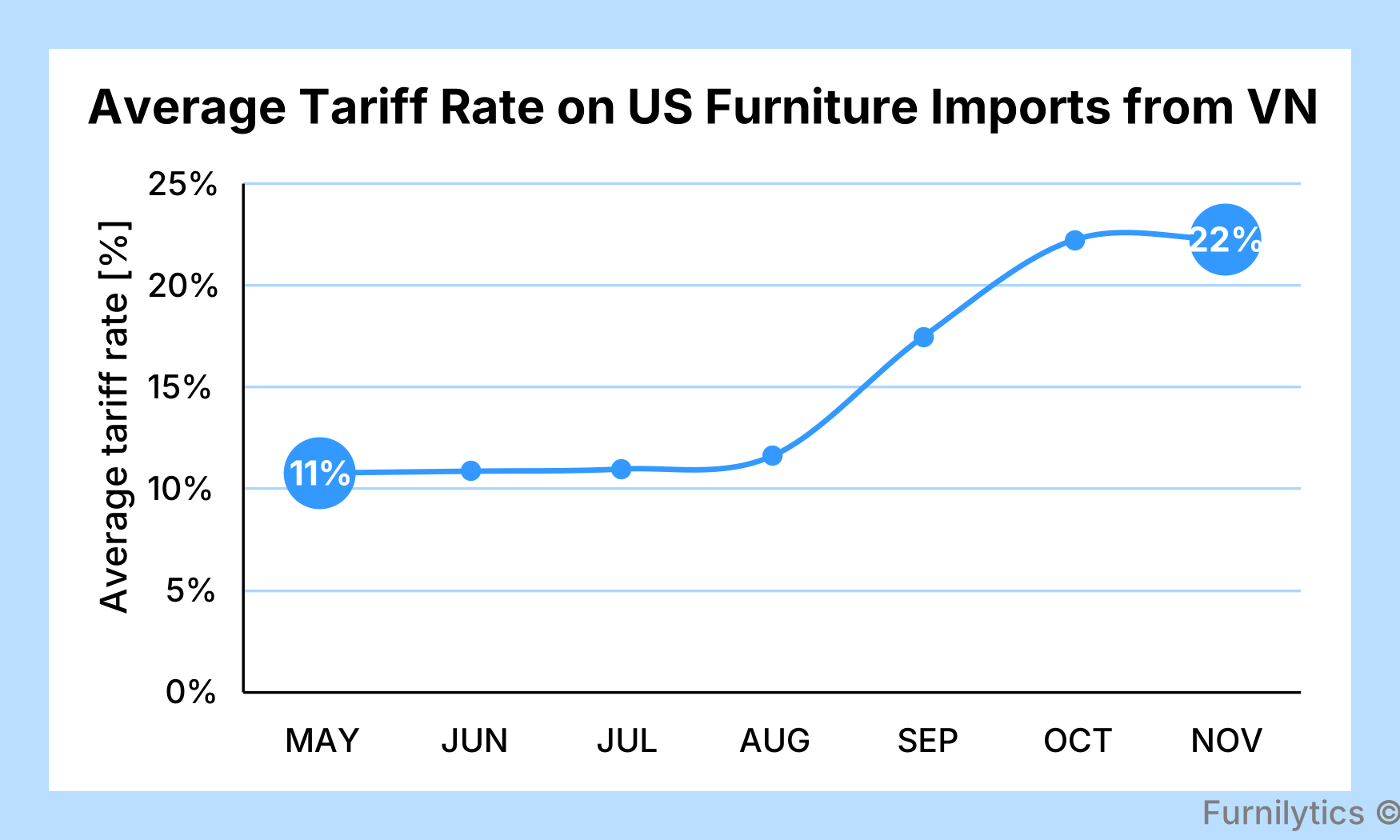
This section reviews the average tariff rate applied to dutiable US furniture imports from Vietnam, based on customs duties actually paid. From May through August, the average rate remained broadly stable at around 11%. Beginning in September, however, applied tariffs increased sharply, reaching approximately 22% by October and November. From June onward, nearly all Vietnamese furniture imports (around 98%) were dutiable, indicating that this increase reflects a higher tariff burden on the vast majority of shipments rather than a shift toward duty-free goods.
The observed rise in applied tariff rates aligns with US tariff actions unfolding over 2025. While broad reciprocal tariff measures affecting Vietnam were announced earlier in the year, these were initially suspended or adjusted and did not immediately translate into higher furniture duties. Tariffs affecting Vietnamese exports were expected to take effect later in the summer, around July-August 2025, as suspension periods ended. The most material shift for furniture imports occurred in October, when the United States introduced new Section 232 tariffs on wood and furniture products, including sofas, chairs, cabinets, and other furniture items, at rates of around 25%. This marked the point at which furniture-specific tariffs began to apply at scale, closely corresponding with the sharp rise in average applied tariff rates observed in the data. Planned tariff increases scheduled for January 2026 were subsequently delayed, leaving the 25% rate in place through the start of the year.
Tariff Exposure Across Furniture Categories
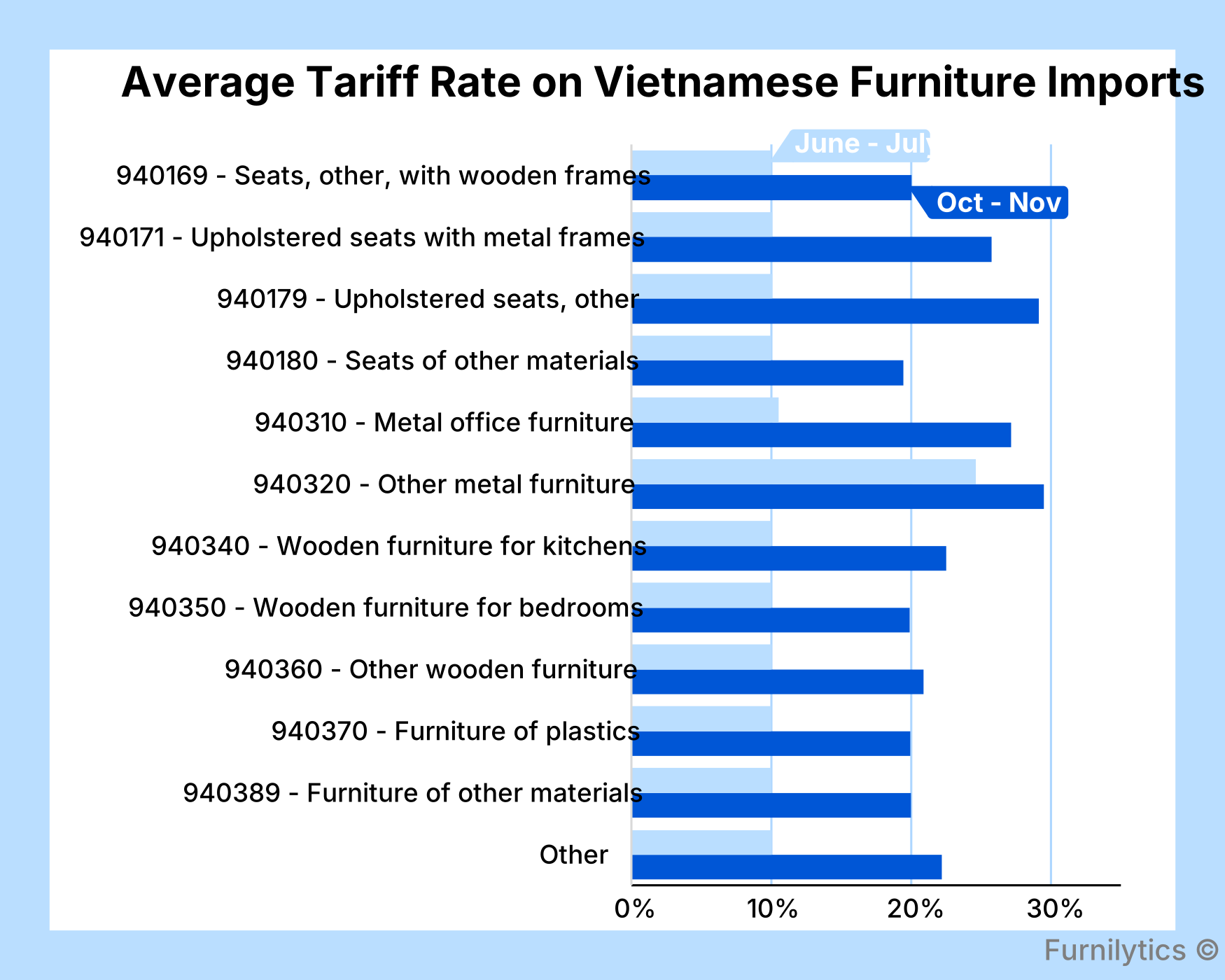
The rise in average tariff rates conceals substantial variation in tariff exposure across furniture categories, particularly between wood- and metal-based products. While applied tariffs increased broadly in October-November, the share of imports subject to duty diverged sharply by HS code.
In November, only around 13% of wooden kitchen furniture (HS 940340) imports were dutiable, while other wooden furniture (HS 940360) showed a higher but still partial dutiable share of roughly 75%. The residual “other” category also exhibited a low dutiable share of about 33%, suggesting that a significant portion of these products entered duty-free. As the latest month in the dataset, November may be subject to greater short-term variability related to reporting or timing.
By contrast, metal furniture categories remain consistently more exposed to tariffs. Both metal office furniture (HS 940310) and other metal furniture (HS 940320) show higher average tariff rates and a larger share of imports subject to duty. Overall, the data point to a clear material divide: metal furniture faces more uniform tariff exposure, while wooden and other furniture categories display more uneven and flexible duty treatment.
Comparing US Tariff Exposure Across Furniture Suppliers
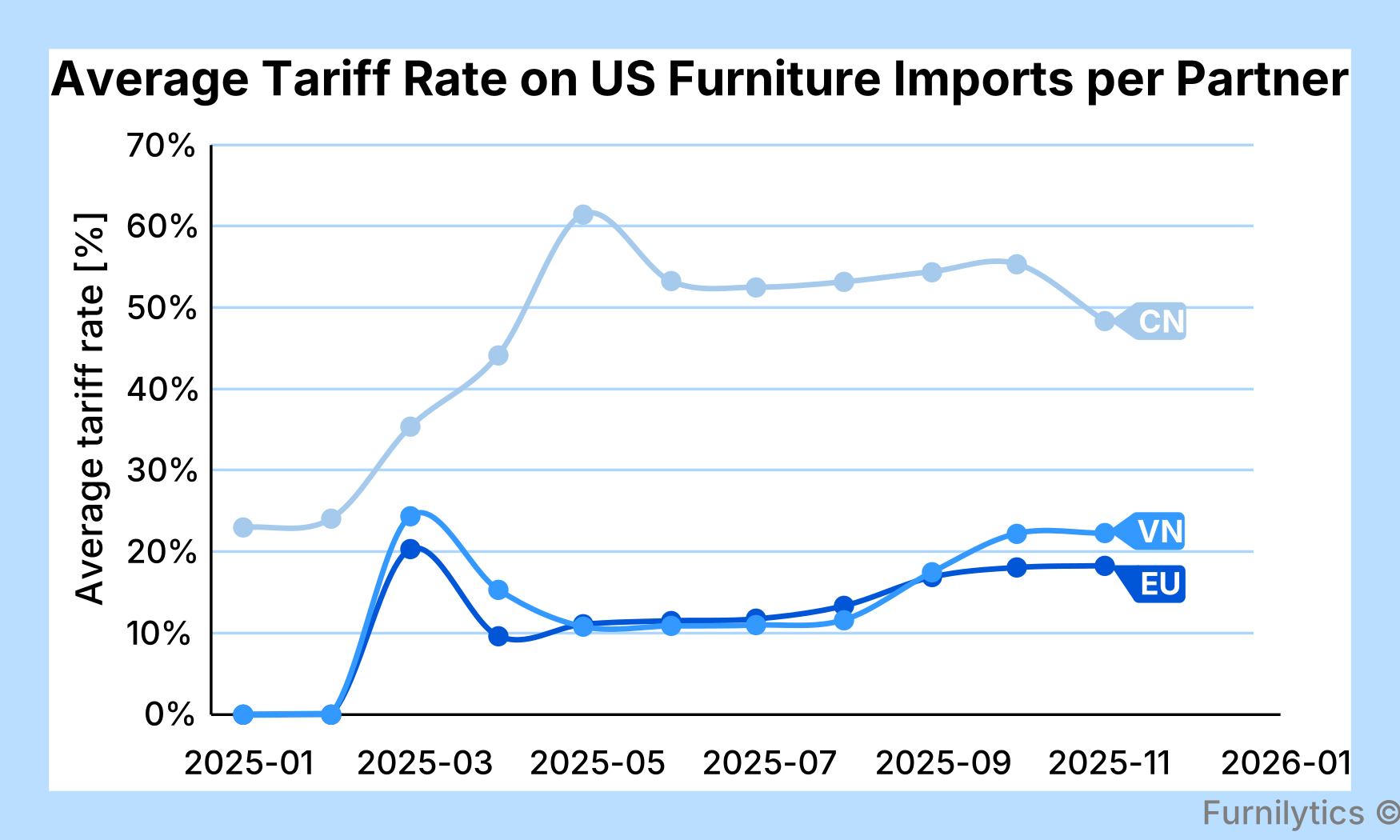
The comparison across partners highlights clear structural differences in US tariff treatment. China has faced persistently high furniture tariffs throughout the year, averaging around 52%, reflecting long-standing trade measures. By contrast, Vietnam and the EU move largely in sync, with average tariff rates rising over the course of 2025 and reaching around 21% by November.
Despite this convergence, exposure differs materially. In November, both EU and Chinese furniture imports remained almost fully dutiable (around 95%), while Vietnam’s dutiable share declined to roughly 60%, indicating that a larger share of Vietnamese furniture entered under duty-free or preferential tariff lines. This divergence should be interpreted with caution, as November represents the most recent data point.
A temporary peak in average tariff rates around March, particularly for Vietnam and the EU, likely reflects early-year shipment timing and tariff-line composition effects, such as front-loading ahead of anticipated policy changes. In March and April, the share of imports subject to duties remained relatively low - only about 3 to 25 % of total imports were dutiable - underscoring that much of trade initially entered under duty-free or preferential tariff lines. These distortions typically normalise as trade flows rebalance later in the year.
Conclusion
The analysis shows that rising US tariffs are increasingly visible in Vietnam’s furniture export data, coinciding with a recent slowdown in shipments to its most important market. While tariff pressure has intensified across 2025, its impact on Vietnam remains uneven, varying by furniture category and tariff line, and in some cases allowing for partial duty-free entry. Compared with other major suppliers, Vietnam’s tariff exposure now moves more closely with the EU than with China, but with greater short-term volatility. In this context, changes in the share of dutiable imports are an important indicator to monitor, as they signal how deeply tariffs are affecting actual trade flows. With the seasonal Lunar New Year slowdown approaching and further adjustments to US trade measures still under discussion, tariff exposure is likely to remain a key factor shaping Vietnam’s furniture export outlook in the months ahead.
Sources:
United Nations Comtrade - API
US Census Bureau HS Import - API
Methodology & limitations:
Same method was used a in previous Vietnam review. Export values were sourced from UN COMTRADE. Because Vietnam’s official export data lag by one year, partner countries’ import data were used for the most recent period, and trends from the top 15 partners were applied to estimate 2024 exports. Small differences may arise due to FOB (export) versus CIF (import) valuation methods.
Tariff rates and tariff exposure are derived from the U.S. Census Bureau’s International Trade time-series data for furniture imports (HS 9401–9403) from Vietnam. The average tariff rate on dutiable imports is calculated as customs duties divided by dutiable import value (CAL_DUT / DUT_VAL), while the share of imports subject to duty is measured as dutiable value divided by total customs value (DUT_VAL / CON_VAL), reflecting applied customs treatment rather than statutory tariff schedules.

Rising US Tariffs and Their Impact on Vietnam’s Furniture Exports
Recent US trade data are beginning to show the impact of rising tariffs on Vietnam’s furniture exports, building on the demand-side risks outlined in our earlier article, Vietnam’s Export-Driven Furniture Sector: Trends and Risks. As tariff effects become more visible in applied duty data, trade policy is emerging as a more important driver of export performance.
This shift matters given the central role of the US-Vietnam trade relationship in the furniture industry, with the US absorbing the majority of Vietnam’s furniture exports. The analysis below reviews recent export trends, examines the rise in applied US tariffs, highlights differences across furniture categories, and compares Vietnam’s tariff exposure with other major suppliers.
Vietnam Furniture Exports Face Growing US Trade Pressure
Vietnam’s furniture industry is highly export-dependent, with an estimated 82% of production sold abroad and the United States absorbing roughly 76% of total furniture exports. This concentration makes Vietnam particularly sensitive to changes in US trade conditions.
As shown in the chart, export values have softened in recent months. Between September and November, furniture exports declined by approximately 17% compared with the same period last year, marking a clear shift from the relative stability observed earlier in 2024. While the downturn remains moderate in absolute terms, its timing coincides with rising tariff exposure in the US. market, suggesting that trade frictions are beginning to weigh on export performance. This recent decline provides the context for the following sections, which examine how US tariff dynamics are increasingly shaping Vietnam’s furniture export outlook.
Applied US Tariff Rates on Vietnamese Furniture in 2025
This section reviews the average tariff rate applied to dutiable US furniture imports from Vietnam, based on customs duties actually paid. From May through August, the average rate remained broadly stable at around 11%. Beginning in September, however, applied tariffs increased sharply, reaching approximately 22% by October and November. From June onward, nearly all Vietnamese furniture imports (around 98%) were dutiable, indicating that this increase reflects a higher tariff burden on the vast majority of shipments rather than a shift toward duty-free goods.
The observed rise in applied tariff rates aligns with US tariff actions unfolding over 2025. While broad reciprocal tariff measures affecting Vietnam were announced earlier in the year, these were initially suspended or adjusted and did not immediately translate into higher furniture duties. Tariffs affecting Vietnamese exports were expected to take effect later in the summer, around July-August 2025, as suspension periods ended. The most material shift for furniture imports occurred in October, when the United States introduced new Section 232 tariffs on wood and furniture products, including sofas, chairs, cabinets, and other furniture items, at rates of around 25%. This marked the point at which furniture-specific tariffs began to apply at scale, closely corresponding with the sharp rise in average applied tariff rates observed in the data. Planned tariff increases scheduled for January 2026 were subsequently delayed, leaving the 25% rate in place through the start of the year.
Tariff Exposure Across Furniture Categories
The rise in average tariff rates conceals substantial variation in tariff exposure across furniture categories, particularly between wood- and metal-based products. While applied tariffs increased broadly in October-November, the share of imports subject to duty diverged sharply by HS code.
In November, only around 13% of wooden kitchen furniture (HS 940340) imports were dutiable, while other wooden furniture (HS 940360) showed a higher but still partial dutiable share of roughly 75%. The residual “other” category also exhibited a low dutiable share of about 33%, suggesting that a significant portion of these products entered duty-free. As the latest month in the dataset, November may be subject to greater short-term variability related to reporting or timing.
By contrast, metal furniture categories remain consistently more exposed to tariffs. Both metal office furniture (HS 940310) and other metal furniture (HS 940320) show higher average tariff rates and a larger share of imports subject to duty. Overall, the data point to a clear material divide: metal furniture faces more uniform tariff exposure, while wooden and other furniture categories display more uneven and flexible duty treatment.
Comparing US Tariff Exposure Across Furniture Suppliers
The comparison across partners highlights clear structural differences in US tariff treatment. China has faced persistently high furniture tariffs throughout the year, averaging around 52%, reflecting long-standing trade measures. By contrast, Vietnam and the EU move largely in sync, with average tariff rates rising over the course of 2025 and reaching around 21% by November.
Despite this convergence, exposure differs materially. In November, both EU and Chinese furniture imports remained almost fully dutiable (around 95%), while Vietnam’s dutiable share declined to roughly 60%, indicating that a larger share of Vietnamese furniture entered under duty-free or preferential tariff lines. This divergence should be interpreted with caution, as November represents the most recent data point.
A temporary peak in average tariff rates around March, particularly for Vietnam and the EU, likely reflects early-year shipment timing and tariff-line composition effects, such as front-loading ahead of anticipated policy changes. In March and April, the share of imports subject to duties remained relatively low - only about 3 to 25 % of total imports were dutiable - underscoring that much of trade initially entered under duty-free or preferential tariff lines. These distortions typically normalise as trade flows rebalance later in the year.
Conclusion
The analysis shows that rising US tariffs are increasingly visible in Vietnam’s furniture export data, coinciding with a recent slowdown in shipments to its most important market. While tariff pressure has intensified across 2025, its impact on Vietnam remains uneven, varying by furniture category and tariff line, and in some cases allowing for partial duty-free entry. Compared with other major suppliers, Vietnam’s tariff exposure now moves more closely with the EU than with China, but with greater short-term volatility. In this context, changes in the share of dutiable imports are an important indicator to monitor, as they signal how deeply tariffs are affecting actual trade flows. With the seasonal Lunar New Year slowdown approaching and further adjustments to US trade measures still under discussion, tariff exposure is likely to remain a key factor shaping Vietnam’s furniture export outlook in the months ahead.
Sources:
United Nations Comtrade - API
US Census Bureau HS Import - API
Methodology & limitations:
Same method was used a in previous Vietnam review. Export values were sourced from UN COMTRADE. Because Vietnam’s official export data lag by one year, partner countries’ import data were used for the most recent period, and trends from the top 15 partners were applied to estimate 2024 exports. Small differences may arise due to FOB (export) versus CIF (import) valuation methods.
Tariff rates and tariff exposure are derived from the U.S. Census Bureau’s International Trade time-series data for furniture imports (HS 9401–9403) from Vietnam. The average tariff rate on dutiable imports is calculated as customs duties divided by dutiable import value (CAL_DUT / DUT_VAL), while the share of imports subject to duty is measured as dutiable value divided by total customs value (DUT_VAL / CON_VAL), reflecting applied customs treatment rather than statutory tariff schedules.