
Vietnam’s Export-Driven Furniture Sector: Trends and Risks
This article builds on our earlier analysis — “Patterns in US Furniture Imports: Supply Shifts and Emerging Trade Pressures” — which documented how the United States has increasingly turned to Vietnam as a top furniture supplier.
In that context, we now shift perspective to Vietnam itself, exploring how export demand (especially from the US) shapes its furniture industry. By examining production levels, export shares, trade-partner concentrations and producer-price trends, this report sheds light on how deeply Vietnam’s furniture output is linked to external demand — and how vulnerabilities such as tariffs, global shocks or price pressures may ripple back to the producers themselves.
Exports Driving Vietnam’s Furniture Output
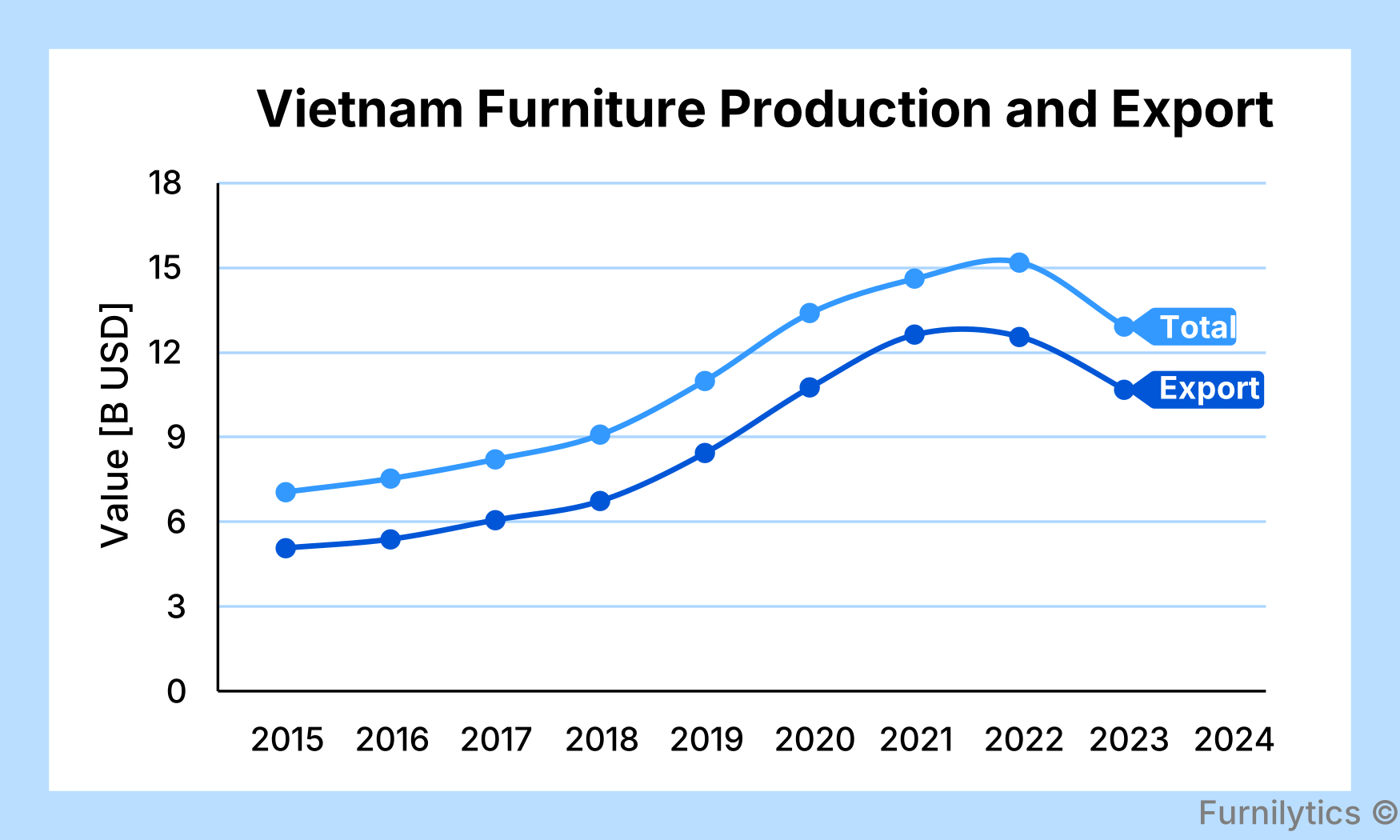
Vietnam’s furniture industry is highly export-reliant, with imports remaining very low at around USD 0.6 billion per year. The export share of production has increased from about 72% a decade ago to roughly 82% today, where it appears to have stabilized. The trend shown in the graph highlights how export growth has consistently outpaced domestic production. At first glance, 2024 appears to mark a slight decline from the earlier peak, but—as explained in the next paragraph—the most recent data indicate a strong renewed upward trend following 2023.
Furniture Export Trends of Vietnam
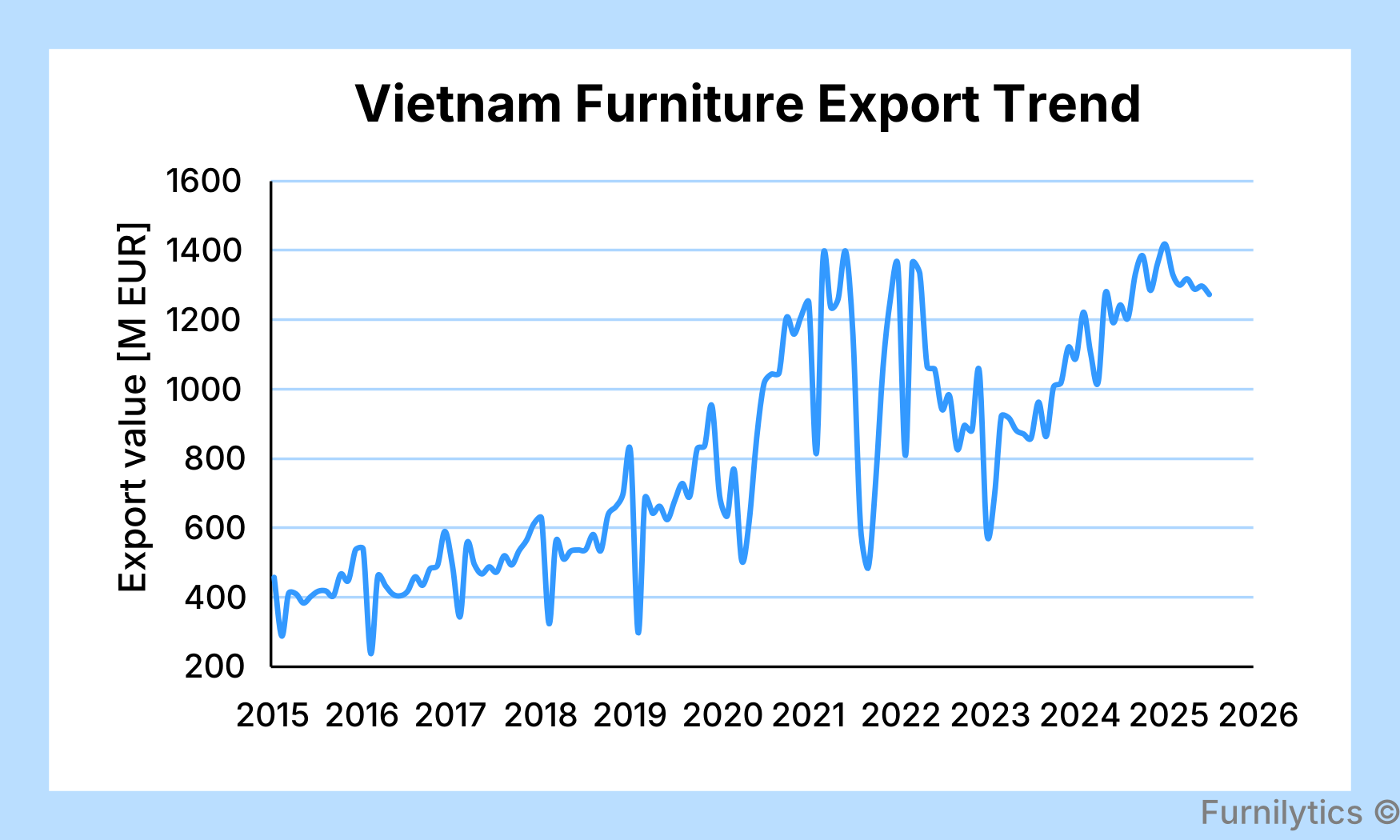
Vietnam’s furniture export performance shows a clear long-term growth trajectory, but with several distinct disruptions. The sharp dip in August 2021 aligns with the Delta wave and the strict lockdowns imposed in key industrial provinces, briefly halting production and logistics. After conditions normalised, exports rebounded strongly through 2022 and especially in late 2023, reflecting a broad recovery in global demand.
However, the most recent months of 2025 show renewed softness, likely linked to the impact of new U.S. tariff measures and a temporary cooling of orders. Despite these fluctuations, the broader pattern remains one of structural expansion, with exports consistently recovering after shocks and maintaining their role as the primary engine of Vietnam’s furniture industry.
A Tightening Vietnam–US Furniture Trade Link
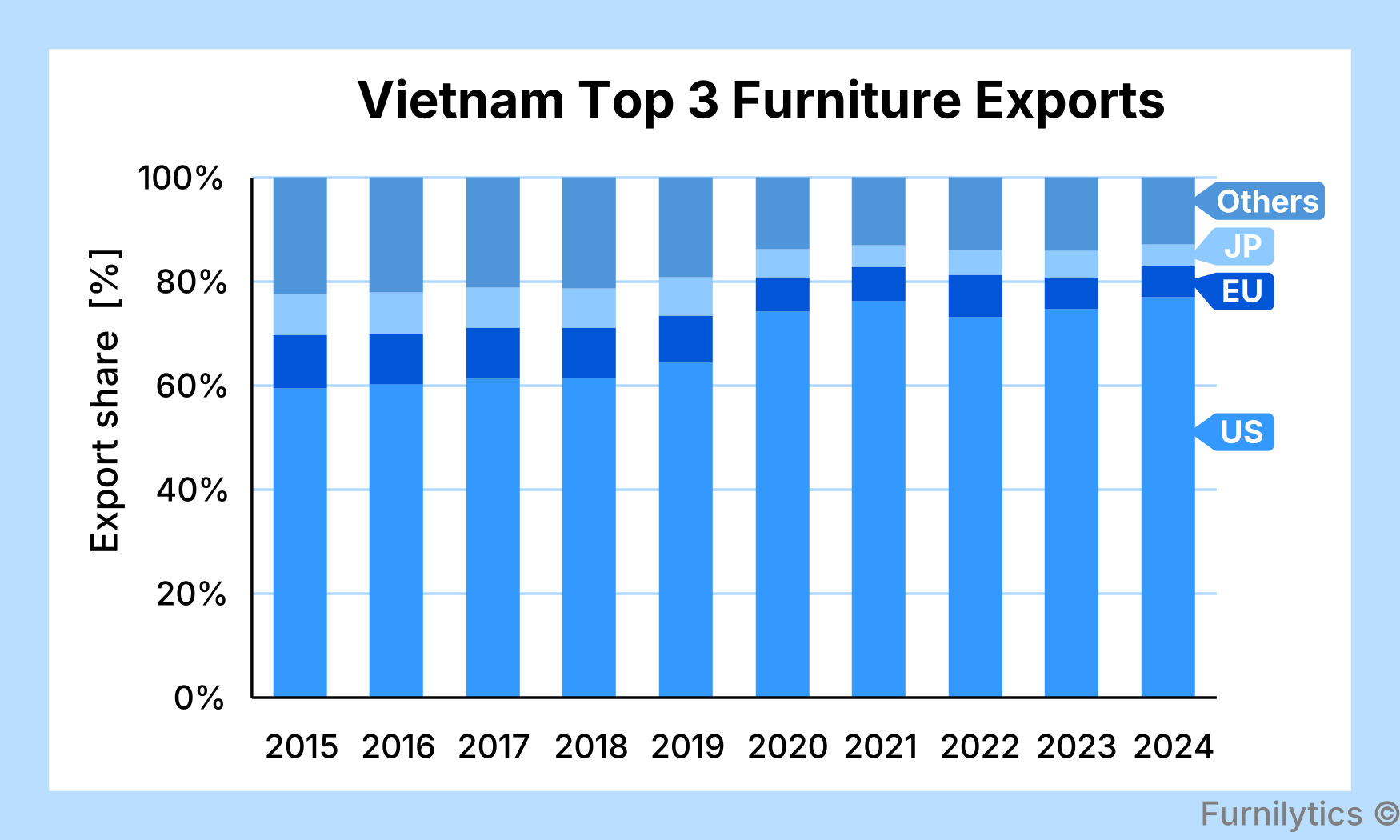
The chart underlines how deeply Vietnam’s furniture industry depends on the US market: exports to the US clearly dominate, far outweighing any other single destination and rising over time to anchor Vietnam’s overall export growth. This high concentration means that shifts in US demand, tariffs, or logistics conditions are transmitted almost directly into Vietnam’s factories and employment.
At the same time, as discussed in the earlier US import analysis, the sourcing pattern is now two-way: the US has gradually shifted away from China and become structurally more reliant on Vietnam as a leading furniture supplier, rather than reducing its overall dependence on imports.
Together, the chart and previous findings point to a tight, mutually reinforcing linkage—Vietnam relies on the US as its key outlet, and the US increasingly relies on Vietnam to keep its furniture shelves stocked.
Relative Cost Stability in Vietnam’s Furniture PPI
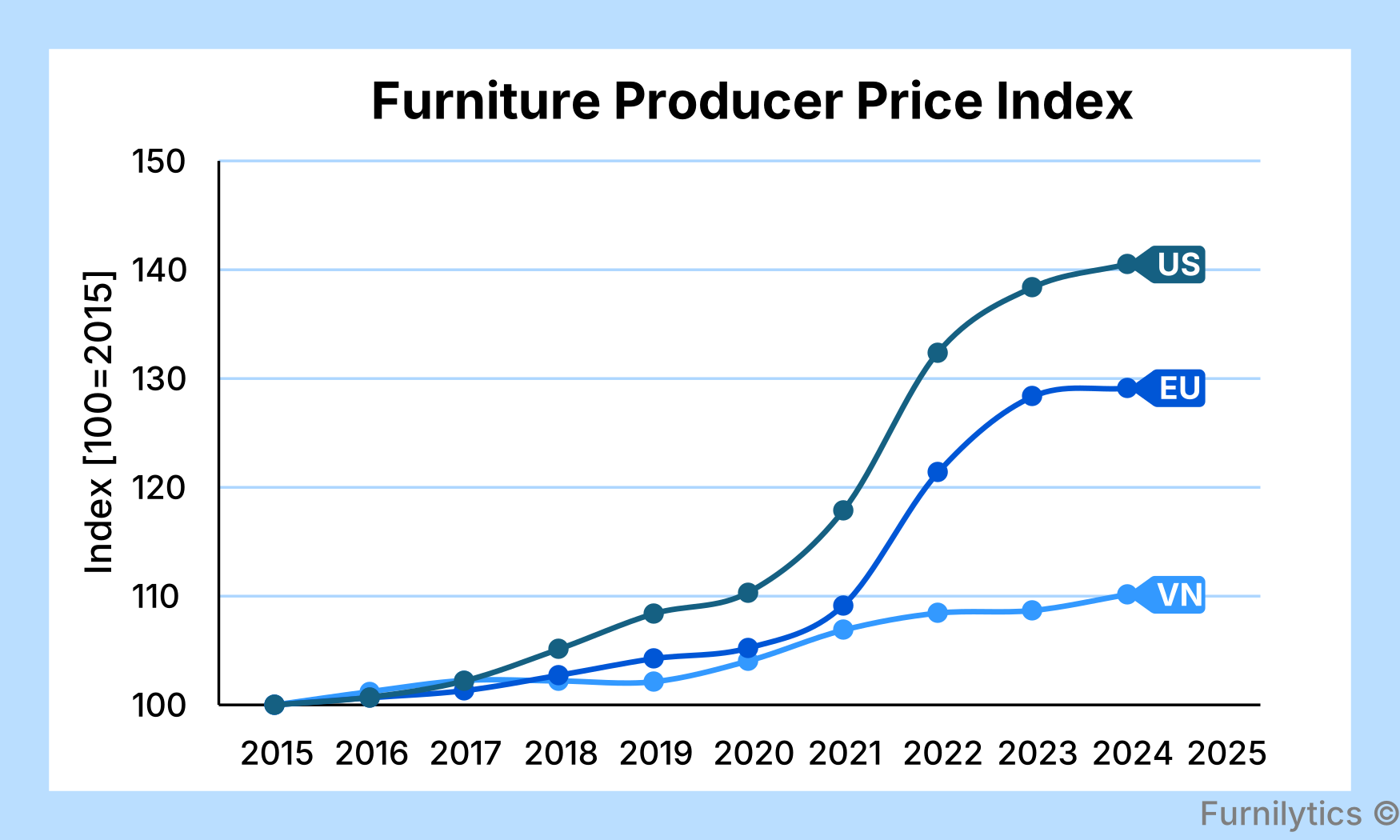
Vietnam’s PPI pattern broadly echoes movements in the US and EU, but with noticeably smaller swings, hinting that Vietnam’s cost base has been more stable than that of its major destination markets. This relative steadiness may help explain why buyers have continued shifting toward Vietnam when costs rose elsewhere. At the same time, the bumps and pauses in the Vietnamese series—especially around global disruptions—suggest that the industry still feels external pressure quickly. Taken together with earlier export trends, the PPI lines hint at a system where Vietnam’s competitiveness is attractive, but also vulnerable to shifts in global demand and policy.
Conclusion
Overall, the data paints a picture of a furniture industry that has become structurally export-driven, deeply intertwined with shifts in global demand and increasingly anchored by the US market. Vietnam’s rising export share, rapid rebounds after shocks, and relatively stable producer prices have all contributed to its growing role in the global furniture supply chain. Yet the recent softening in 2025 and the industry’s sensitivity to policy changes and external disruptions show that this success also comes with heightened exposure. As global conditions evolve, Vietnam’s competitiveness will remain a key strength—but one that depends on its ability to adapt to the same international forces that have fuelled its growth.
Sources:
General Statistics Office of Viet Nam (NSO) - Statistical data, Monthly report & API
United Nations Comtrade - API
Eurostat Producer Price in Industry - sts_inpp_a
BLS Producer Price Index per Industry - FRED PCU337337
United Nations Industrial Development Organization - UNIDO INSTAT V4
Methodology & limitations:
Annual production values (turnover under ISIC/VSIC 31) were taken from Vietnam’s NSO, and export data for HS 9401–9403 were sourced from UN COMTRADE. Turnover figures were cross-checked with UNIDO “value added,” and export values were validated against partner-country import reports. Because ISIC 31 and HS 9401–9403 differ slightly in product coverage, some definitional mismatch may occur.
Due to a one-year lag in Vietnam’s official export reporting, partner import data were used to fill the latest period, with trends from the top 15 partners applied to extrapolate 2024. Minor discrepancies are expected from FOB (exports) versus CIF (imports) valuation.
US and EU PPIs were taken from FRED/BLS and Eurostat, which use harmonized methods. Vietnam lacks a dedicated furniture PPI, so the closest NSO series—producer prices for manufacturing of wardrobes, tables, and chairs—was used as a proxy. Its narrower coverage may limit comparability with US/EU furniture PPIs.

Vietnam’s Export-Driven Furniture Sector: Trends and Risks
This article builds on our earlier analysis — “Patterns in US Furniture Imports: Supply Shifts and Emerging Trade Pressures” — which documented how the United States has increasingly turned to Vietnam as a top furniture supplier.
In that context, we now shift perspective to Vietnam itself, exploring how export demand (especially from the US) shapes its furniture industry. By examining production levels, export shares, trade-partner concentrations and producer-price trends, this report sheds light on how deeply Vietnam’s furniture output is linked to external demand — and how vulnerabilities such as tariffs, global shocks or price pressures may ripple back to the producers themselves.
Exports Driving Vietnam’s Furniture Output
Vietnam’s furniture industry is highly export-reliant, with imports remaining very low at around USD 0.6 billion per year. The export share of production has increased from about 72% a decade ago to roughly 82% today, where it appears to have stabilized. The trend shown in the graph highlights how export growth has consistently outpaced domestic production. At first glance, 2024 appears to mark a slight decline from the earlier peak, but—as explained in the next paragraph—the most recent data indicate a strong renewed upward trend following 2023.
Furniture Export Trends of Vietnam
Vietnam’s furniture export performance shows a clear long-term growth trajectory, but with several distinct disruptions. The sharp dip in August 2021 aligns with the Delta wave and the strict lockdowns imposed in key industrial provinces, briefly halting production and logistics. After conditions normalised, exports rebounded strongly through 2022 and especially in late 2023, reflecting a broad recovery in global demand.
However, the most recent months of 2025 show renewed softness, likely linked to the impact of new U.S. tariff measures and a temporary cooling of orders. Despite these fluctuations, the broader pattern remains one of structural expansion, with exports consistently recovering after shocks and maintaining their role as the primary engine of Vietnam’s furniture industry.
A Tightening Vietnam–US Furniture Trade Link
The chart underlines how deeply Vietnam’s furniture industry depends on the US market: exports to the US clearly dominate, far outweighing any other single destination and rising over time to anchor Vietnam’s overall export growth. This high concentration means that shifts in US demand, tariffs, or logistics conditions are transmitted almost directly into Vietnam’s factories and employment.
At the same time, as discussed in the earlier US import analysis, the sourcing pattern is now two-way: the US has gradually shifted away from China and become structurally more reliant on Vietnam as a leading furniture supplier, rather than reducing its overall dependence on imports.
Together, the chart and previous findings point to a tight, mutually reinforcing linkage—Vietnam relies on the US as its key outlet, and the US increasingly relies on Vietnam to keep its furniture shelves stocked.
Relative Cost Stability in Vietnam’s Furniture PPI
Vietnam’s PPI pattern broadly echoes movements in the US and EU, but with noticeably smaller swings, hinting that Vietnam’s cost base has been more stable than that of its major destination markets. This relative steadiness may help explain why buyers have continued shifting toward Vietnam when costs rose elsewhere. At the same time, the bumps and pauses in the Vietnamese series—especially around global disruptions—suggest that the industry still feels external pressure quickly. Taken together with earlier export trends, the PPI lines hint at a system where Vietnam’s competitiveness is attractive, but also vulnerable to shifts in global demand and policy.
Conclusion
Overall, the data paints a picture of a furniture industry that has become structurally export-driven, deeply intertwined with shifts in global demand and increasingly anchored by the US market. Vietnam’s rising export share, rapid rebounds after shocks, and relatively stable producer prices have all contributed to its growing role in the global furniture supply chain. Yet the recent softening in 2025 and the industry’s sensitivity to policy changes and external disruptions show that this success also comes with heightened exposure. As global conditions evolve, Vietnam’s competitiveness will remain a key strength—but one that depends on its ability to adapt to the same international forces that have fuelled its growth.
Sources:
General Statistics Office of Viet Nam (NSO) - Statistical data, Monthly report & API
United Nations Comtrade - API
Eurostat Producer Price in Industry - sts_inpp_a
BLS Producer Price Index per Industry - FRED PCU337337
United Nations Industrial Development Organization - UNIDO INSTAT V4
Methodology & limitations:
Annual production values (turnover under ISIC/VSIC 31) were taken from Vietnam’s NSO, and export data for HS 9401–9403 were sourced from UN COMTRADE. Turnover figures were cross-checked with UNIDO “value added,” and export values were validated against partner-country import reports. Because ISIC 31 and HS 9401–9403 differ slightly in product coverage, some definitional mismatch may occur.
Due to a one-year lag in Vietnam’s official export reporting, partner import data were used to fill the latest period, with trends from the top 15 partners applied to extrapolate 2024. Minor discrepancies are expected from FOB (exports) versus CIF (imports) valuation.
US and EU PPIs were taken from FRED/BLS and Eurostat, which use harmonized methods. Vietnam lacks a dedicated furniture PPI, so the closest NSO series—producer prices for manufacturing of wardrobes, tables, and chairs—was used as a proxy. Its narrower coverage may limit comparability with US/EU furniture PPIs.