
Furniture Manufacturing in Europe: Size, Specialisation, and Productivity in 2025
Furniture manufacturing is an established industrial activity across Europe, though its scale and economic role vary widely between countries. Based on official European Union statistics, this article examines the European furniture manufacturing sector in 2025 by combining absolute production measures with relative indicators of employment, economic scale, and productivity. The analysis provides a comparative perspective on how the sector differs across countries in terms of size, specialisation, and economic performance.
Absolute size of furniture manufacturing in 2025
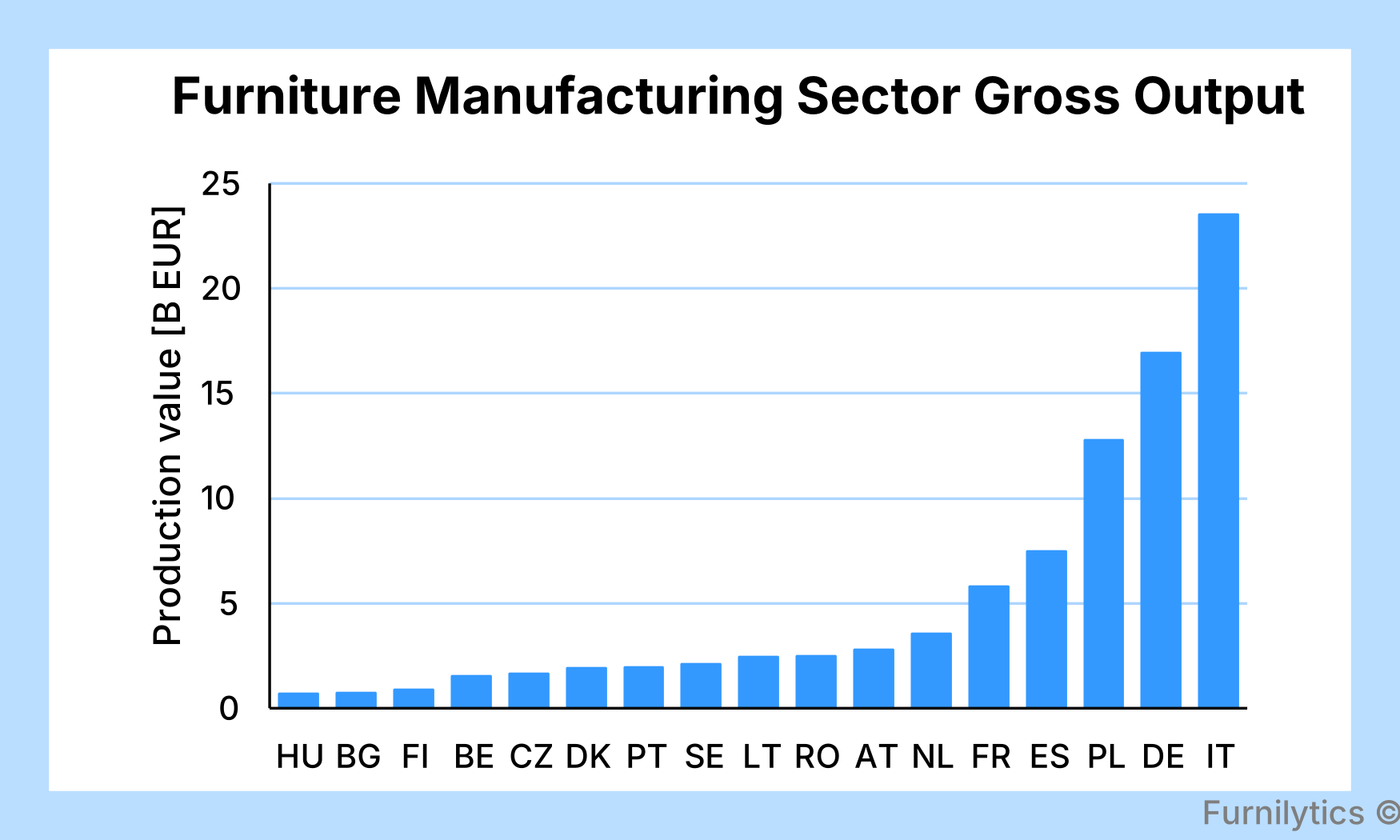
Furniture manufacturing activity in Europe is highly uneven in absolute terms. Based on estimated 2025 gross production output, Italy, Germany, and Poland clearly dominate the sector, together accounting for a substantial share of total European furniture manufacturing. They are followed at some distance by Spain and France, while production levels in smaller economies remain comparatively modest.
This ranking largely reflects differences in overall economic size and industrial scale rather than structural specialisation. As a result, absolute production figures provide an important baseline for understanding where furniture manufacturing is concentrated in 2025, but they offer limited insight into the relative importance of the sector within national economies. To capture those differences, it is necessary to move beyond absolute output and examine relative indicators.
Employment intensity in furniture manufacturing
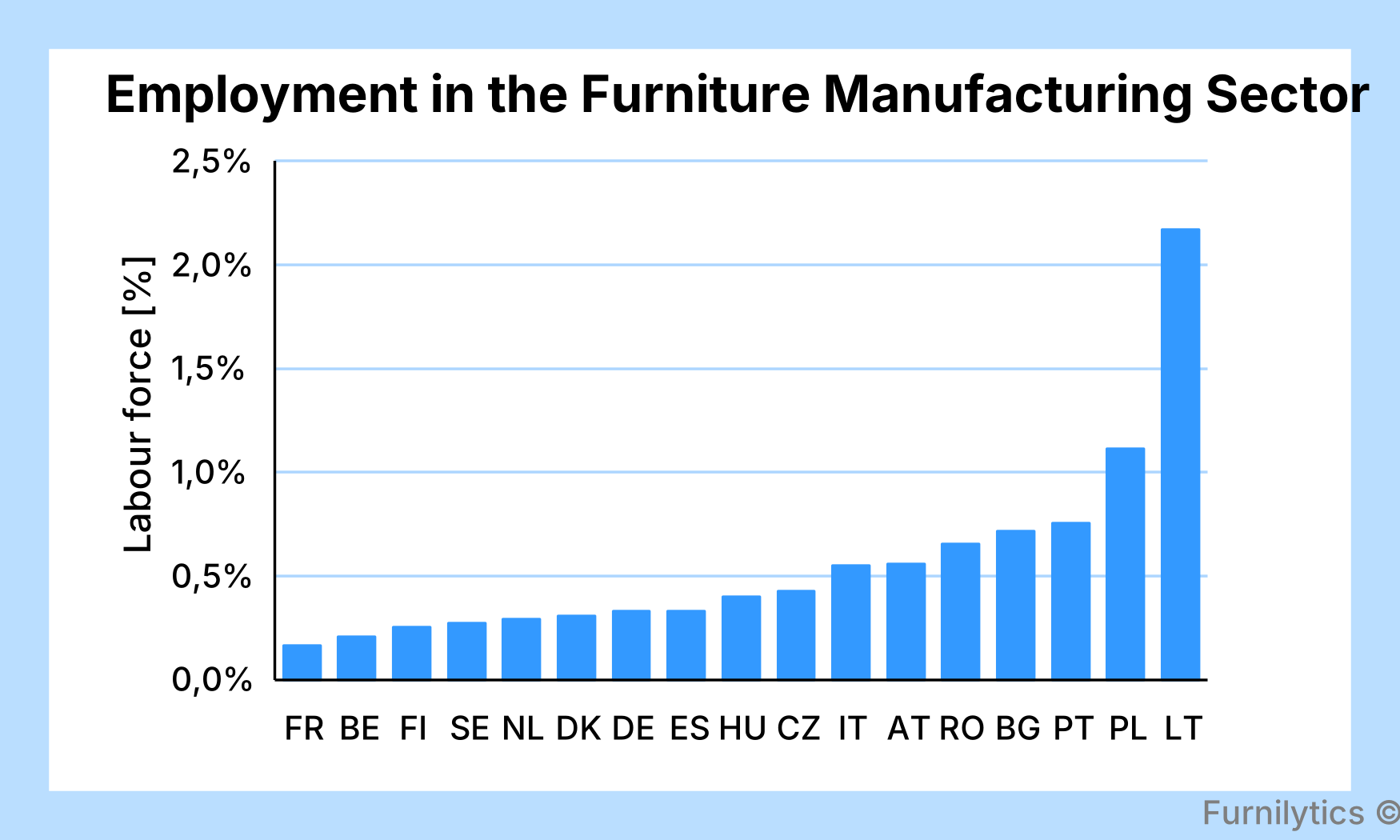
Looking at employment shares provides a clearer picture of the relative importance of furniture manufacturing across countries. In 2025, Lithuania stands out clearly, with more than 2% of the total labour force employed in furniture manufacturing, indicating a high degree of sectoral specialisation. Several other countries also display above-average employment intensity, notably Romania, Bulgaria, and Portugal, where furniture manufacturing accounts for a comparatively large share of national employment despite more modest absolute production levels.
In contrast, larger Western European economies such as France, Belgium, and the Netherlands show much lower employment shares, reflecting a more diversified economic structure and a smaller relative role for furniture manufacturing. Overall, these patterns highlight how the sector’s importance varies substantially across countries when measured in labour terms rather than absolute output.
Gross production relative to national GDP
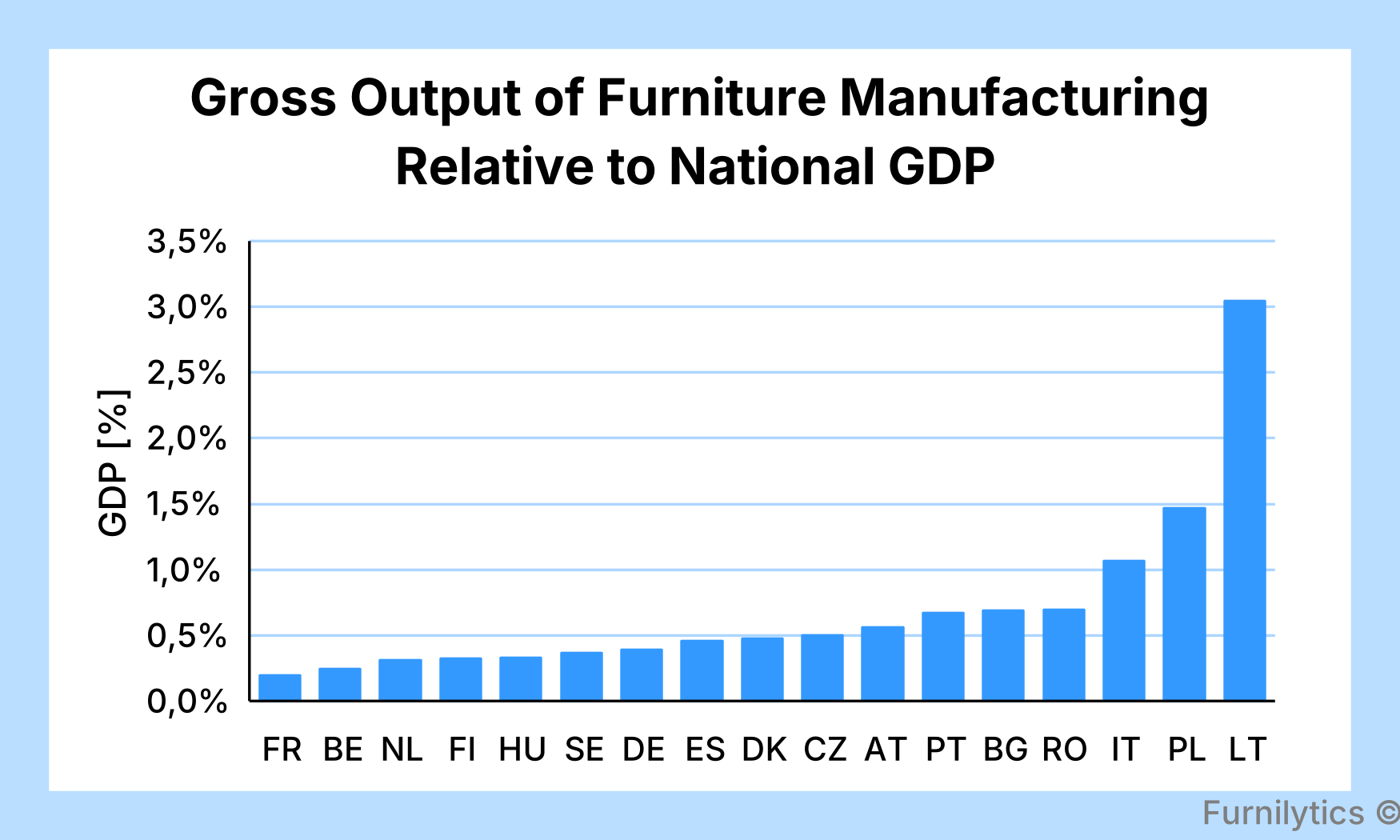
Comparing gross furniture manufacturing output to national GDP provides a useful measure of the sector’s relative production scale across countries. Lithuania stands out clearly, with furniture manufacturing output equivalent to around 3% of GDP, followed by Poland and Italy, where the sector also represents a relatively large share of economic activity. Romania, Bulgaria, and Portugal likewise exhibit above-average ratios, while larger and more diversified economies such as France, Belgium, and the Netherlands show much lower values. The ranking closely mirrors the employment shares observed earlier, indicating that countries with a larger furniture workforce also tend to have a higher relative production scale.
It is important to note that this indicator does not measure the contribution of furniture manufacturing to GDP, as gross production includes intermediate inputs and therefore overstates the sector’s direct economic contribution. For comparison, value-added data show that furniture manufacturing accounts for approximately 1.26% of GDP in Lithuania, 0.56% in Poland, 0.36% in Italy, and 0.17% in Germany. The production-to-GDP ratio should therefore be interpreted as an indicator of relative production intensity and sectoral specialisation rather than as a measure of value added or income generation.
Gross production output per employee
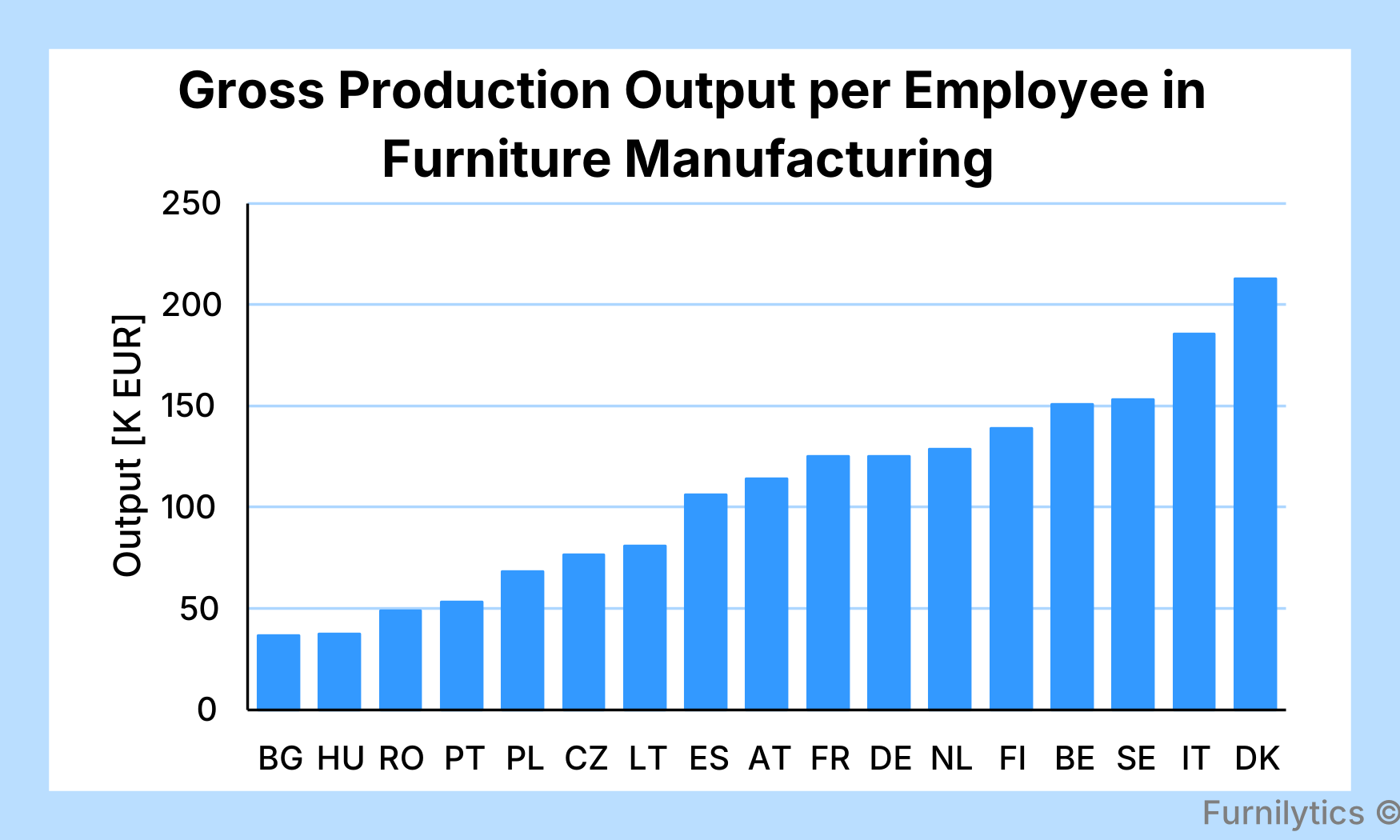
Gross production output per employee provides a first indication of labour intensity in furniture manufacturing. In 2025, output per worker varies substantially across countries, with Denmark, Italy, Sweden, Belgium, and Finland at the upper end of the distribution, while Bulgaria, Hungary, Romania, and Portugal show much lower levels. These differences reflect variations in production scale per worker, capital intensity, and the typical value of goods produced, rather than differences in economic contribution. Countries with high gross output per employee tend to operate larger production units, use more capital-intensive processes, or focus on higher-priced furniture segments, while lower values are consistent with more labour-intensive production structures.
However, gross production output per employee remains an incomplete measure of productivity, as it includes the value of intermediate inputs and does not account for differences in cost structures across countries. High output per employee does not necessarily translate into high income generation or efficiency if input use is also high. For this reason, gross output per employee is best interpreted as an indicator of production scale and labour intensity, and serves as a natural transition to value added per employee, which provides a more direct measure of economic productivity.
Value added per employee and economic productivity
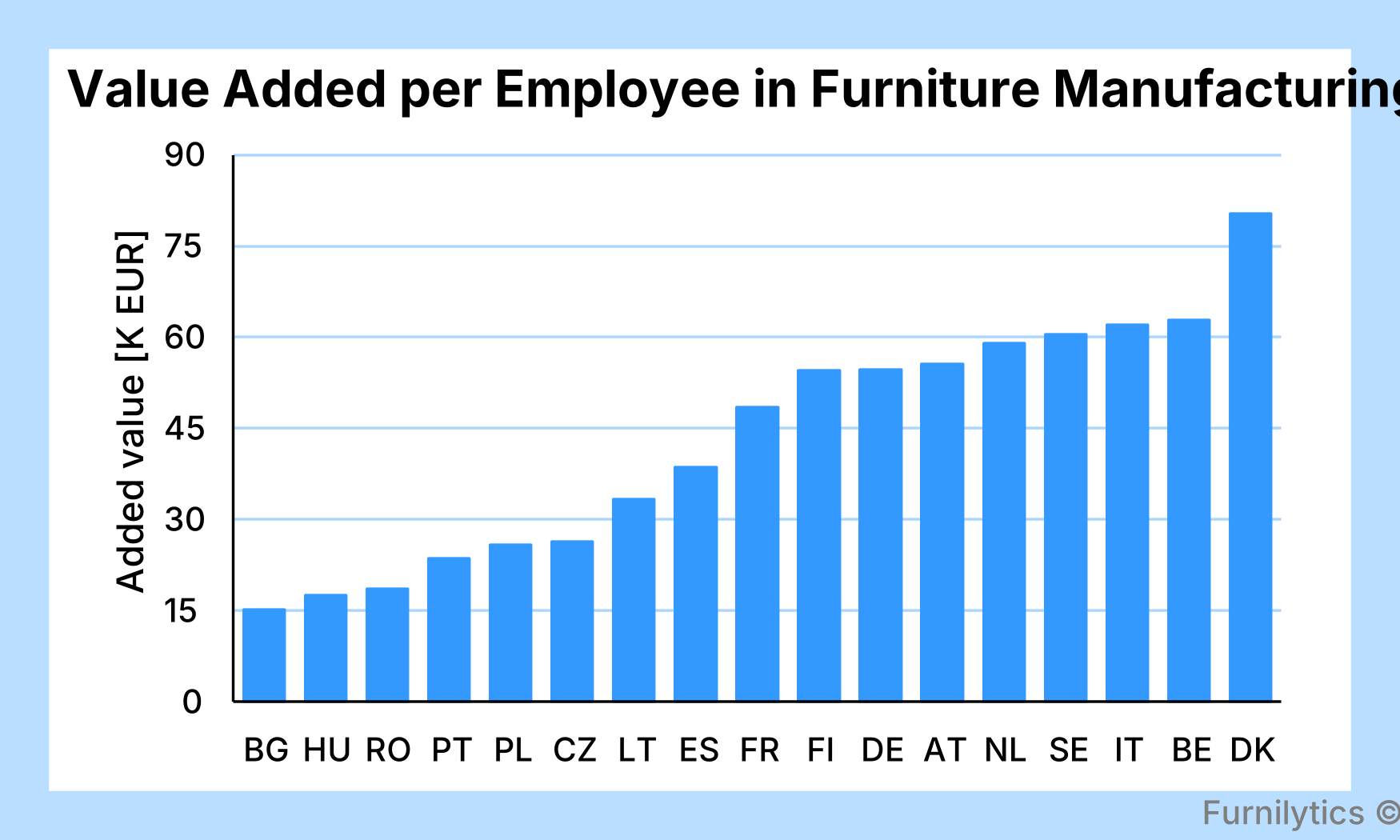
Value added per employee provides the most direct measure of economic productivity in furniture manufacturing, as it captures the income generated by labour after intermediate inputs, including both wages and operating surplus. Denmark stands out clearly, followed by Belgium, Italy, Sweden, and the Netherlands, indicating higher productivity per worker and a greater share of value retained within the production process. These outcomes are consistent with more capital-intensive production and stronger positioning in higher-value market segments.
In contrast, several Central and Eastern European countries, including Bulgaria, Hungary, Romania, and Poland, show substantially lower value added per employee, even where employment or production volumes are relatively high. This points to more labour-intensive production structures and lower value capture per unit of output, rather than weaker industrial activity. Compared with gross output per employee, this indicator highlights that scale alone does not determine productivity, making value added per employee a key metric for assessing the economic performance of the furniture manufacturing sector.
Conclusion
Furniture manufacturing plays markedly different roles across European economies. While absolute production is dominated by large countries such as Italy, Germany, and Poland, relative indicators show strong sectoral specialisation in smaller economies, most notably Lithuania. Employment shares and production relative to GDP broadly align, highlighting where the sector is structurally important.
Productivity indicators add a further layer of distinction. Gross output per employee reflects differences in labour intensity, while value added per employee points to higher value capture in countries such as Denmark, Belgium, Italy, Sweden, and the Netherlands. Overall, the analysis shows that scale, specialisation, and productivity are distinct dimensions shaping the European furniture manufacturing landscape.
Sources:
European Union Eurostat - Structural Business Statistics
European Union Eurostat - Annual National Accounts
European Union Eurostat - Short-term Business Statistics - production in industry
European Union Eurostat - National Accounts - gross value added current prices
European Union Eurostat - National Accounts - gross value added volumes
European Union Eurostat - Short-term Business Statistics - labour input in industry
European Union Eurostat - Short-term Business Statistics - producer prices in industry
European Union Eurostat - Labour Force Statistics - employment and activity
Methodology & limitations:
The analysis combines annual official statistics with short-term indicators using standard temporal disaggregation, benchmarking, and nowcasting methods. Annual production value and value added for furniture manufacturing (NACE Rev. 2, C31) are taken from Eurostat Structural Business Statistics (sbs_ovw_act) and disaggregated to monthly frequency using the Industrial Production Index (STS_INPR_M), with monthly shares constrained to match annual totals. Nominal production values are obtained using the Producer Price Index for furniture manufacturing (STS_INPP_M), while value added is deflated using an implicit value-added deflator derived from quarterly national accounts (teina412_r2 and teina414_r2) and interpolated to monthly frequency. For 2024–2025, missing observations are nowcasted using year-to-date production developments.
Employment is anchored to annual SBS data and extrapolated using the quarterly STS labour input index (sts_inlb_q), while labour force data are taken from Eurostat lfsi_emp_a. National GDP is obtained from annual national accounts (nama_10_gdp); GDP for 2025 is proxied by extrapolating the latest annual GDP using quarterly GDP volume growth. Real value added per employee is used for productivity comparisons, while nominal values are used to assess industry size and GDP shares. These methods are standard practice in applied economic analysis, and the resulting estimates are cross-checked against the latest available official annual data to ensure consistency, though results for recent years remain subject to limitations related to indicator-based extrapolation, the use of manufacturing-level deflators, and the absence of purchasing-power parity adjustments at detailed industry level. Not all EU27 countries are included due to data gaps.