
Polish Furniture Industry: Market Trends, Exports, and Profitability
This analysis of the Polish furniture industry was prepared for Big Furniture Group, as part of its collaboration with Furnilytics. The paper examines recent trends in production, exports, and profitability, highlighting Poland’s role as a key manufacturing and export base within the European furniture market. Market data and company financials are used to compare the performance of OEM, OBM, and retail business models over time, with the objective of identifying structural strengths, market dependencies, and emerging pressures shaping the sector, in the context of current industry developments and major trade events.
The Polish furniture industry is examined through recent trends in production, exports, and profitability, highlighting its role as a key manufacturing and export base within the European market. Market data and company financials are used to compare the performance of OEM, OBM, and retail business models over time, with the aim of identifying structural strengths, market dependencies, and emerging pressures shaping the sector.
General trends
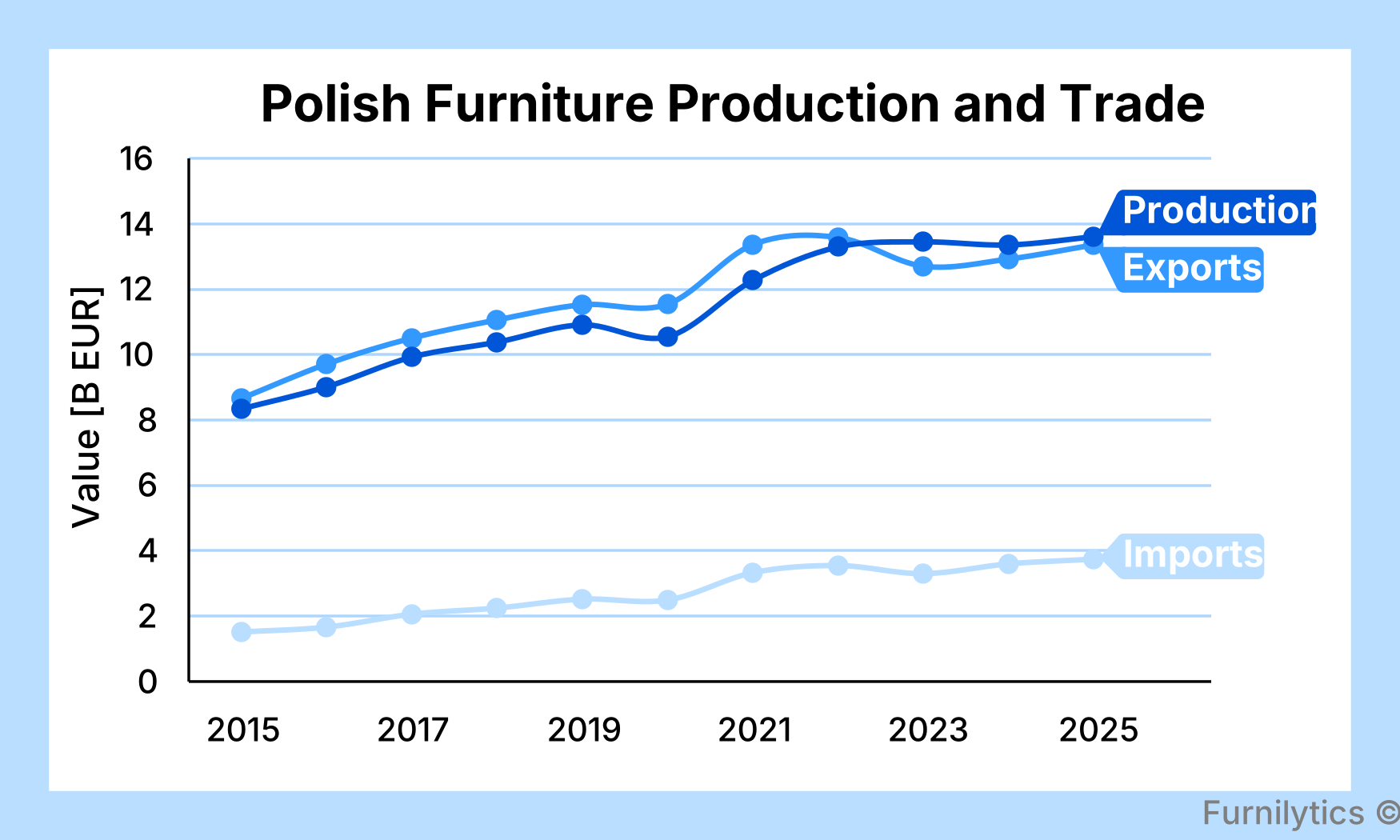
The Polish furniture market remains one of the strongest production bases in the EU, with production and exports at historically high levels in value terms. The close alignment between production and exports highlights Poland’s export-oriented industry, while the continuous rise in imports underlines Poland’s function as an import logistics hub for the furniture industry.
Compared with the broader EU furniture market—where production growth has been more subdued—Poland continues to show greater resilience. The data reflect current values, meaning that inflation has contributed to the observed growth; this effect, particularly on exports, is discussed further in the export section.
Exports
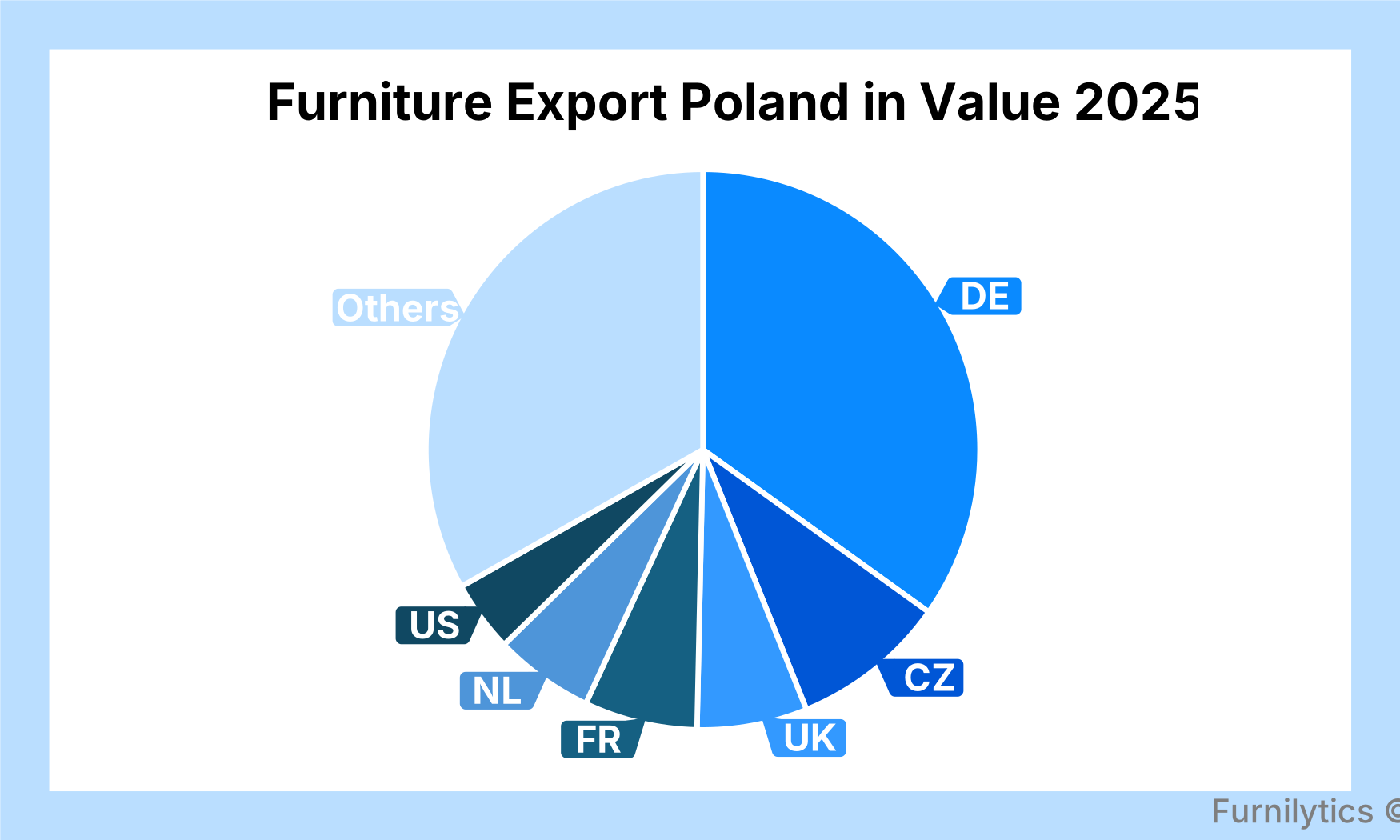
Furniture exports have remained broadly stable over recent years, with Germany as the primary destination, accounting for approximately 34% of total exports. The six largest destination markets together represent about two-thirds of Polish furniture exports. Czechia, in particular, has recorded slow but steady growth, increasing its share from 6.3% in 2015 to 9.0% in 2025.
From Germany’s perspective, furniture imports rose significantly in 2025, growing by 11%, despite a slight contraction in the domestic retail market. However, Germany’s reliance on Polish furniture declined marginally, from 26.0% in 2024 to 25.0% in 2025, with some import demand shifting toward other European suppliers, notably Italy.
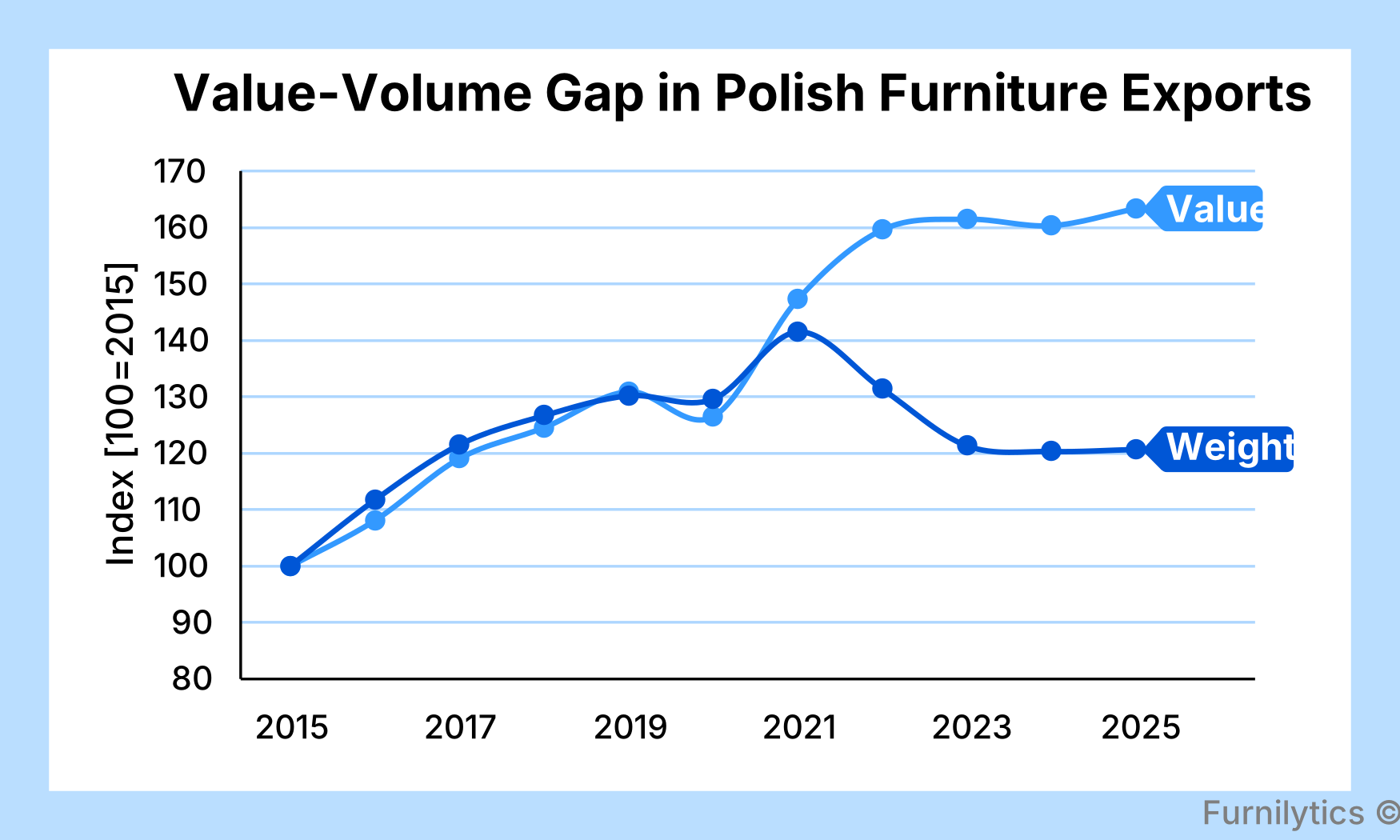
Inflation effects are clearly visible in Polish furniture exports. The value–volume divergence shown in the graph indicates that export volumes have not increased since 2021 and remain close to 2017 levels. In contrast, export values reflect cumulative inflation of around 35%. Asian producers appear to hold a competitive advantage, benefiting from a deflationary price trend, estimated at 11% in 2025.
Profitability
Profitability is reviewed through a case study of the top 10 producers by business model, based on their financial statements. OEM manufactures products for other brands, OBM designs and manufactures products under its own brand, and retail sells finished goods directly to end customers.
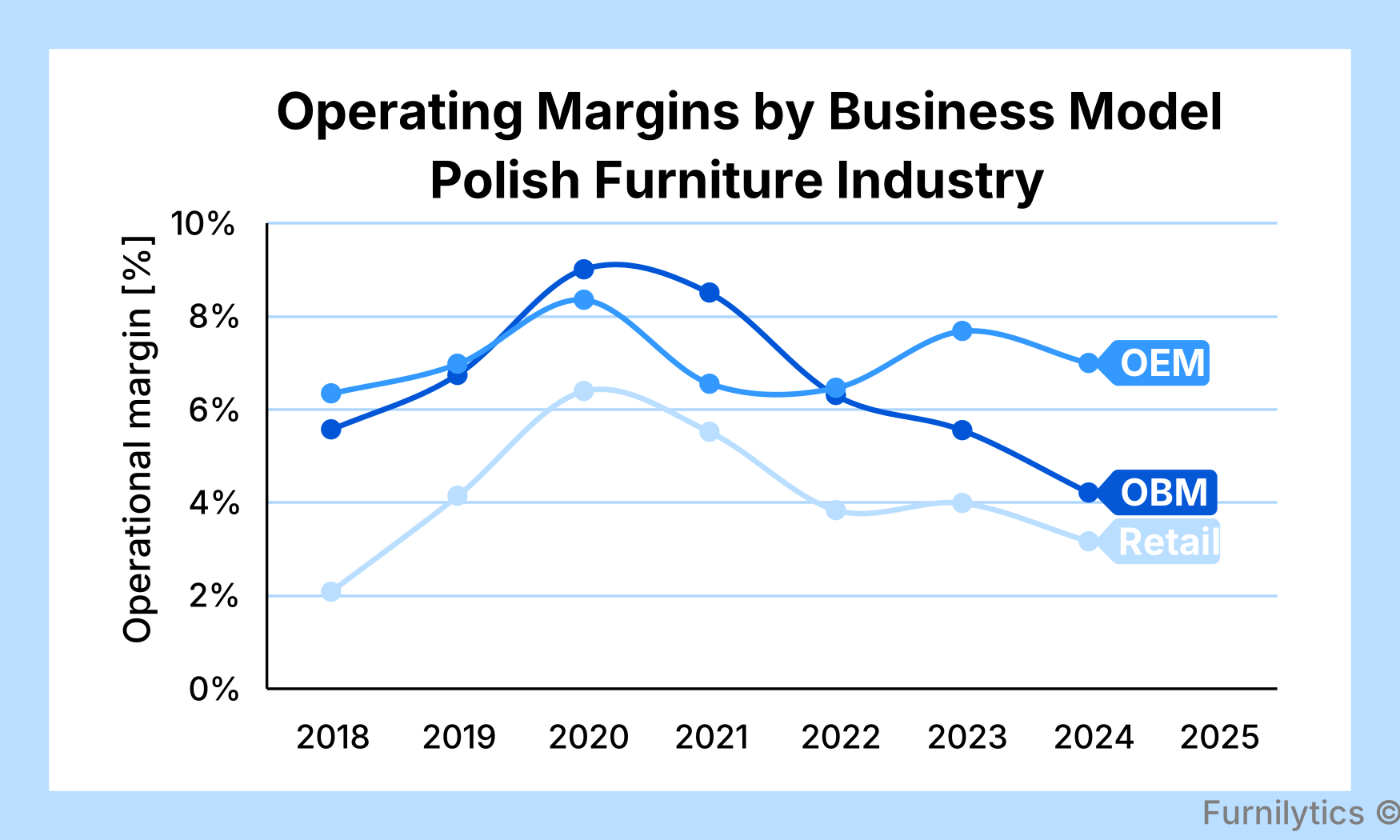
The chart below shows that operating margins peaked in 2020 across all business models, but OBM and retail margins declined more sharply than OEM in the following years. The close correlation between OBM and retail trends reflects the fact that many large furniture groups operate in both segments, while OEM margins have remained comparatively more resilient over the same period.
Conclusion
Overall, the Polish furniture industry remains strongly positioned within the EU, supported by its export orientation and resilient production base, with recent growth partly reflecting inflation effects in value terms. While export volumes have been broadly stable, profitability pressures have increased for OBM and retail models, whereas major OEM players have shown greater margin resilience. Going forward, business model choice and exposure to key export markets, such as the growing Czech market, will be important factors in shaping performance.
Sources:
Polish National Court Register - Krajowy Rejestr Sądowy (KRS)
European Union (Eurostat) - structural business statistics
European Union (Eurostat) - short term business statistics
European Union (Eurostat) Comext Trade Data – DS-045409
Methodology & limitations:
Trade data are sourced from Eurostat Comext for HS codes 9401–9403. The final months of 2025 are extrapolated using indexed projections based on observed 2024 trends. Import shares are calculated using the apparent consumption method (domestic production plus imports minus exports), with import penetration defined as imports divided by apparent consumption. All trade values are expressed in current euros. Both value and volume data are analysed, with divergences between the two used as indicators of price dynamics.
Furniture production is based on Eurostat Structural Business Statistics (SBS) for NACE 31. Values beyond 2023 are extrapolated using the Industrial Production Index from Short-Term Statistics (STS), assuming a stable relationship between production volume and value. Operational margins are derived from officially published financial statements following the methodology applied in Poland’s OEM furniture sector analysis and are cross-checked using mojeanalizy.