
US Furniture Sector Revenue, Inventory and Margin Trends
This analysis examines how selected US-listed furniture companies evolved between 2018 and 2026 using aggregated quarterly financial data from a selected group of furniture and home furnishing companies. The purpose is to assess how revenue trends, inventory intensity and profitability developed before, during and after the pandemic-driven furniture demand surge.
The article focuses on three core areas: revenue trends, Days Inventory Outstanding (DIO), and profitability trends through gross and operating margins. Together, these indicators provide a directional view of how listed US furniture companies adapted to the post-pandemic market environment and how the sector’s operating structure changed over time.
Scope of analysis
The analysis covers a selected group of US-listed furniture and home furnishing companies, including residential furniture retailers, e-commerce platforms, manufacturers and office furniture producers. The aggregation includes Bassett Furniture Industries, Ethan Allen Interiors, Haverty Furniture Companies, HNI, Hooker Furnishings, La-Z-Boy, MillerKnoll, RH, Steelcase, Williams-Sonoma and Wayfair. The selected company group is intended to function as a directional proxy for the listed US furniture sector rather than a complete representation of the total US furniture industry.
Revenue Trends and Sector Stabilisation
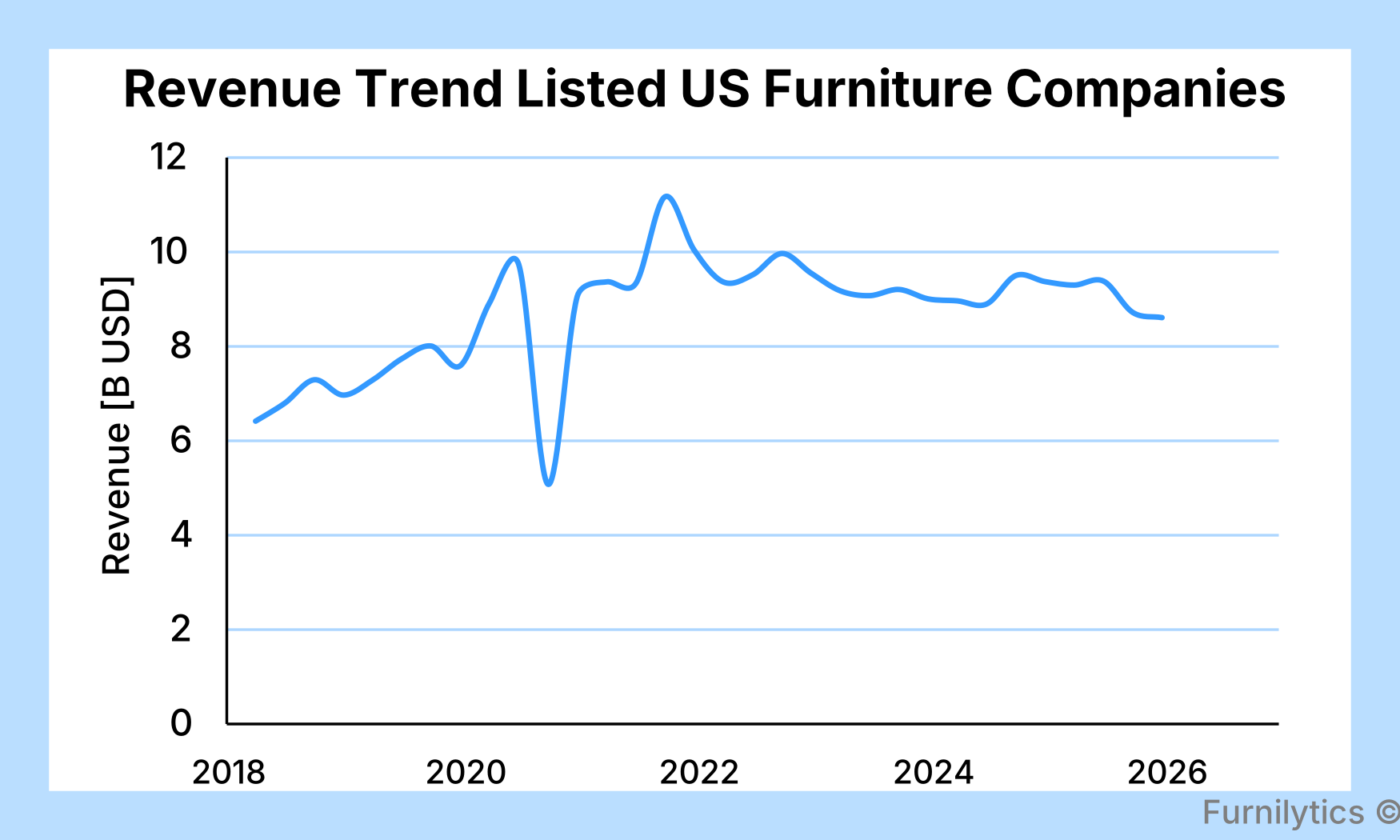
The aggregated revenue trend of selected US-listed furniture companies shows a strong expansion phase between 2018 and 2021, with quarterly revenues increasing from roughly USD 6.4 billion in early 2018 to a peak above USD 11 billion during the post-pandemic demand surge in 2021. The sector benefited from exceptionally strong home-related consumer spending during the pandemic period, although the sharp temporary decline in 2020 also reflects the initial COVID disruption and store closures across parts of the furniture market.
Since the 2021–2022 peak, aggregated revenues gradually normalised and trended moderately downward, stabilising closer to the USD 8.5–9.5 billion range during 2023–2026. Despite the softer trajectory in recent years, revenue levels remained above most pre-pandemic levels, suggesting that the listed US furniture sector retained part of the structural pricing and revenue expansion that emerged after 2020.
Inventory Intensity and DIO Trends
Days Inventory Outstanding (DIO) increased materially across the selected US-listed furniture companies following the post-pandemic demand surge, suggesting that the sector became significantly more inventory intensive after 2020. Aggregated DIO levels increased from roughly 55–60 days before the pandemic to around 65–70 days by 2025–2026, while the company group excluding Wayfair increased from around 80 days to more than 100 days over the same period.
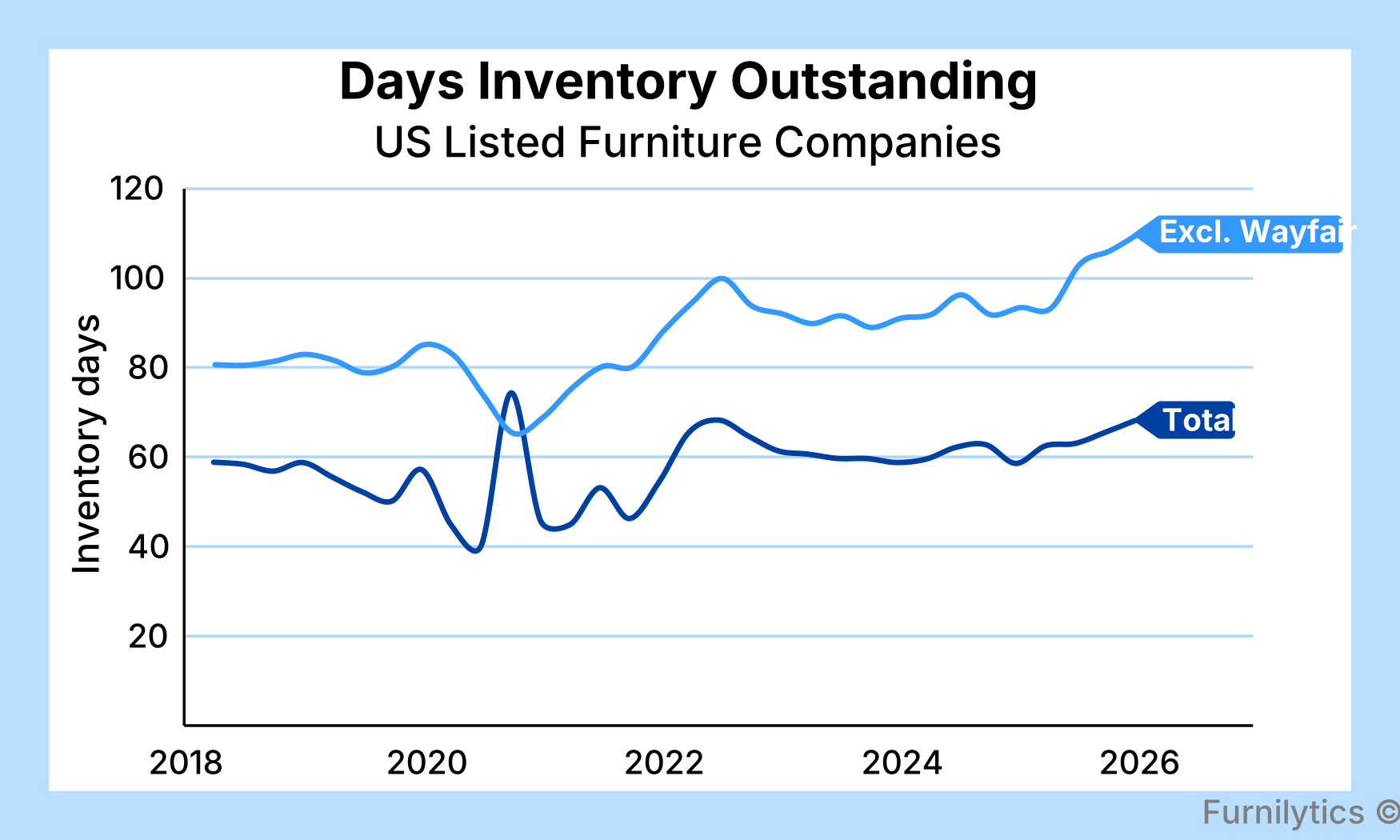
The divergence between the total aggregation and the “excluding Wayfair” series highlights the structurally different operating models within the furniture sector. Wayfair’s asset-light e-commerce model operates with extremely low inventory coverage levels, with recent DIO around 3 days, materially below traditional furniture retailers and manufacturers. In contrast, several traditional furniture companies currently operate with substantially higher inventory coverage levels, including Ethan Allen (~223 days), RH (~171 days), Bassett Furniture (~153 days), Williams-Sonoma (~123 days) and Haverty Furniture (~117 days).
The broader upward shift in DIO after 2020 suggests that inventory structures within the listed US furniture sector did not fully return to pre-pandemic norms. This may partly reflect softer demand conditions in recent years, but also structurally higher inventory buffers, longer supply chain planning horizons and a greater focus on inventory resilience following the disruptions experienced during the pandemic period.
Margin Dynamics and Profitability Trends
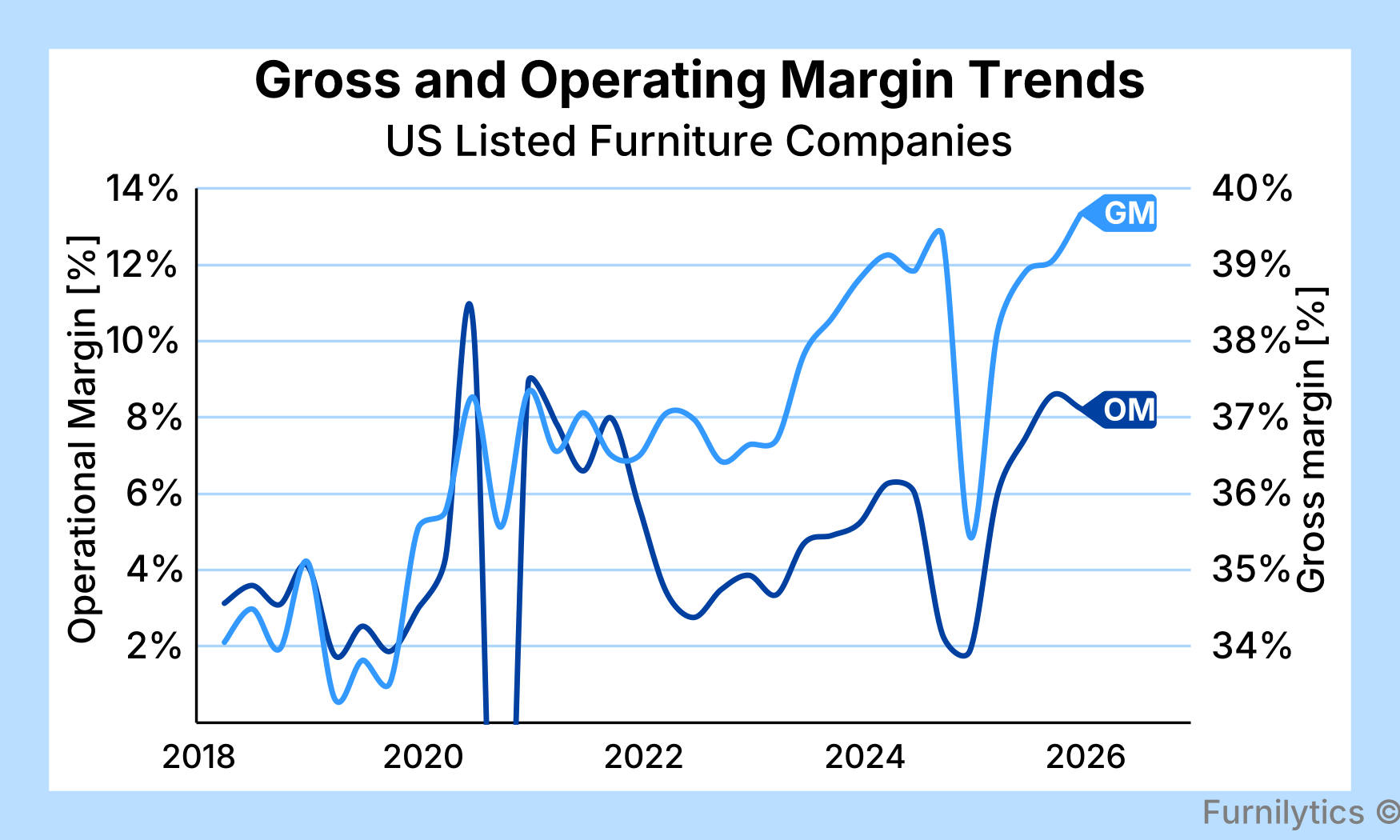
Gross margins among the selected US-listed furniture companies increased structurally after 2020, rising from roughly 34–35% during the pre-pandemic period to nearly 40% by 2025–2026. Despite softer revenue development after 2022, the sector maintained materially stronger product-level profitability, likely supported by higher pricing levels, product mix improvements and broader inflation pass-through.
Operating margins followed a more volatile trajectory. Margins increased sharply during the post-pandemic demand surge before weakening during 2022–2024 as demand normalised and inventory pressure increased. By 2025–2026, operating margins recovered toward 8–9%, although the recovery remained weaker than the gross margin trend. The sharp temporary decline in early 2025 was largely driven by impairment charges at MillerKnoll and Steelcase within the office furniture segment.
Overall, the divergence between gross and operating margin development suggests that listed US furniture companies generally protected product-level profitability more effectively than total operating profitability during the post-pandemic normalisation period.
Conclusion
The aggregated financial trends of selected US-listed furniture companies suggest that the sector underwent a significant structural shift following the pandemic period. Revenues expanded sharply during the 2020–2022 demand surge before gradually normalising, while inventory intensity and Days Inventory Outstanding remained structurally above most pre-pandemic levels. At the same time, gross margins improved materially and remained elevated through 2025–2026, indicating that many listed furniture companies retained stronger product-level pricing and profitability despite softer demand conditions in recent years.
However, the weaker and more volatile operating margin recovery suggests that broader operational costs and business complexity continued to pressure overall profitability across parts of the sector. The divergence between gross and operating margin development also highlights the increasingly different operating dynamics between asset-light e-commerce models and more inventory-intensive traditional furniture retailers and manufacturers. Overall, the selected company group suggests that the listed US furniture sector did not fully revert to its pre-pandemic operating structure, but instead emerged with structurally different inventory, pricing and profitability characteristics.
Methodology & limitations:
The analysis is based on a selected group of US-listed furniture and home furnishing companies, including Bassett Furniture Industries, Ethan Allen Interiors, Haverty Furniture Companies, HNI, Hooker Furnishings, La-Z-Boy, MillerKnoll, RH, Steelcase, Williams-Sonoma and Wayfair. Quarterly financial statement data was extracted from the SEC EDGAR XBRL APIs and aggregated to construct sector-level revenue, profitability and inventory indicators between 2018 and 2026.
Because companies use different US-GAAP XBRL tags for similar concepts, fallback tag mappings were applied to standardise revenue, gross profit, operating income, cost of revenue and inventory metrics across companies. Quarterly figures were normalised by prioritising reported 10-Q data and deriving Q4 values from annual 10-K filings where appropriate. Days Inventory Outstanding (DIO) figures were approximated using aggregated inventory values relative to trailing revenue. The selected company group is intended to function as a directional proxy for the US listed furniture sector rather than a complete representation of the total US furniture industry.