
European Furniture Retail Market Analysis by Region
With approximately €158 billion in annual furniture retail sales, Europe represents one of the world's largest furniture markets. However, regional differences in market size, growth and consumer spending have become increasingly important, making regional comparisons a valuable complement to country-level analysis.
This article compares 28 European furniture retail markets, grouped into Western Europe, Southern Europe, Central & Eastern Europe (CEE) and the Nordics, using harmonised market estimates aligned with the Eurostat NACE G47.59 definition of specialised furniture retail. By analysing market size, long-term growth and furniture expenditure per capita, the results reveal four distinct regional market profiles with different characteristics and growth opportunities.
European Furniture Retail Market Structure
Europe's furniture retail market is analysed across four regions to better highlight structural differences in market size, growth and consumer spending. As shown in the table below, the analysis covers 28 European markets grouped into Western Europe, Southern Europe, Central & Eastern Europe (CEE) and the Nordics.
| Region | Countries | Population 2025 | Market size 2025 |
|---|---|---|---|
| West Europe | AT, BE, CH, DE, FR, IE, NL, UK | 275.6m | €95.9 bn |
| South Europe | ES, GR, IT, PT | 129.2m | €30.8 bn |
| CEE | BG, CZ, EE, HR, HU, LT, LV, PL, RO, RS, SI, SK | 106.5m | €17.0 bn |
| Nordics | DK, FI, NO, SE | 27.8m | €14.1 bn |
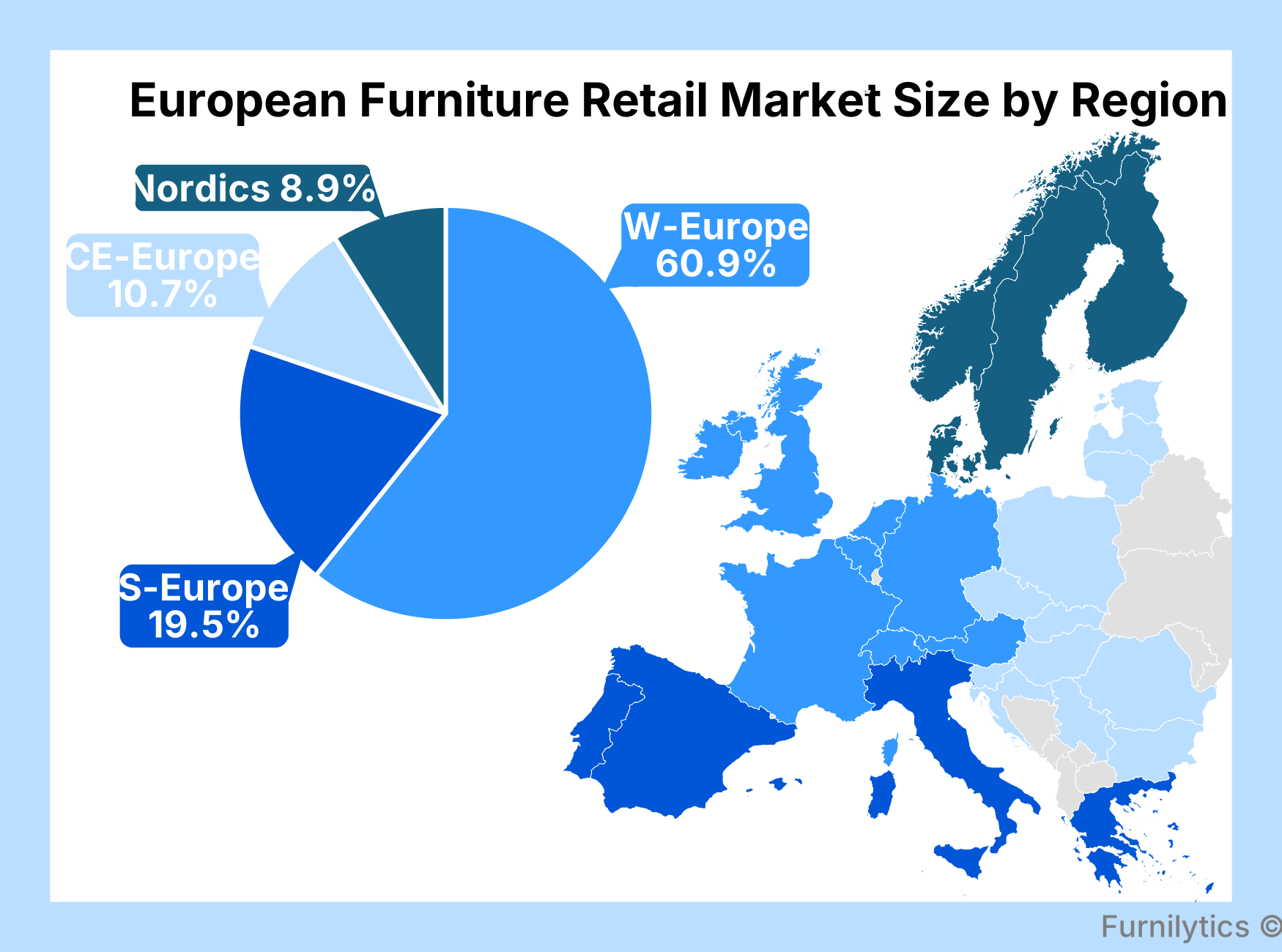
Western Europe remains by far Europe's largest furniture retail market, accounting for 60.9% of total market value in 2025 (€95.9 billion). The region also has the largest consumer base, with approximately 276 million inhabitants. Southern Europe is home to 129 million people and represents the second-largest furniture market (€30.8 billion), while Central & Eastern Europe combines a population of 107 million with a market size of €17.0 billion. Despite having by far the smallest population (28 million), the Nordic countries still account for more than €14 billion in annual furniture retail expenditure.
The current market structure provides an important benchmark for the remainder of the analysis. While Western Europe continues to dominate in absolute market size, the following sections show that regional growth patterns and consumer spending differ considerably, resulting in four increasingly distinct furniture markets across Europe.
European Furniture Retail Market Growth
Since 2018, Central & Eastern Europe (CEE) has recorded the strongest long-term furniture retail market growth in Europe. The region expanded by 57% between 2018 and 2025, substantially outperforming Southern Europe (+32%), while Western Europe (+8%) and the Nordics (+8%) remained comparatively stable. The results suggest that furniture demand has increasingly shifted towards Europe's emerging markets, while more mature regions have experienced slower structural growth.
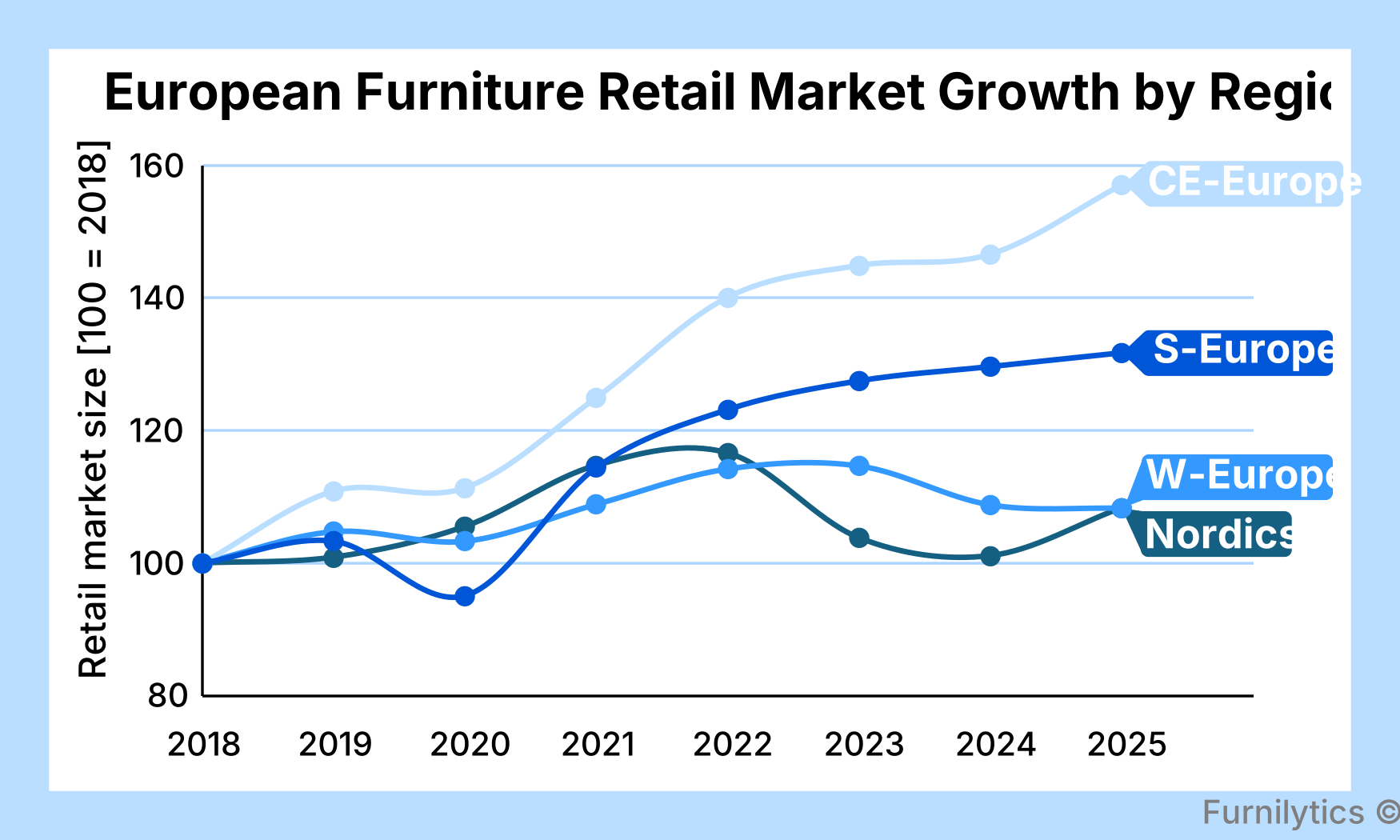
Although CEE achieved the highest percentage growth, Southern Europe generated the largest increase in absolute market value during the post-pandemic recovery. Since 2020, the region added approximately €8.6 billion in furniture retail expenditure, compared with €4.9 billion in Central & Eastern Europe and €4.4 billion in Western Europe. Over the full 2018–2025 period, however, Western Europe still recorded the largest absolute increase (€7.3 billion) due to its much larger market size, narrowly ahead of Southern Europe (€7.4 billion) and Central & Eastern Europe (€6.2 billion).
The latest short-term indicators suggest that regional growth dynamics continue to evolve. During the first quarter of 2026, furniture retail turnover increased by 2.5% year-on-year in Central & Eastern Europe, compared with 1.8% in Southern Europe, while Western Europe contracted by 1.8%. If these trends continue, CEE is likely to remain Europe's fastest-growing furniture retail region in the near term.
Furniture Retail Expenditure per Capita
Absolute market size is only part of the story. Comparing furniture retail expenditure on a per-capita basis provides a better indication of market maturity and consumer spending intensity across Europe's regional furniture markets.
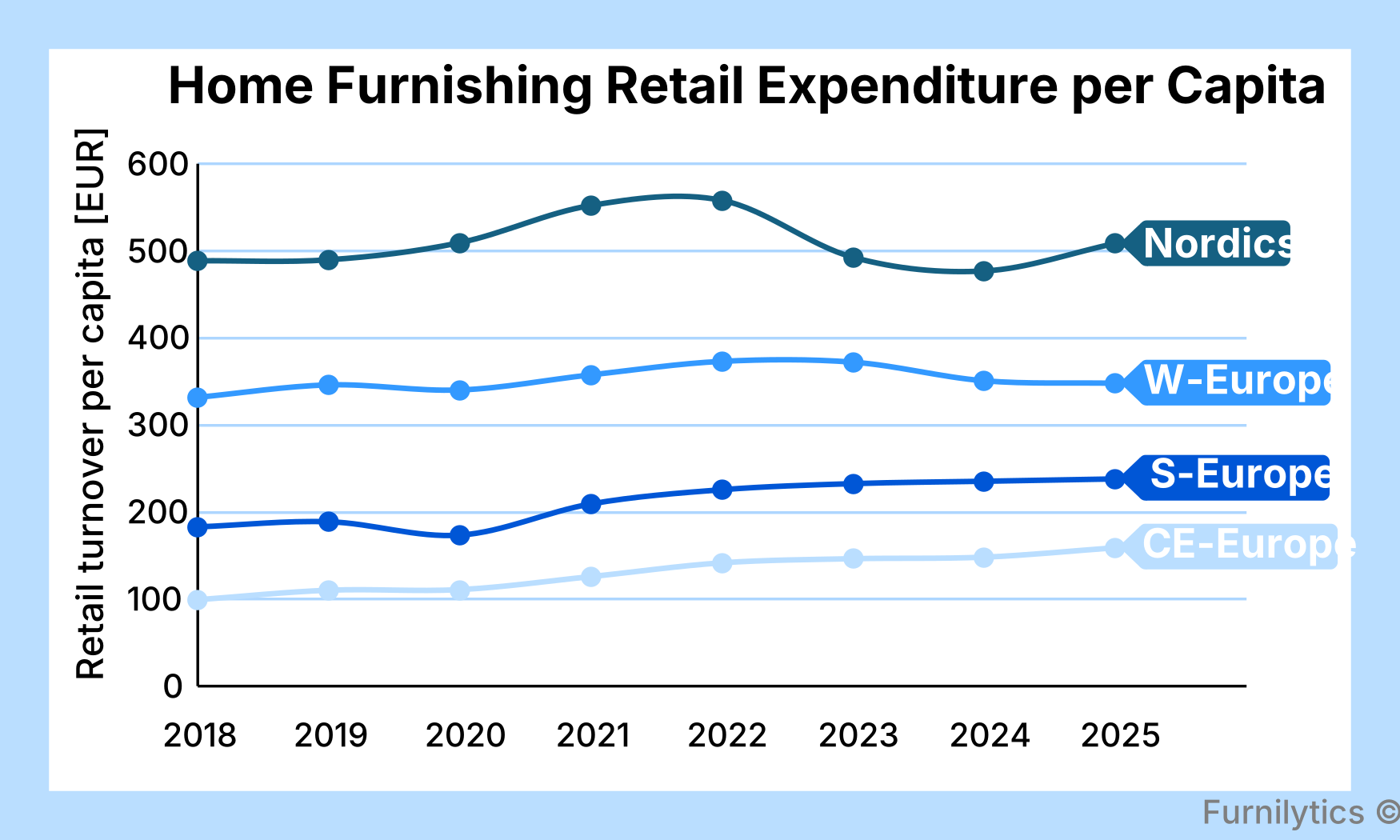
The Nordics continue to record by far the highest furniture retail expenditure per capita, reaching approximately €509 per resident in 2025. Despite representing Europe's smallest regional market by population, Nordic consumers spend around 46% more on furniture than consumers in Western Europe (€348 per capita) and more than three times as much as consumers in Central & Eastern Europe (€160 per capita).
Western Europe forms a second tier of mature furniture markets, with expenditure remaining relatively stable around €350 per capita throughout the period. In contrast, Southern Europe has steadily narrowed the gap, increasing from €183 to €238 per capita since 2018. Central & Eastern Europe recorded the strongest relative increase, rising by more than 60% over the same period, although expenditure levels remain well below those observed in Western Europe and the Nordics.
The results suggest that recent market growth has largely been driven by convergence rather than already high spending levels. While consumers in Central & Eastern Europe continue to spend considerably less on furniture than those in Europe's mature markets, the sustained increase in expenditure per capita indicates further potential for long-term market expansion.
Regional Market Positioning
The previous sections examined regional market size, long-term growth and consumer expenditure separately. Bringing these dimensions together highlights four distinct furniture market profiles, reflecting different levels of market maturity and future growth potential.
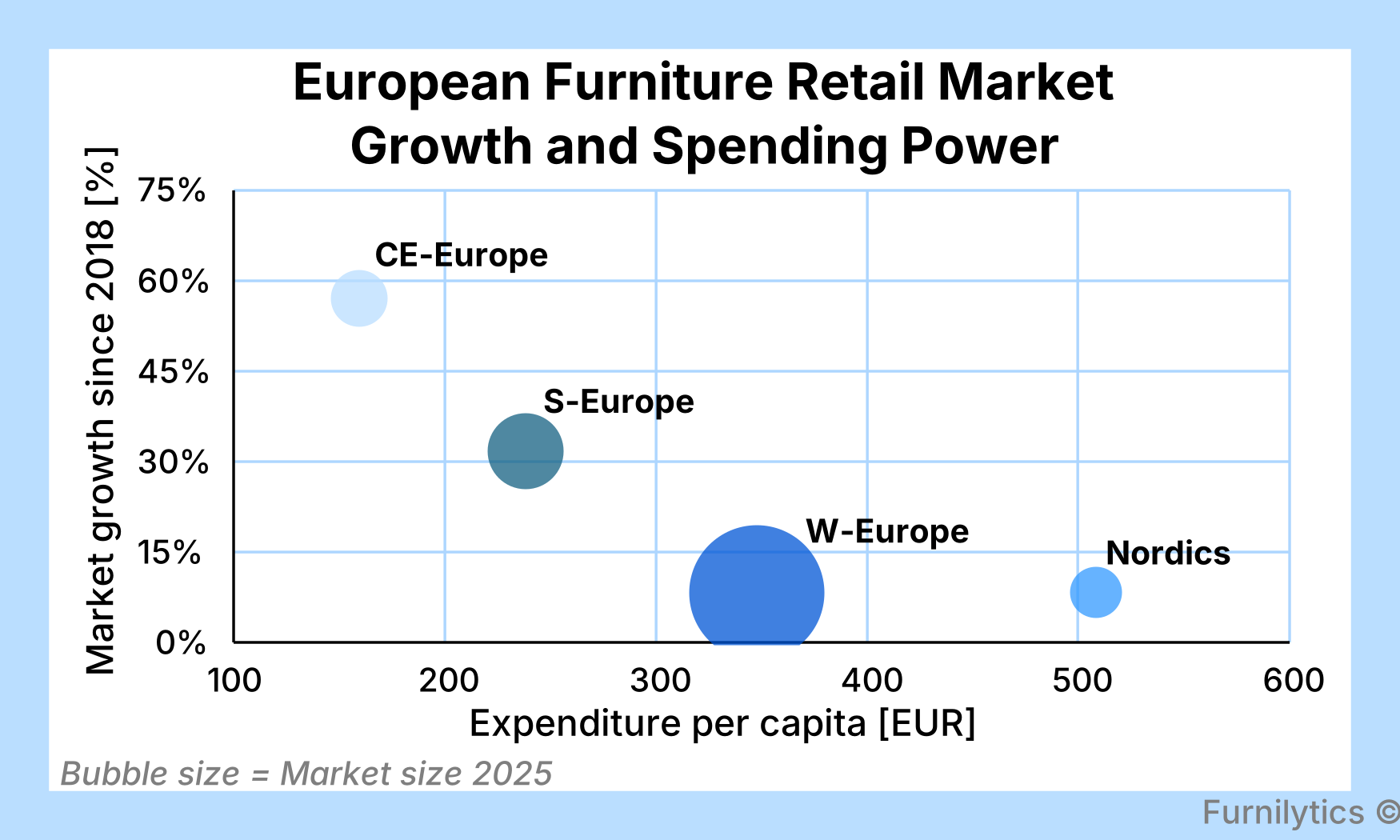
Western Europe combines by far the largest market with comparatively modest long-term growth. Its high expenditure per capita and dominant market size reflect a mature furniture market where future expansion is likely to depend more on replacement demand than rapid consumer growth.
Southern Europe occupies a middle position, combining moderate expenditure per capita with strong long-term growth. The region has become Europe's largest contributor to post-pandemic market expansion, suggesting continued opportunities as consumer spending recovers.
Central & Eastern Europe (CEE) combines the strongest structural growth with the lowest expenditure per capita. This indicates an ongoing convergence process, where furniture spending continues to increase from a comparatively low base. Combined with the strongest recent momentum, CEE appears to offer the greatest long-term growth potential.
The Nordics remain Europe's highest-spending furniture markets on a per-capita basis despite slower market growth. Although population growth and market expansion have moderated, the region continues to represent Europe's most mature and highest-value consumer market.
Conclusion
Rather than viewing Europe as a single furniture market, businesses should increasingly consider the distinct characteristics of its regional markets. Mature regions such as Western Europe and the Nordics continue to offer scale and high consumer spending, while Southern Europe and Central & Eastern Europe present stronger long-term growth opportunities. As these regional differences continue to evolve, understanding where growth, market size and consumer spending intersect will become increasingly important for strategic decision-making.
Sources:
Eurostat - structural business statistics
Eurostat - Population (national level)
Furnilytics - Europe Furniture Retail Market Size by Country
Methodology & limitations:
European furniture retail market size is based on Furnilytics harmonised country-level retail turnover estimates, benchmarked where available to official annual market values from Eurostat Structural Business Statistics and national statistical sources. Recent periods are estimated using official monthly retail turnover indicators through temporal disaggregation and now-casting. Regional totals are aggregated from country-level estimates, while per-capita expenditure is calculated using annual population data.
The regional comparisons are intended to illustrate long-term market structure and trends rather than precise differences in household consumption. Comparability is affected by differences in national statistical methodologies, country coverage, exchange rates and the use of estimated values for recent periods, which may be revised as additional official benchmark data become available.