
Germany Furniture Market: Rising Import Dependence and Shifting Supply Dynamics
Germany’s furniture market has become increasingly import-driven over recent years. While domestic furniture production experienced a temporary recovery following the pandemic period, recent data suggests that production momentum has weakened again, while imports continue to play an increasingly important role in supplying the German market.
This analysis examines how Germany’s furniture supply structure has evolved since 2018. The data highlights the growing role of imports, the development of domestic production activity, and the changing importance of major supplier countries. Together, these indicators provide insight into how sourcing dynamics in Europe’s largest furniture market are changing.
This analysis is made for Big Furniture Group.
Furniture Production Falls Back
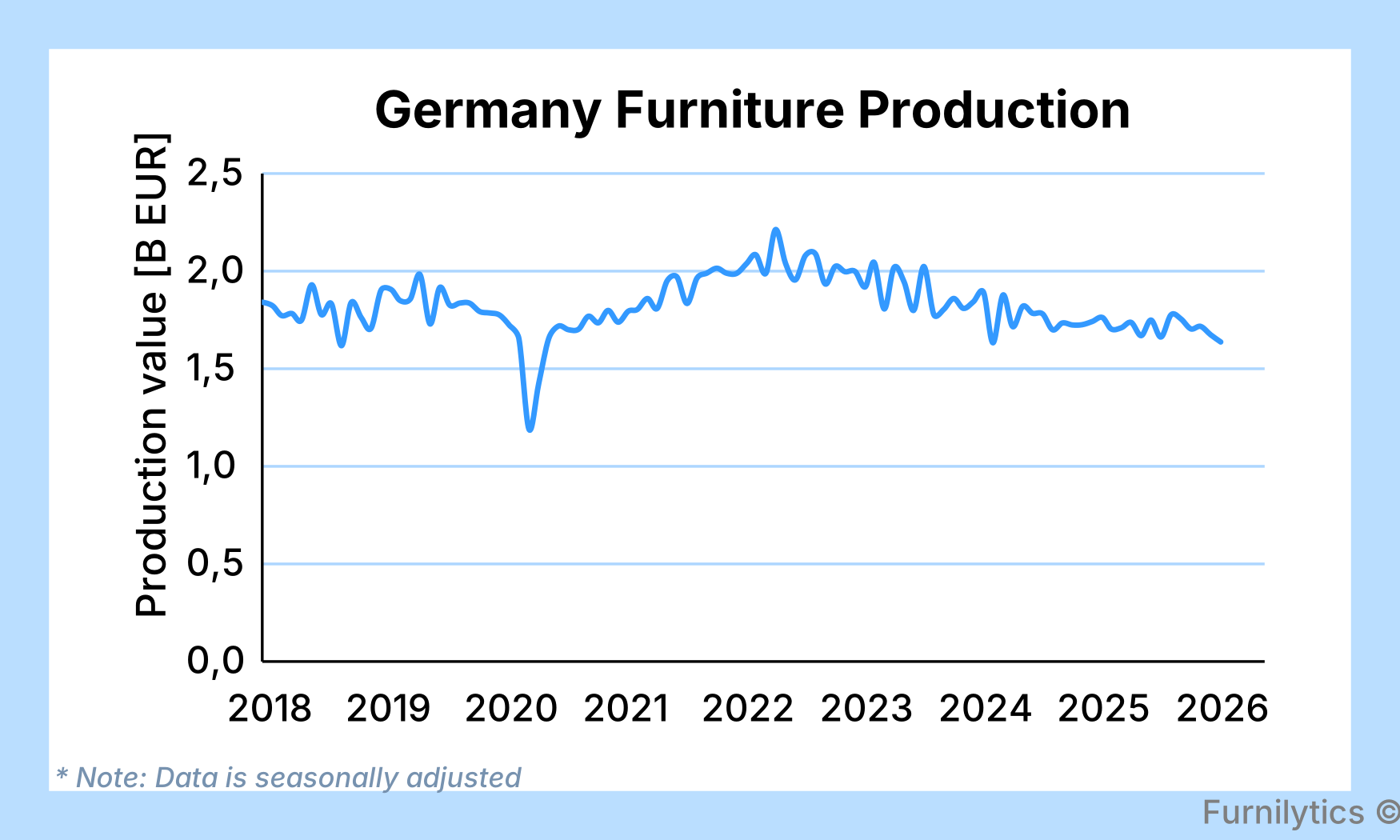
Germany’s furniture production recovered strongly following the sharp disruption during the COVID period, with production values reaching a peak of roughly 2.2B EUR per month in May 2022. Since then, momentum has weakened steadily. By recent months, production values had fallen back below 1.7B EUR per month, returning to levels last seen at the start of 2015.
The development suggests that the post-pandemic production surge was temporary rather than structural. Weaker housing activity, softer furniture demand and broader cost pressures appear to have weighed on domestic manufacturers in recent years. At the same time, Germany’s furniture market continues to rely increasingly on imported products, as reflected in the rising import share of the market.
Imports Gain Market Share
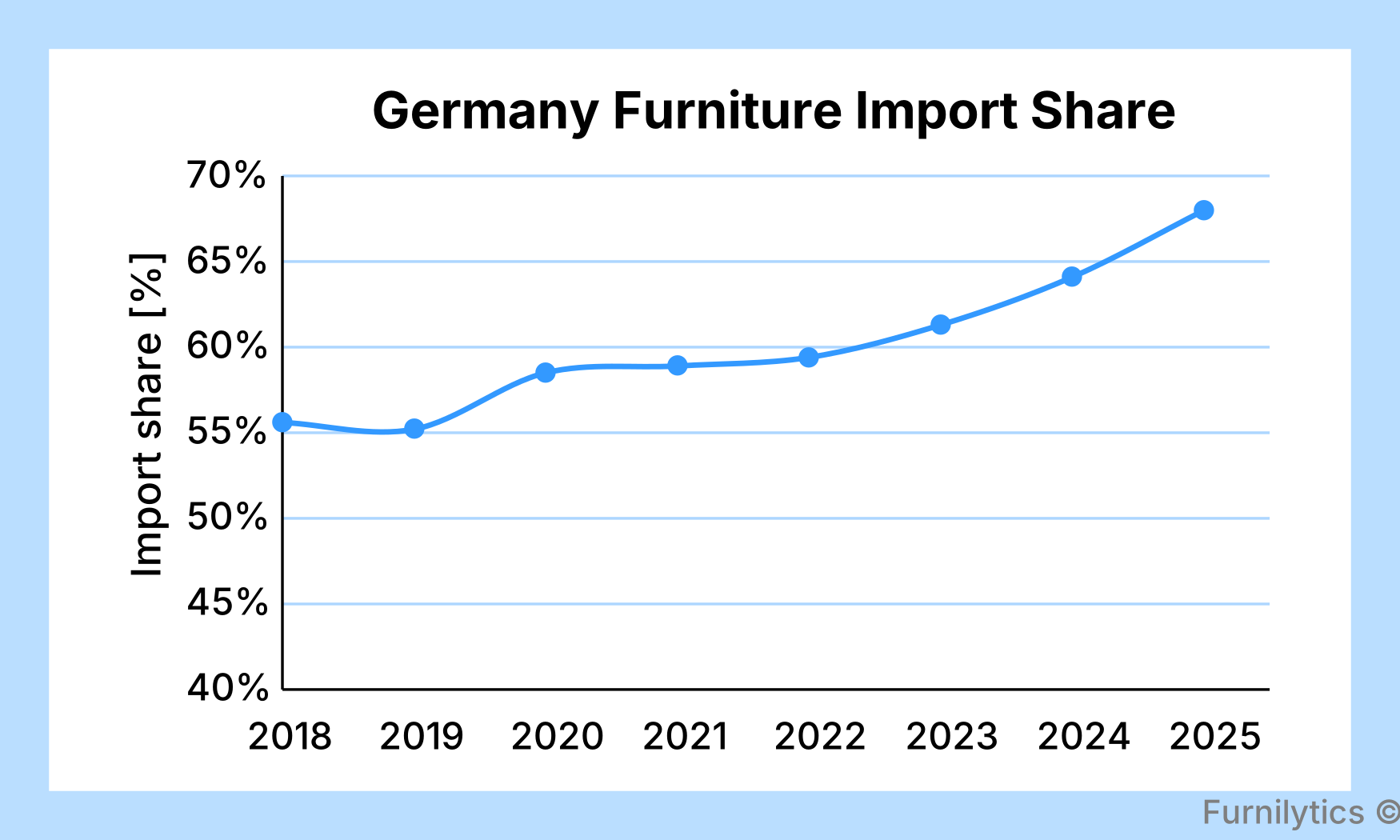
The share of furniture supplied through imports has increased steadily over recent years. Germany’s furniture import share rose from roughly 55% in 2018 to nearly 68% in 2025, reaching the highest level in the observed period.
The trend highlights a structural shift in the German furniture market. Imports have grown faster than domestic production, suggesting that retailers and buyers increasingly rely on international sourcing networks to meet demand. The development also reflects the growing integration of European furniture supply chains, particularly within Central and Eastern Europe.
Germany’s Sourcing Structure Shifts
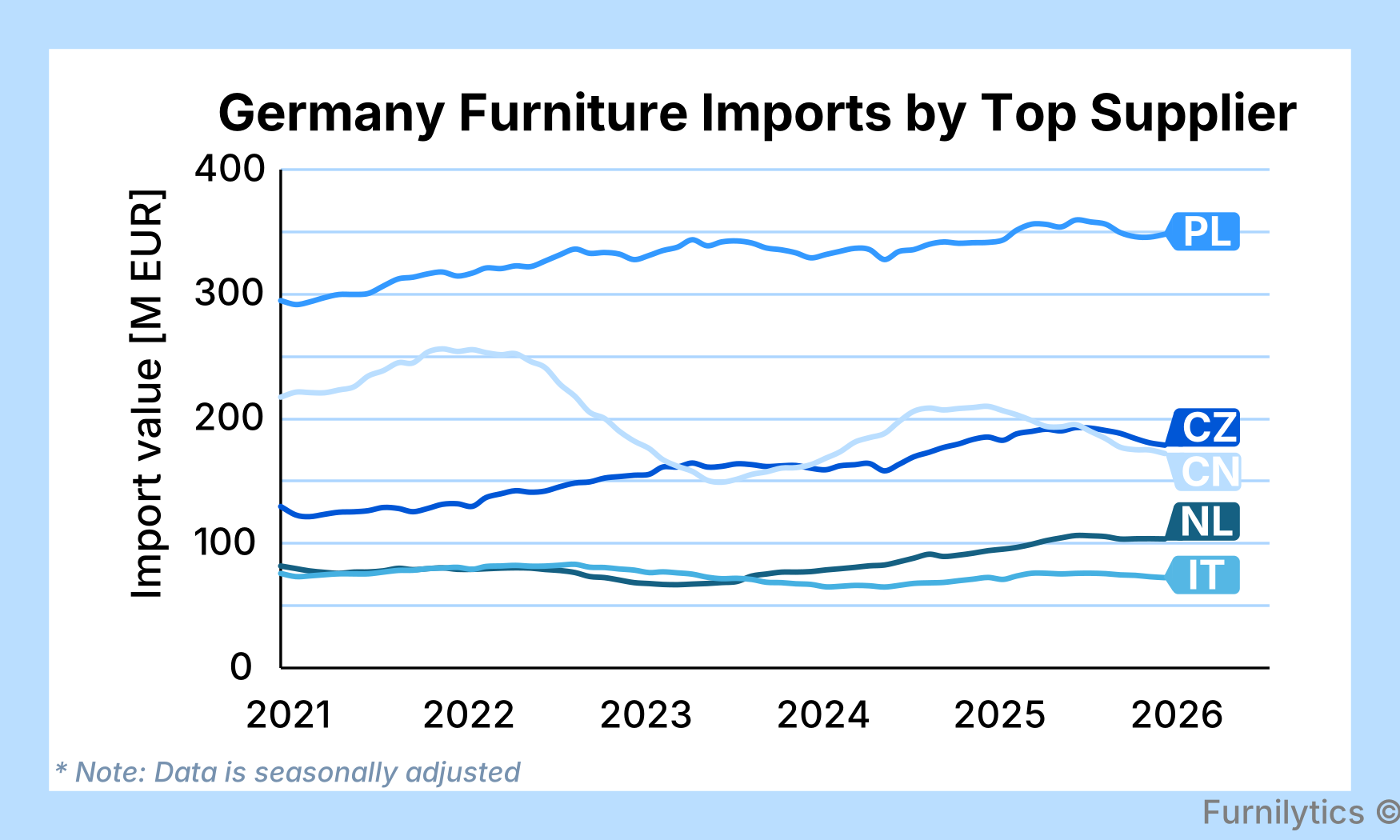
Poland remains Germany’s largest furniture supplier by a wide margin. Monthly imports increased from around 295M EUR in 2021 to peaks above 360M EUR during 2025, before softening slightly toward the end of the year.
The Czech Republic also strengthened its position, with imports rising from roughly 125M EUR to nearly 190M EUR per month, although recent months likewise showed some weakening. In contrast, China’s imports were far more volatile, peaking around 255M EUR per month in 2022 before falling sharply during 2023. While imports recovered partly during 2024–2025, levels remain below the earlier highs.
Note: China import values are partly influenced by Euro appreciation.
Imports from the Netherlands increased from roughly 80M EUR to above 100M EUR per month, although part of the Dutch trade flow likely reflects re-export activity linked to the Netherlands’ role as a European logistics hub.
Conclusion
Overall, the data suggests that Germany’s furniture market is becoming increasingly import-driven. While domestic production has weakened since the post-pandemic recovery phase, imports continue to gain market share.
Poland remains by far Germany’s largest supplier, while sourcing patterns increasingly reflect deeper regional European integration, with countries such as the Czech Republic and the Netherlands gaining importance. China’s role appears less dominant than during the pandemic-driven import surge, although part of the decline in EUR-denominated import values is influenced by EUR/USD exchange-rate movements. Together, the data points toward an ongoing structural shift in how furniture products are sourced within Europe’s largest furniture market.
Sources:
Eurostat – Short-term business statistics (STS)
Eurostat – Structural business statistics (SBS)
Eurostat – Comext database DS-045409
Furnilytics indicator - Germany Furniture Production Market Size
Furnilytics data - EU furniture imports by partner and HS4
Methodology & limitations:
Germany furniture production is based on Furnilytics estimates for furniture manufacturing (NACE C31). Annual benchmark values are derived from Eurostat Structural Business Statistics (SBS), while monthly developments are estimated through temporal disaggregation using Eurostat short-term production and producer-price indicators. Furniture import data is based on Eurostat Comext trade statistics (DS-045409) covering HS 9401, HS 9402 and HS 9403 product groups.
Monthly production and import series were seasonally adjusted using STL (Seasonal-Trend decomposition using Loess) with a 12-month seasonal period and robust fitting. As a result, production values should be interpreted as estimates rather than directly reported monthly market values. Trade data may be subject to revisions, reporting lags and exchange-rate effects, while seasonal adjustment may lead to minor revisions of historical observations as new data becomes available.