
Westwing Business Model Analysis
Westwing is one of Europe's largest online Home & Living retailers and has developed a distinctive position within the furniture and home furnishing market. Since launching Westwing Collection in 2018, the company has increasingly expanded its proprietary product portfolio while building a substantial social media audience across its European markets.
This analysis examines how Westwing's business model evolved between 2018 and 2025. Using annual report data, we explore the company's social media reach, the growth of Westwing Collection, changes in customer purchasing behaviour and the resulting development in gross margins. Together, these indicators provide insight into how Westwing has combined brand building, product strategy and customer spending patterns to reshape the economics of its business.
Audience Scale Versus Business Scale
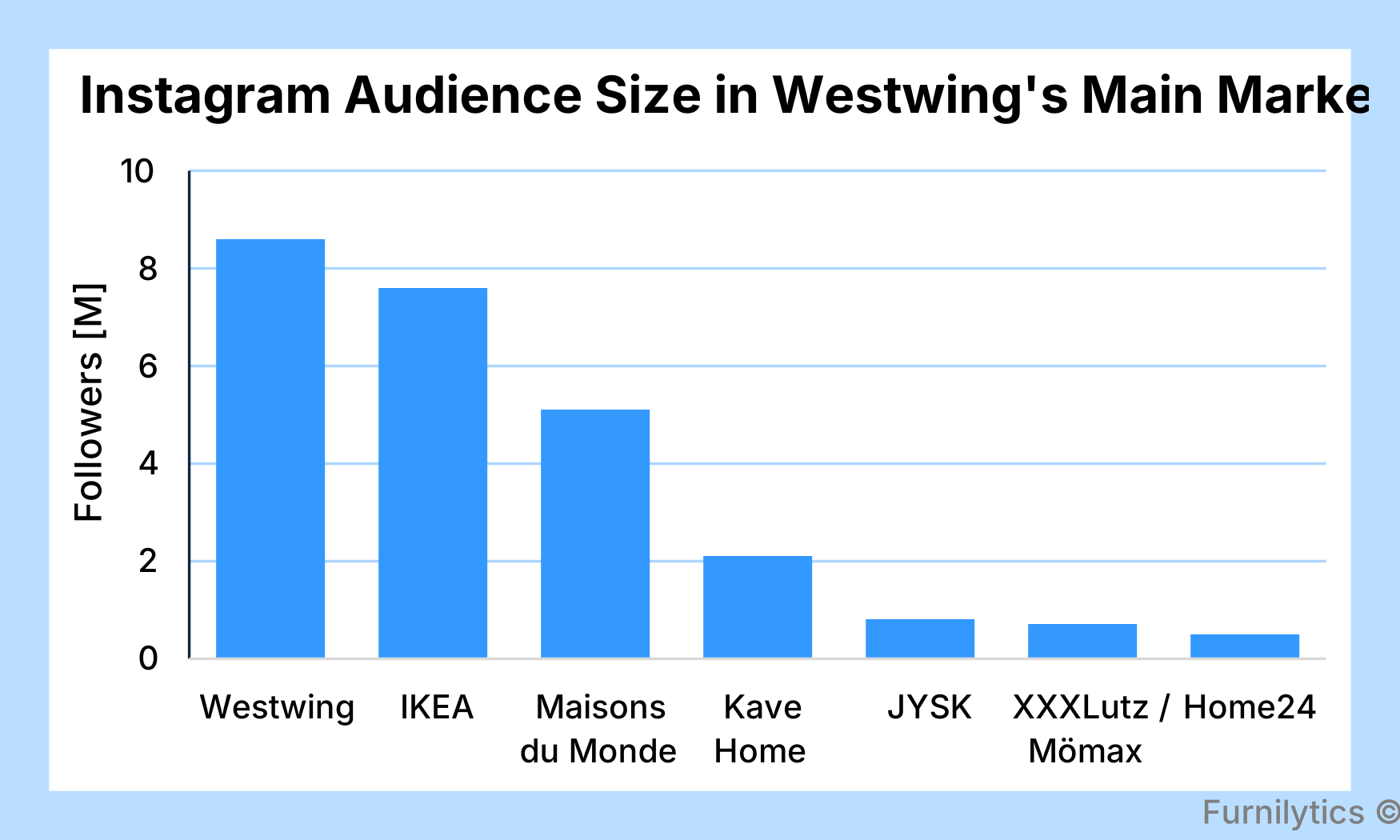
Westwing has a strong social media position both in absolute audience size and relative to its business scale. Its consolidated European Instagram account reaches around 8.6 million followers, slightly ahead of IKEA’s aggregated local accounts in the selected markets at around 7.6 million and well ahead of Maisons du Monde at around 5.1 million.
The difference becomes clearer when followers are compared with revenue. More online- and design-led brands show much higher Instagram intensity: Kave Home reaches roughly 6,700 followers per €1 million of revenue, Westwing around 4,700 and Maisons du Monde around 3,300. Traditional store-led retailers are far lower, with IKEA around 400 and JYSK around 260 followers per €1 million of revenue. This suggests that Westwing’s position is closer to design-led and inspiration-driven brands than to conventional furniture retail chains.
Expansion of the Westwing Collection
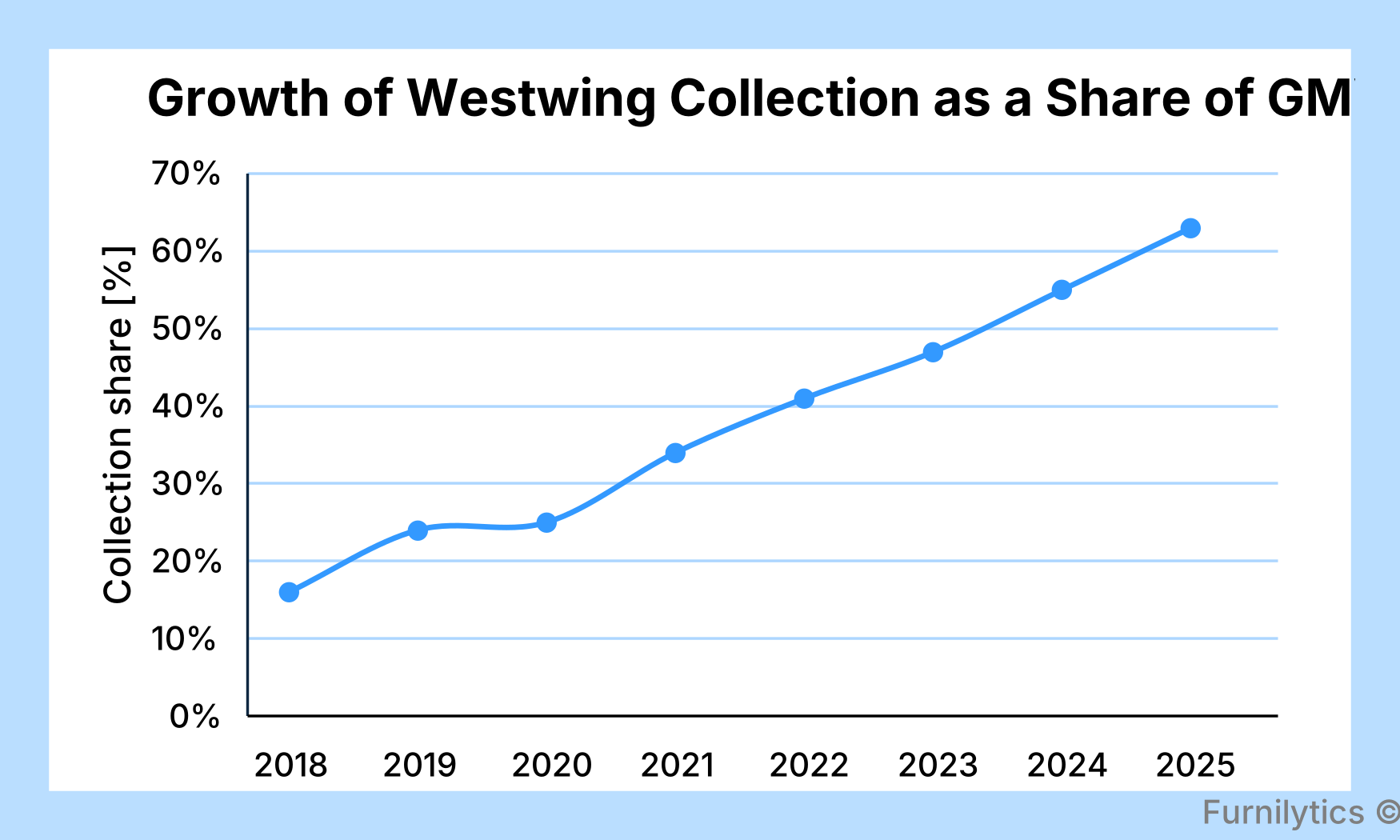
Since its launch in 2018, Westwing Collection has become an increasingly important part of Westwing's business model. Its share of gross merchandise Value (GMV) increased from 16% in 2018 to 63% in 2025, a gain of 47 percentage points over seven years.
The strongest growth occurred after 2020, when Collection share rose from 25% to 63%. By 2025, nearly two-thirds of all GMV was generated by Westwing Collection, making it the dominant part of the company's product mix.The steady increase suggests a long-term strategic shift toward proprietary products rather than a temporary change in assortment.
Premiumisation of Customer Demand
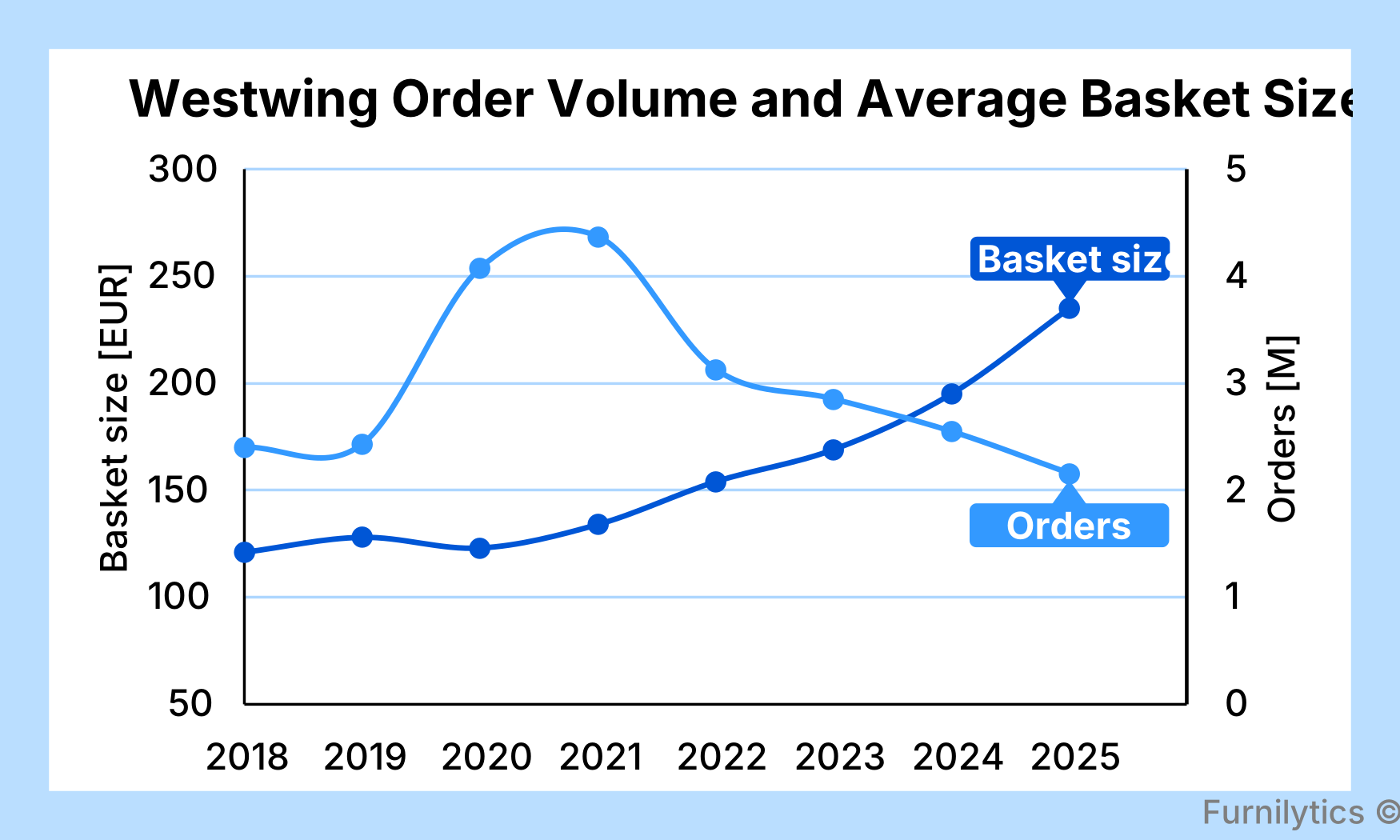
The growth of Westwing Collection coincided with a significant change in customer purchasing behaviour. After peaking at 4.4 million orders in 2021, annual order volume declined to 2.2 million by 2025, a reduction of approximately 51%.
At the same time, the average basket size increased from €134 to €235, an increase of 75%. Compared with 2018, basket size nearly doubled, while order volume returned to levels below the pandemic-driven peak.
The diverging trends suggest that Westwing increasingly generated value through larger purchases rather than higher transaction volumes. This development is consistent with the growing importance of Westwing Collection and the company's positioning as a more design-oriented and premium Home & Living brand.
Margin Expansion Despite Stable Revenue
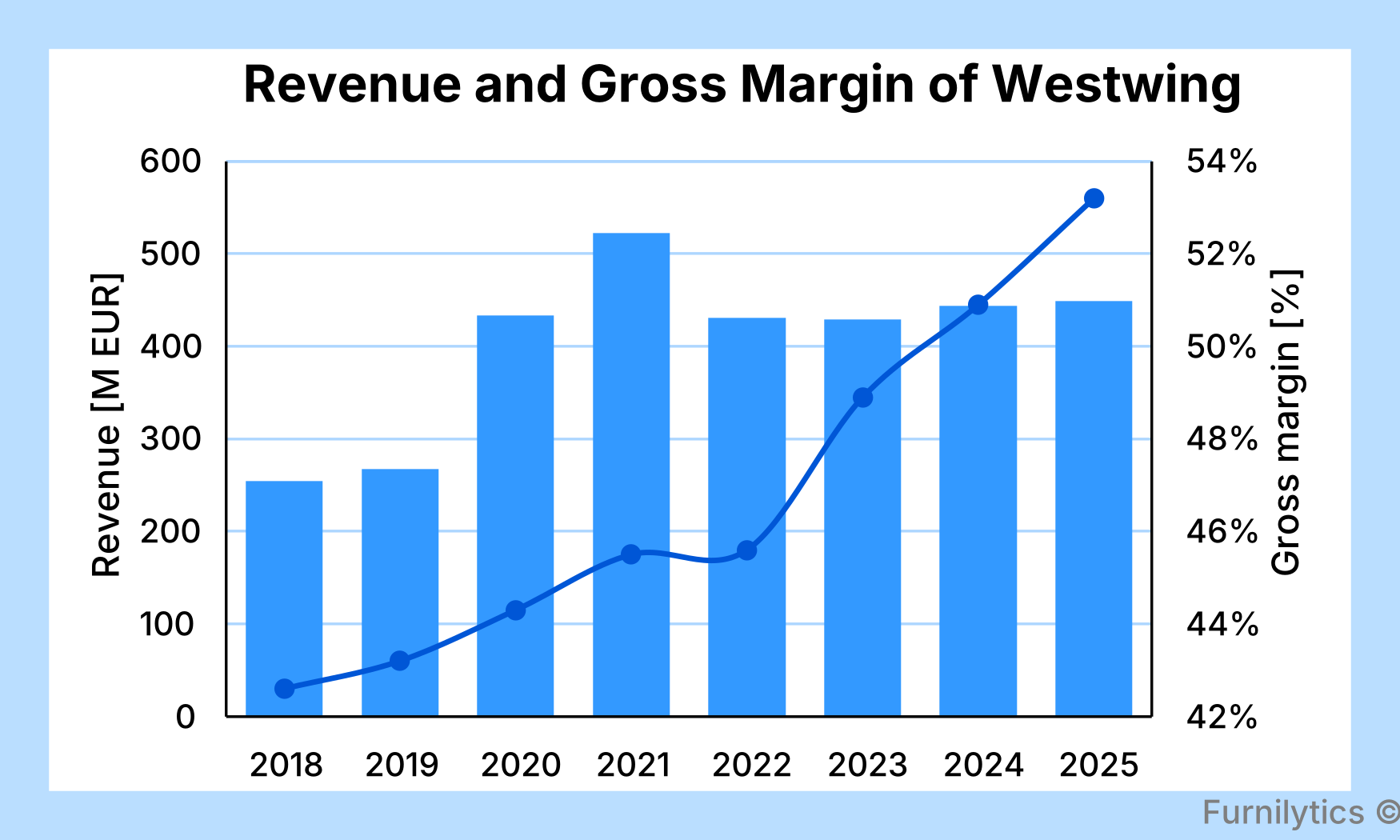
Westwing's strategic transformation is reflected in its gross margin development. Between 2018 and 2025, gross margin increased from 42.6% to 53.2%, a gain of 10.6 percentage points. The strongest expansion occurred after 2022, when gross margin rose from 45.6% to 53.2%.
Revenue followed a different path. While revenue increased from €254 million in 2018 to €449 million in 2025, it remained broadly stable around €430–450 million between 2022 and 2025. This suggests that recent performance improvements were driven less by revenue growth and more by changes in product mix and customer spending patterns.
The timing closely matches the growth of Westwing Collection and the increase in average basket size, indicating that Westwing generated more gross profit from a relatively stable revenue base.
Conclusion
Westwing has built a substantial social media audience, with an Instagram following that exceeds most major furniture retailers despite its comparatively modest scale. Between 2018 and 2025, the company increased the share of Westwing Collection from 16% to 63% of GMV, while average basket size rose from €121 to €235 and gross margin expanded from 42.6% to 53.2%.
The combination of a large social media audience, a growing proprietary product portfolio and higher-value customer purchases suggests that Westwing's recent performance has been driven more by product mix and brand strength than by transaction volume growth.
Sources:
Westwing Annual Reports
Westwing Group SE annual financial statements (HGB)
Methodology & limitations:
The analysis is based primarily on Westwing's consolidated annual reports for 2018–2025, supplemented by HGB annual financial statements where relevant. Revenue, gross margin, GMV, order volume, average basket size, active customers, orders per active customer, adjusted EBITDA and Westwing Collection share were extracted from company disclosures.
Instagram audience comparisons were compiled using official Instagram accounts in Westwing's core markets (Germany, Italy, France, Spain, the Netherlands and Poland). For competitors with multiple country accounts, follower counts were aggregated across the relevant markets. Follower counts are approximate and may change over time. Differences in account structures and market coverage may affect comparability between companies.