
European Furniture Manufacturing: Production, Inflation and Price Trend
European furniture manufacturing has undergone significant changes since the pandemic, with rising production values often suggesting a strong industry recovery. This analysis examines whether that recovery reflects higher manufacturing output or primarily the impact of producer price inflation by comparing production values, inflation-adjusted output and producer price developments across Europe.
Covering 28 European countries, the analysis reviews the structure of the European furniture manufacturing industry, production trends between 2018 and 2025, and the latest developments in the European Furniture Producer Price Index. The analysis is based primarily on Eurostat and harmonised national statistical sources, providing a consistent view of manufacturing activity and cost developments across the European furniture industry.
European Furniture Manufacturing Landscape
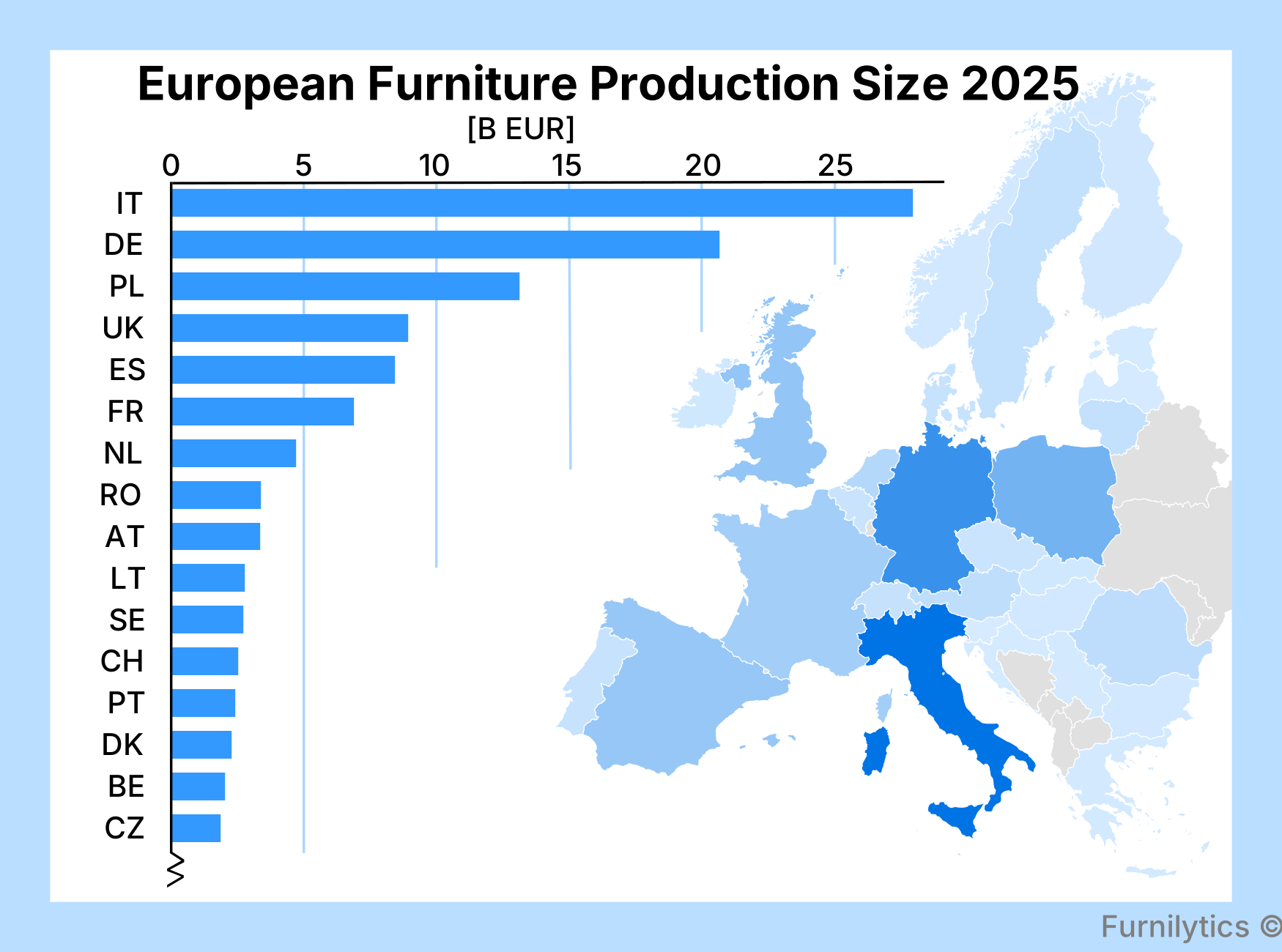
European furniture production is estimated at €123.9 billion in 2025 across 28 European countries. The map highlights the geographical coverage of the analysis, while the ranking illustrates the distribution of manufacturing activity across Europe. Together, these countries represent the vast majority of European furniture manufacturing and form the basis for the producer price analysis presented in the following sections.
Italy (€27.9 billion) remains Europe's largest furniture producer, followed by Germany (€20.7 billion) and Poland (€13.1 billion). Together, these three countries account for 49.8% of total European furniture production, while the ten largest producers represent 80.9% of the European market, highlighting the concentration of manufacturing within a relatively small number of countries. As Europe's largest production centres, developments in these markets have a significant influence on aggregate European production values and producer price trends.
Production Growth in Value, Not in Volume
European furniture production value recovered strongly following the pandemic-related slowdown in 2020, rising from €100.7 billion to a record €130.3 billion in 2022. Although production value moderated in the following years, it remained relatively resilient at €123.9 billion in 2025, approximately 15% above its 2018 level. Viewed in isolation, these figures suggest that European furniture manufacturing has largely sustained its post-pandemic recovery.
Inflation-adjusted production, however, tells a different story. While real manufacturing output also rebounded after 2020, it peaked at €111.0 billion in 2022 before declining steadily over the following three years. By 2025, real output had fallen to €98.6 billion, around 8% below its 2018 level, indicating that the industry's underlying production volume has not kept pace with the growth observed in nominal values.
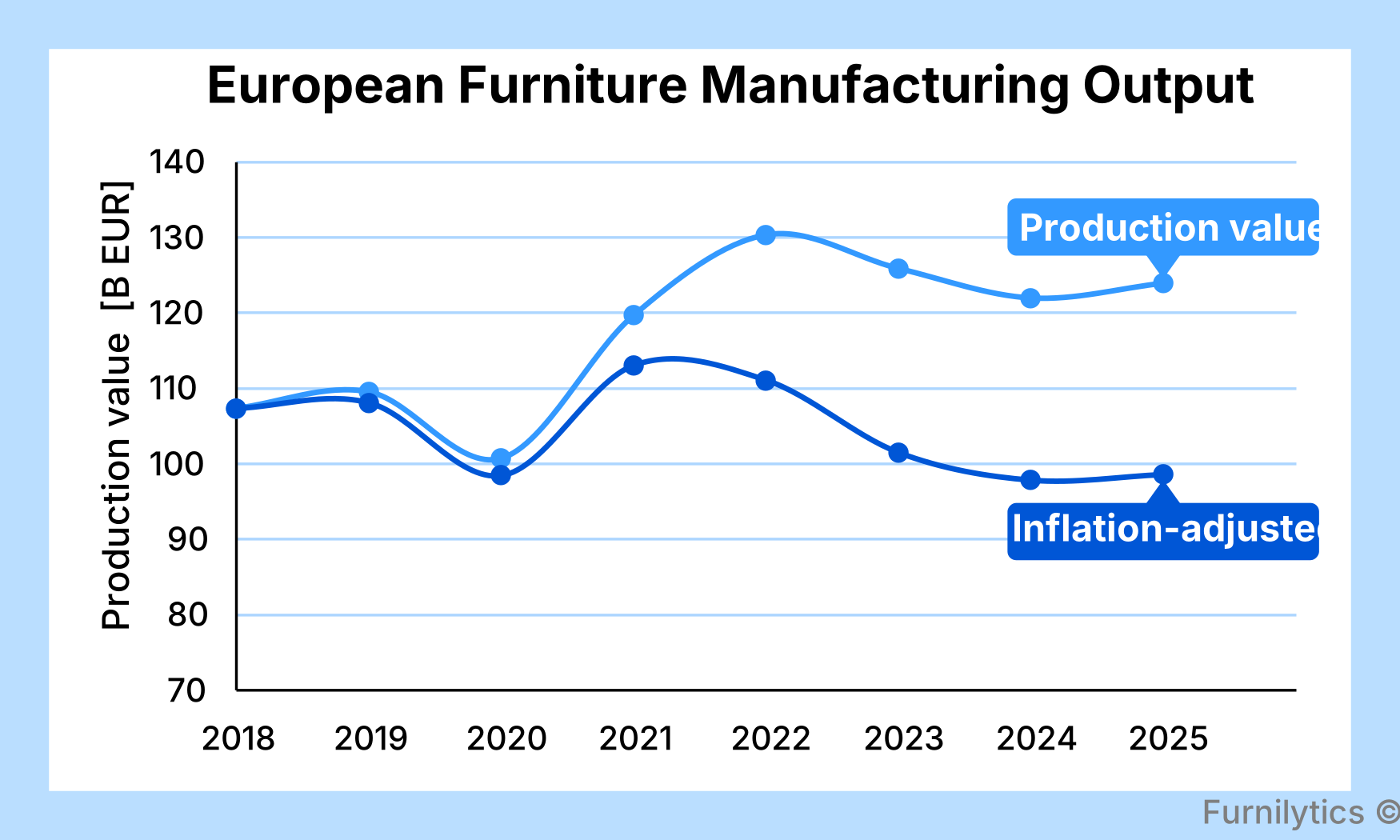
The widening gap between production value and inflation-adjusted output becomes particularly evident after 2022. While nominal production remained relatively stable, real output declined by more than 11%, suggesting that much of the industry's apparent resilience reflects higher prices received by manufacturers rather than an increase in the quantity of furniture produced. Understanding this divergence is essential when evaluating the performance of the European furniture manufacturing industry and provides the context for the producer price developments discussed in the following section.
European Furniture Producer Price Inflation Outlook
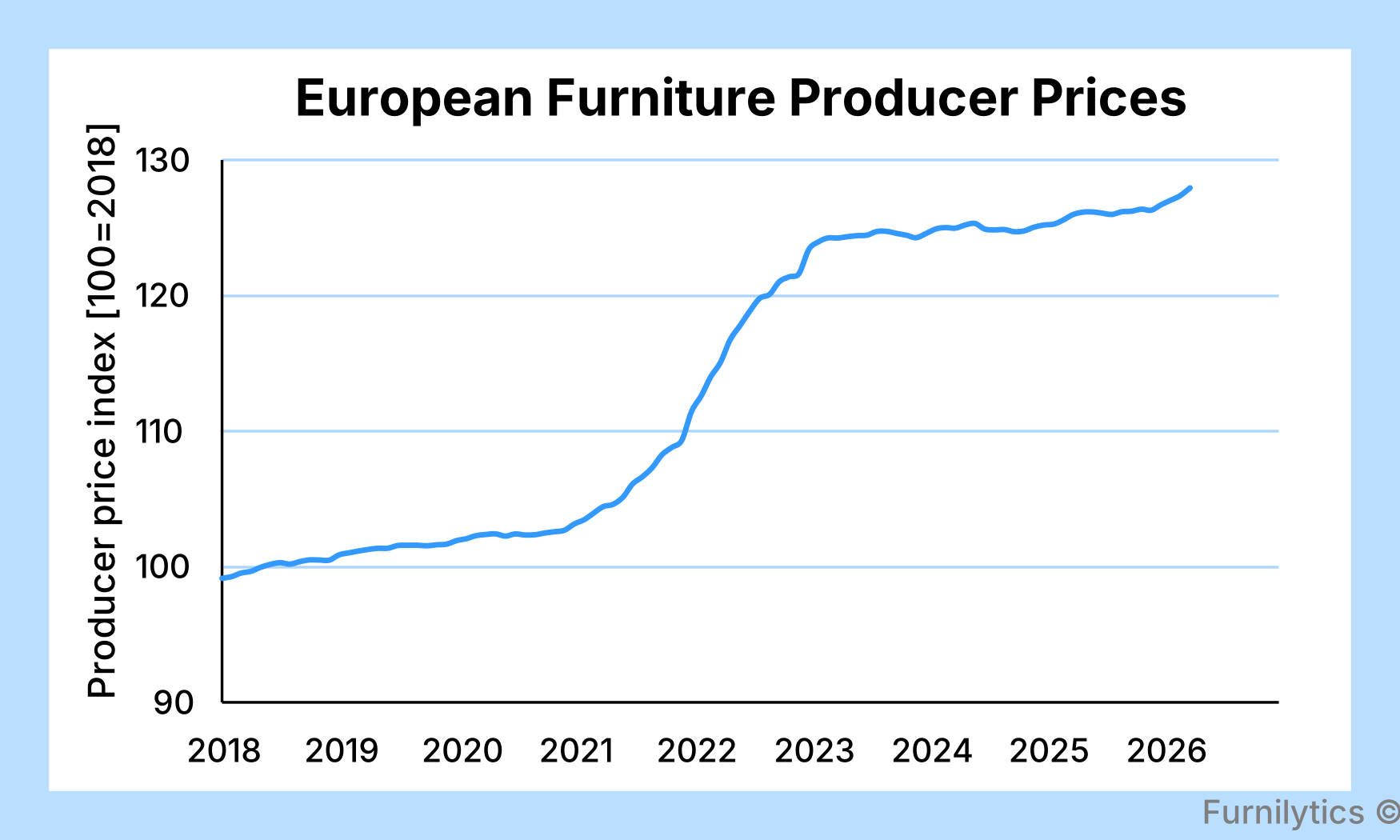
European furniture producer prices remained relatively stable between 2018 and 2021 before accelerating sharply during 2022 as manufacturers faced higher costs for energy, raw materials and logistics. Between January 2021 and March 2023, European furniture producer prices increased by 20.5%, representing one of the strongest inflationary periods experienced by the European furniture manufacturing industry in recent decades.
Following this sharp increase, producer prices largely stabilised throughout 2023, 2024 and 2025. This helps explain why nominal production values remained relatively resilient despite declining inflation-adjusted manufacturing output. More recent data, however, indicates that upward pressure is gradually returning. Between December 2025 and April 2026, European furniture producer prices increased by 1.3%, marking the strongest rise in more than two years.
The outlook remains uncertain, but inflation risks appear tilted to the upside. Continued geopolitical tensions in the Middle East have increased uncertainty in energy markets, while supply constraints for methanol and other chemical feedstocks are placing renewed pressure on resin and panel production costs. If these input cost increases persist, European furniture manufacturers may face further producer price inflation during 2026, although the extent will depend on market demand and manufacturers' ability to pass higher costs on to customers.
Conclusion
European furniture manufacturing has largely completed its post-pandemic adjustment, but the recovery appears considerably weaker once inflation is taken into account. While production values remain above pre-pandemic levels, inflation-adjusted output has fallen back below 2018 levels, indicating that much of the industry's apparent growth has been driven by higher producer prices rather than increased manufacturing activity.
At the same time, producer prices have remained structurally elevated instead of returning to pre-2022 levels. Recent data suggests that cost pressures are beginning to build again, while continued uncertainty surrounding energy markets and chemical feedstocks may keep inflation risks elevated throughout 2026. For manufacturers, suppliers and investors, distinguishing between production value and real output will therefore remain essential for accurately assessing the underlying health of the European furniture industry.
Sources:
Eurostat - structural business statistics (SBS)
Eurostat - Short-Term Business Statistics (STS_INPP_M)
Furnilytics - Europe Furniture Retail Market Size by Country
Methodology & limitations:
European furniture production is based on estimates for furniture manufacturing (NACE Rev. 2 C31). Annual benchmark values are derived from Eurostat Structural Business Statistics (SBS), while monthly developments are estimated using official industrial production volume indices and producer price indices. The European Furniture Producer Price Index is calculated as a bottom-up aggregate by combining country-level monthly production estimates to derive a harmonised measure of factory-gate price developments across Europe.
The European Furniture Producer Price Index is a Furnilytics indicator rather than an official Eurostat aggregate. Recent estimates may be revised as additional official benchmark data become available. Comparability may also be affected by differences in national statistical methodologies, reporting coverage and the use of harmonised national statistical sources where Eurostat data are incomplete. A detailed description of the methodology is available in the European Furniture Producer Price Index Methodology.