
European Furniture Production: Short-Term Momentum Deteriorates
European furniture manufacturing is entering the second half of 2026 with noticeably weaker short-term momentum. While retail turnover has remained broadly stable, production has moved further into contraction, with the latest data showing a clear deterioration across several of Europe’s largest manufacturing markets.
This analysis focuses on the latest developments using harmonised official statistics across 28 European countries. It examines the widening gap between retail and production, the worsening 12-, 6- and 3-month production trends in Germany, Italy and Poland, and the renewed rise in producer prices that may be adding further pressure on manufacturers.
Note: This article is written earlier in August 2026, our homepage shows latest 2026 data. German latest numbers show positive results, resulting in less negative momentum numbers.
European retail remains stable as production weakens
European furniture retail turnover has remained broadly stable into mid-2026, while furniture production has moved in the opposite direction. Across 28 European markets, retail turnover increased by 1.5% over the latest 12-month period compared with the same period one year earlier. Over both the latest six and three months, growth remained positive at 1.0%.
Furniture production shows a markedly different pattern. Production turnover was 0.2% lower over the latest 12 months, but the decline becomes substantially stronger over shorter comparison periods: down 2.1% over the latest six months and 2.8% over the latest three months compared with the same periods one year earlier. The divergence is also visible in the indexed series, with retail turnover remaining relatively stable at its post-2022 level while production turnover has gradually moved lower.
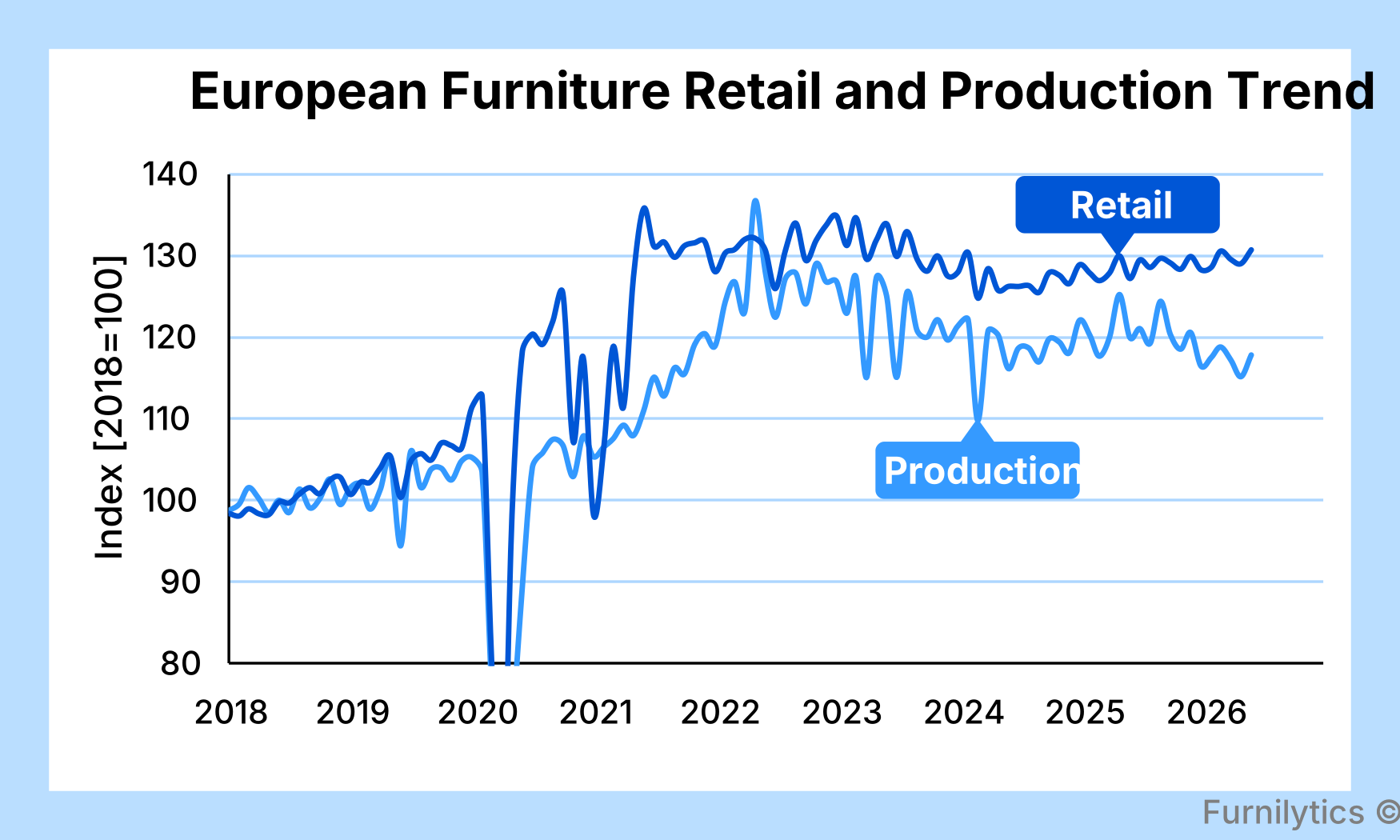
Other indicators point to a similarly weaker environment on the manufacturing side. EU27 furniture exports to markets outside the EU fell 5.9% over the latest six months compared with the same period last year. While extra-EU trade represents only one part of European furniture production and should not be interpreted as the cause of the downturn, it adds to the contrast between relatively stable retail turnover and weakening conditions for manufacturers. More importantly, the increasingly negative 12-, 6- and 3-month production figures indicate that the contraction has intensified during the first half of 2026.
Europe’s largest producers are weakening together
The deterioration in European furniture production is also visible across its largest manufacturing markets. Germany, Italy and Poland together account for roughly half of European furniture production, making their recent performance particularly important for the wider market.
All three are now showing negative momentum, and in each case the shorter comparison periods are weaker than the longer-term picture. Germany declined by 3.3% over the latest 12 months, 4.3% over six months and 4.7% over three months. Poland shows an even steeper progression, from -2.2% over 12 months to -4.8% over six months and -5.6% over the latest three months.
Italy is the more recent development. Over the latest 12 months, production was almost unchanged at -0.3% compared with the same period one year earlier. Over the latest six months, however, the decline widened to -3.4%, followed by -4.8% over the latest three months. This brings Italy much closer to the weakness already visible in Germany and Poland.
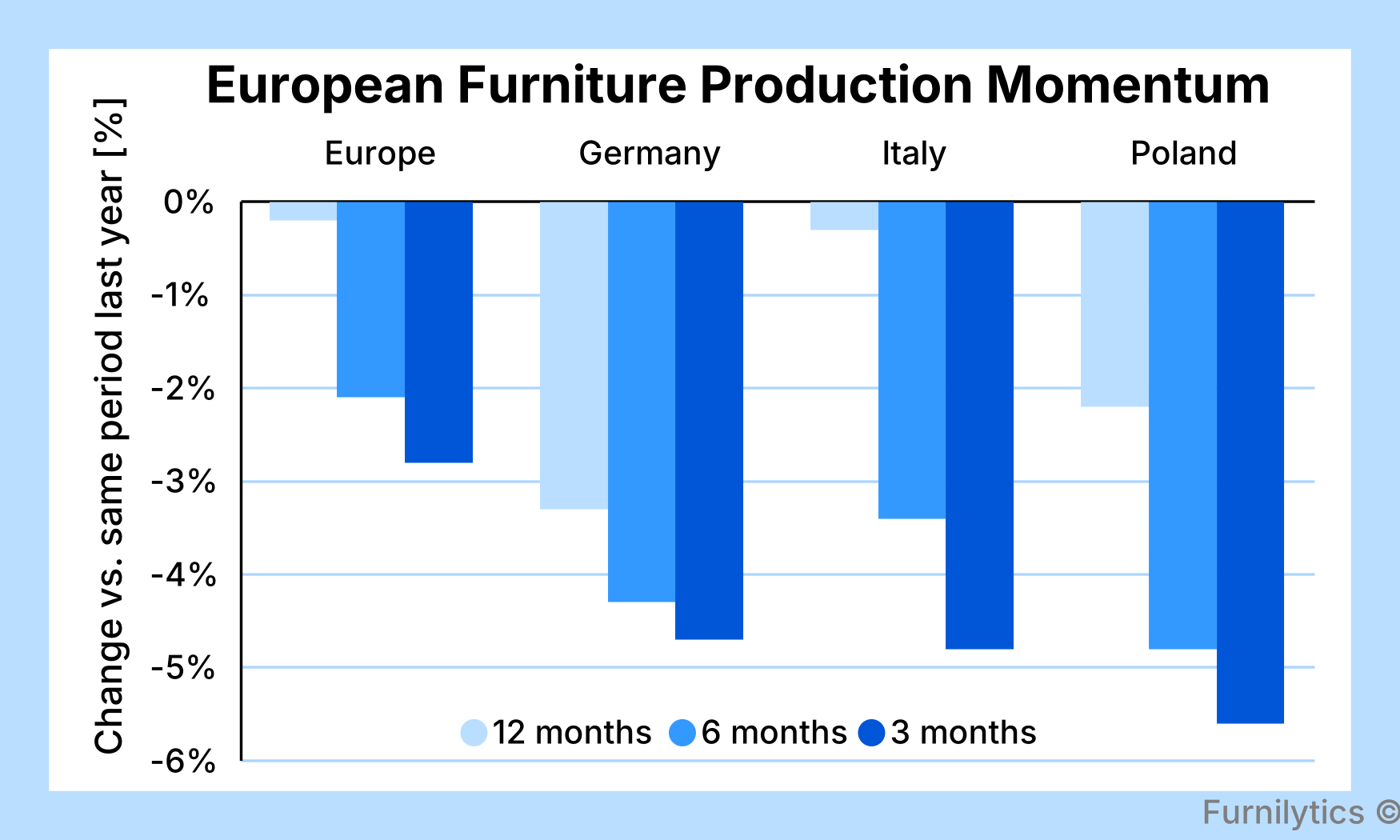
The latest data therefore suggest that the downturn is becoming both broader and more synchronised across Europe’s main furniture-producing economies. Germany and Poland had already been under pressure, but Italy’s recent deterioration means that weakness is no longer concentrated mainly in markets that had been declining for some time.
Renewed pressure on furniture manufacturers
The production downturn is occurring alongside renewed upward movement in furniture producer prices. After remaining broadly stable through much of 2024 and 2025, the European furniture producer price index began rising again towards the end of 2025. By May 2026, the index had reached 128.34, around 1.7% above the same month one year earlier and close to 2% above its low in August 2025.
This creates a less favourable operating environment for manufacturers. Production turnover is falling at an accelerating rate, while factory-gate prices are once again moving higher. The combination suggests that the sector is not entering the current downturn through a broad price correction: weaker manufacturing activity is instead coinciding with renewed price pressure.
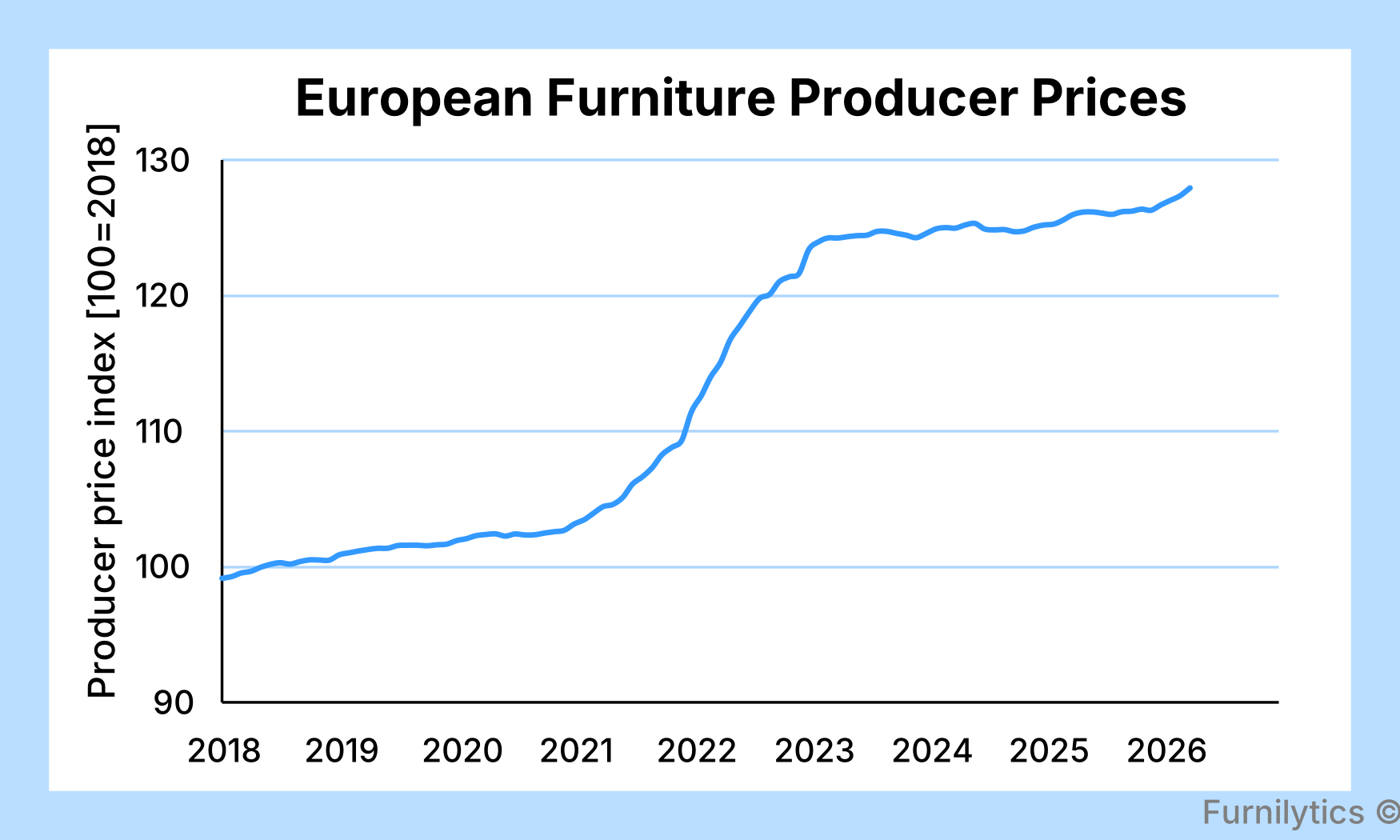
The development is particularly relevant for margins. Rising producer prices can partly reflect manufacturers passing higher costs through to customers, but this becomes increasingly difficult when production and demand for manufactured output are weakening. The simultaneous deterioration in production momentum and renewed increase in producer prices therefore points to a growing risk of margin pressure, especially where input, labour and operating costs remain elevated.
Conclusion
The latest data show that Europe’s furniture production downturn is becoming more pronounced in the short term. Germany and Poland had already been weakening, but Italy has now joined that trend, with all three major producers showing declines of around 5% over the latest three-month period.
This broadening of the downturn is particularly significant because Germany, Italy and Poland together account for roughly half of European furniture production. The recent deterioration therefore points to a wider manufacturing slowdown rather than weakness concentrated in only one or two markets. With producer prices also moving higher again, conditions for manufacturers are becoming more challenging as Europe enters the second half of 2026.
Sources:
Eurostat - Structural Business Statistics (SBS)
Eurostat - Short-Term Business Statistics (STS)
Destatis - GENESIS retail trade statistics
Statistics Poland - Local Data Bank retail sales
Furnilytics - Production, Retail and PPI Methodology
Methodology & limitations:
Furniture production is measured as manufacturing-side turnover for furniture manufacturing, primarily aligned with NACE Rev. 2 C31. Annual benchmark values are based on Eurostat Structural Business Statistics, while monthly developments are estimated using official industrial production and producer price indices. The analysis focuses on Europe, with additional country-level views for Italy, Germany and Poland. Year-on-year measures compare rolling 3-, 6- and 12-month values with the same period one year earlier.
Retail turnover is used as a demand-side comparison and is based on Furnilytics European furniture retail market-size data, anchored to official retail turnover benchmarks and monthly national movement indicators where available. The deseasonalised production and retail series are analytical transformations using STL seasonal adjustment and should not be interpreted as official seasonally adjusted statistics. The Europe Furniture Producer Price Index is a Furnilytics indicator derived from Eurostat and harmonised national statistical sources. Recent values may be revised as official data are updated, and comparability can be affected by reporting lags, national source coverage and classification differences.