
Furniture Prices and Affordability Across Europe
This analysis compares basic furniture prices and affordability across Europe using a matched basket of nine common furniture products. Prices were collected from major furniture retailers including IKEA, JYSK, XXXLutz and Conforama, alongside other leading regional chains.
The analysis examines how much a comparable basic furniture basket costs across countries, how those prices change once household consumption levels are taken into account, and which selected products contribute most to the differences between markets. The results show where entry-level furniture is cheapest and most expensive in nominal terms, where it is most and least affordable, and how product-level pricing patterns differ across Europe.
Comparable Basic Furniture Basket
Furnilytics built a basket of nine common basic furniture products, covering dining, seating, storage and bedroom furniture. IKEA and JYSK provide useful cross-country reference points, but the benchmark draws on a broader set of major online furniture retailers in each market. Products were selected to match as closely as possible on size, function, materials, design and entry-level price positioning.
For each country and product type, at least two retailer observations were targeted where available, with up to five retailers included. The country price for each product is the median of the accepted observations. Four dining chairs are counted in the basket.
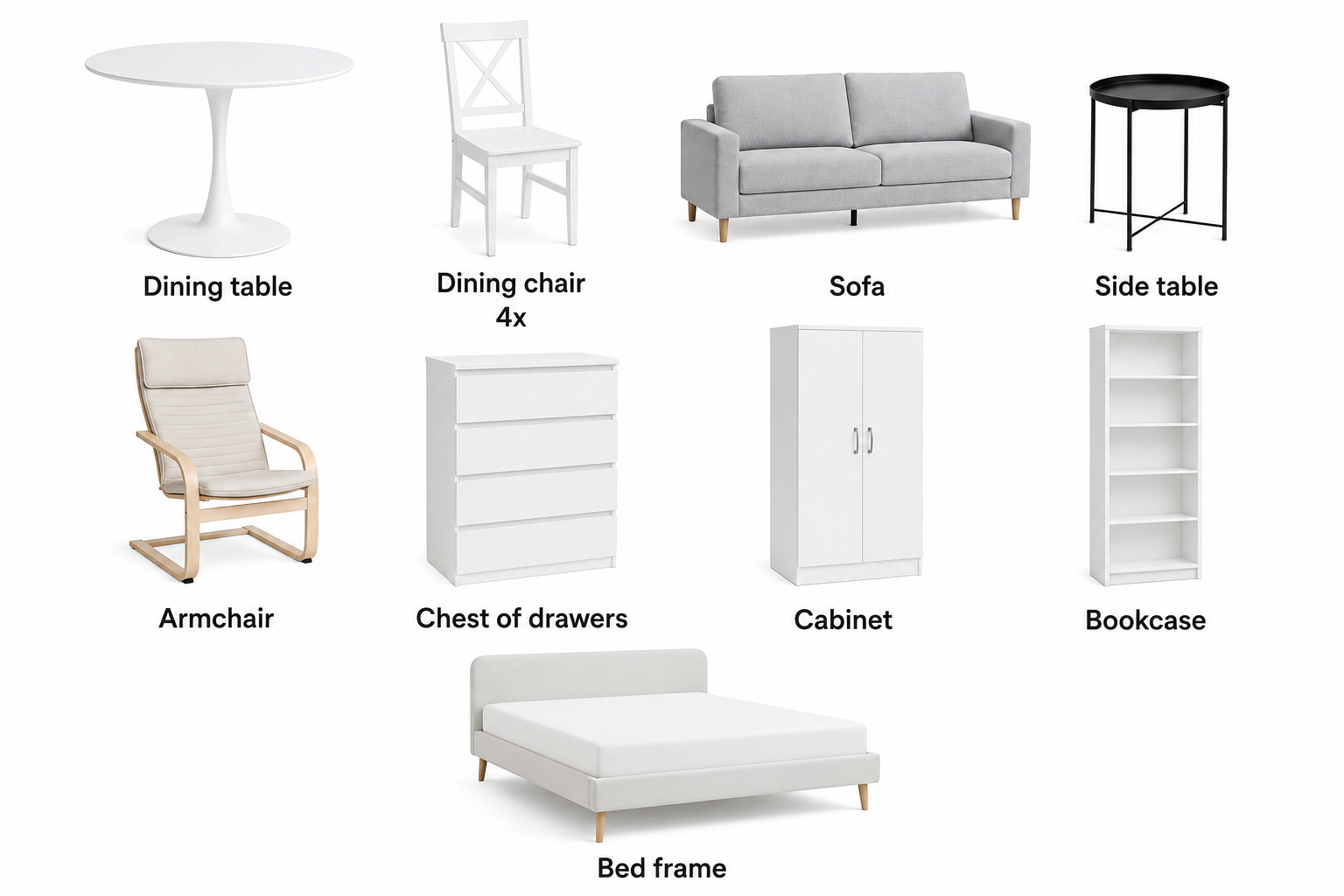
| Product type | Basket definition |
|---|---|
| Chest of drawers | White 4-drawer chest of drawers, roughly 75-85 cm wide and 90-105 cm high, flat-pack basic mass-market segment. |
| 2-door wardrobe | White 2-door wardrobe, roughly 75-85 cm wide and 175-200 cm high, simple hinged-door design. |
| Bed frame | Simple wooden upholstered double bed frame, size 160x200 cm, mattress and slatted base excluded. |
| Armchair | Basic bend veneer lounge armchair with visible armrests, and simple upholstery. |
| Dining chairs | Set-equivalent of 4 simple wooden dining chairs, cross-bar backrest. Basic mass-market dining segment. |
| Side table | Small round black metal side/serving table, roughly 45-50 cm diameter and 50-55 cm high. |
| Bookcase | Tall white open bookcase, roughly 70-80 cm wide and 195-205 cm high, 5-shelf format. |
| 3-seat sofa | Basic 3-seat fabric sofa, fixed sofa format, two pillow seat and backrest. Square fixed armrests. |
| Round dining table | Round dining table, roughly 100-120 cm diameter, simple basic mass-market dining table. |
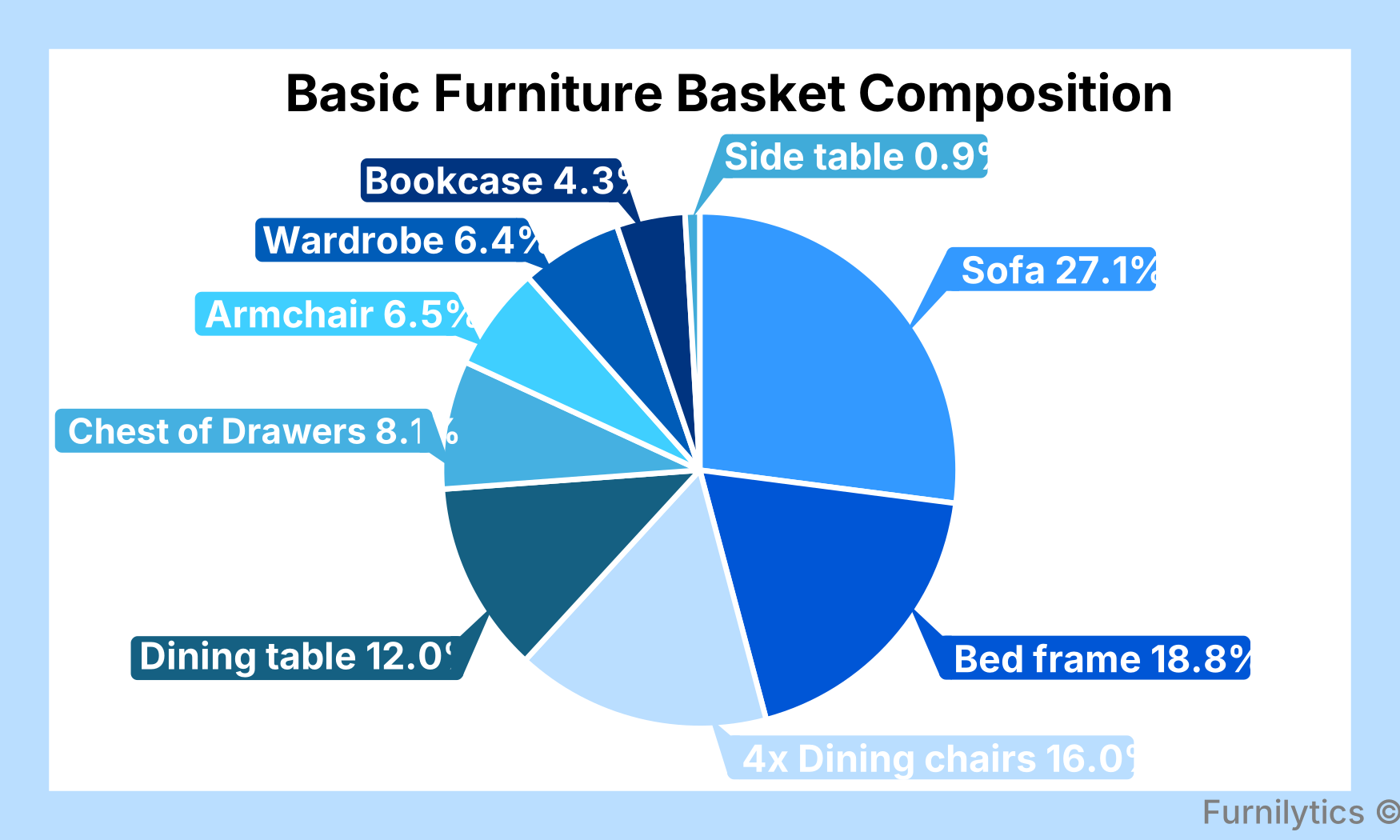
The basket is weighted naturally by the retail price of each product rather than by an imposed weighting scheme. The three-seat sofa is the largest component, accounting for 27.1% of the median basket, followed by the bed frame at 18.8% and four dining chairs at 16.0%. Together with the dining table, these four items account for around three-quarters of the total basket cost. Smaller items such as the side table and bookcase consequently have only a limited influence on the overall country ranking.
Basic Furniture Prices Vary Substantially Across Europe
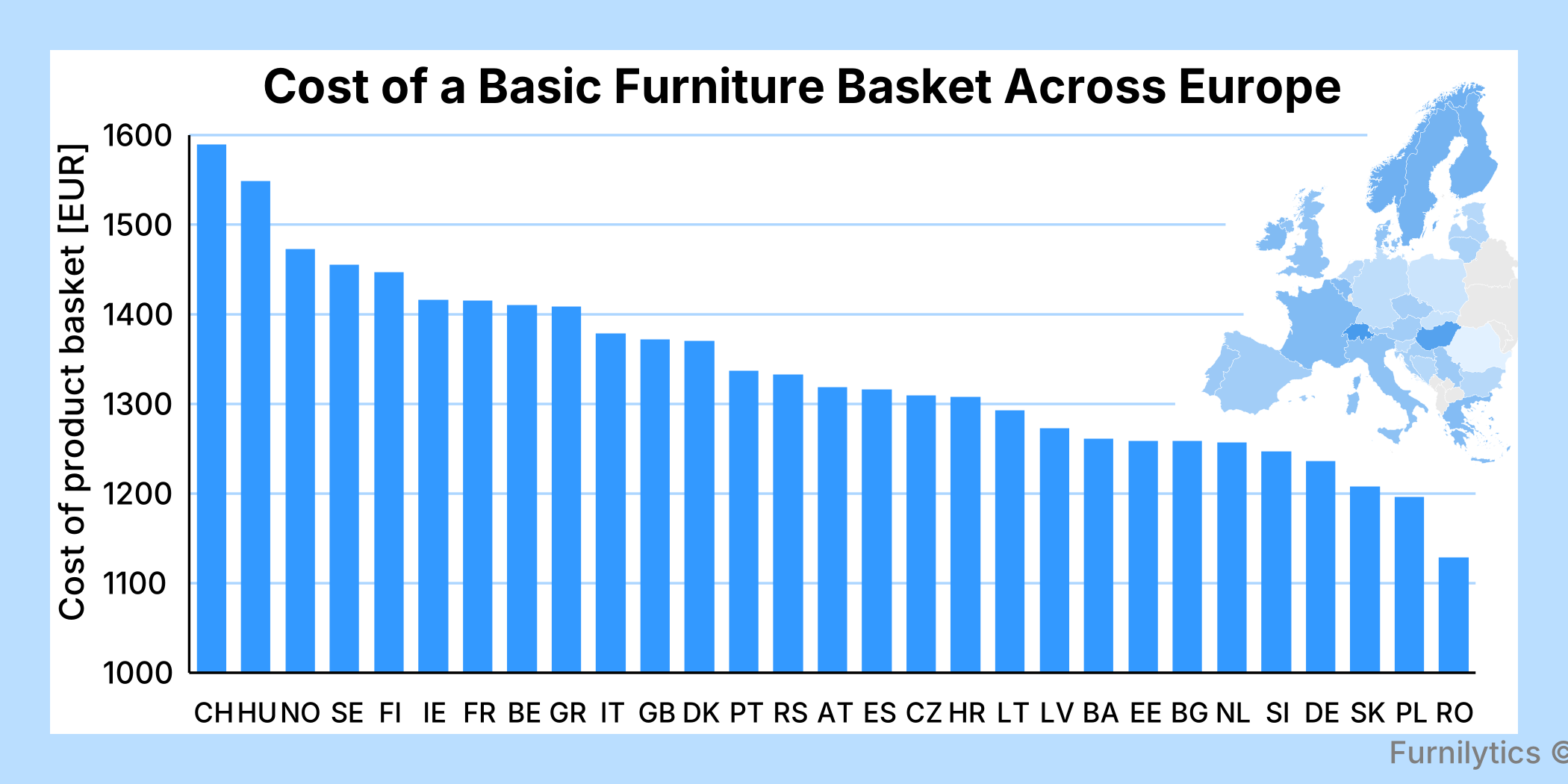
The population-weighted average cost of the basket is 1331 EUR, close to the country median of 1318 EUR. Switzerland is the most expensive market at 1590 EUR, while Romania is the cheapest at 1129 EUR, a difference of 461 EUR, or around 41% relative to the Romanian price level.
The ranking is not simply an east-west divide. The Nordic average is relatively high at 1439 EUR, compared with 1342 EUR in Western Europe and 1264 EUR across CEE and Southeast Europe. Hungary stands out as the second-most expensive market at 1549 EUR, while Germany is among the cheaper markets at 1236 EUR. Poland and Romania are the only markets more than 10% below the European weighted average, while Switzerland, Hungary and Norway are more than 10% above it.
Affordability Diverges More Than Furniture Prices
The population-weighted affordability burden of the basket is 23.1 consumption days, compared with a country median of 26.8 days. The spread is much wider than for nominal prices: the basket represents 72.2 days of household consumption in Bosnia and Herzegovina, compared with just 11.5 days in Switzerland, a more than sixfold difference.
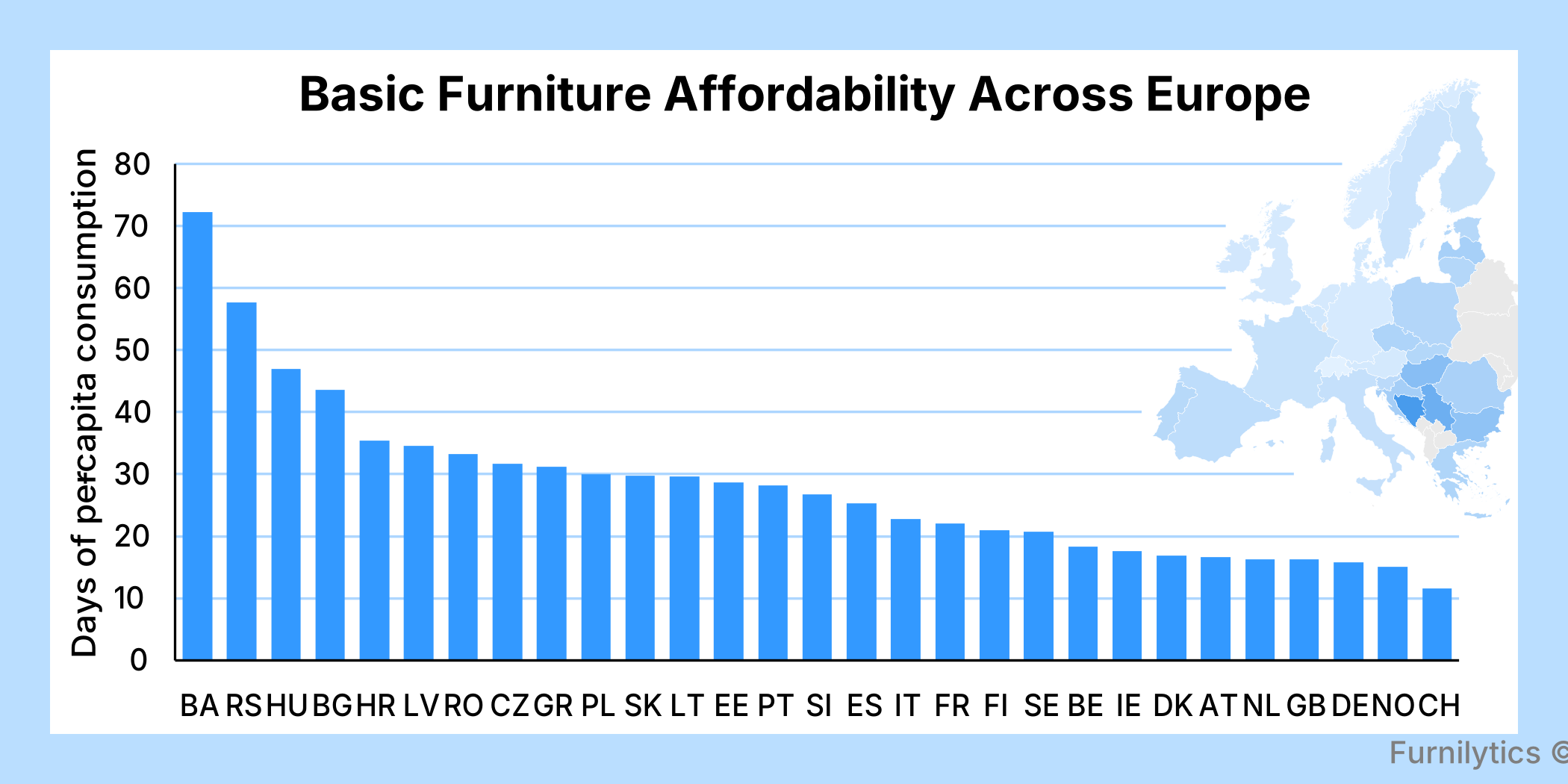
Adjusting for household consumption substantially reshapes the ranking. Switzerland falls from the most expensive market in nominal terms to the most affordable, while Norway shows a similar pattern. Romania moves in the opposite direction: despite having the lowest basket price at 1129 EUR, it rises to seventh-highest on the affordability burden measure. Hungary is the clearest case where both measures point in the same direction, ranking near the top for both nominal price and affordability burden.
Regional differences are also pronounced. The basket represents an average of 35.6 consumption days across CEE and Southeast Europe, compared with 17.5 days in Western Europe and 18.8 days in the Nordics. This indicates that differences in household spending power are considerably larger than differences in entry-level furniture prices themselves.
Price Dispersion Differs Strongly by Product Type
Price differences are not uniform across furniture categories. Dining chairs and bed frames show relatively wide cross-country spreads, while wardrobes and bookcases are much more tightly clustered around the median. This suggests that simple storage furniture is priced more consistently across European markets than seating and some larger furniture categories.
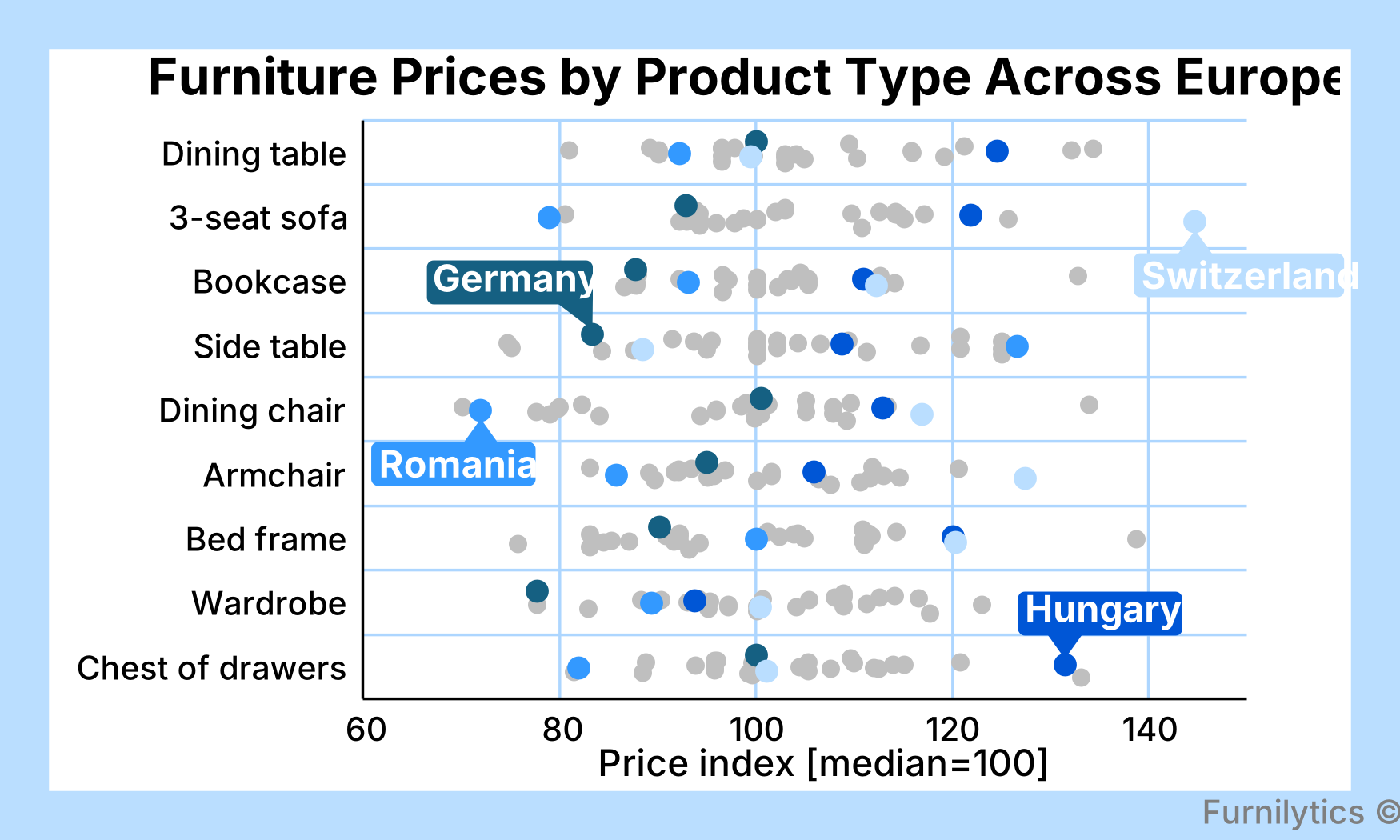
The country patterns also show that overall basket positions are usually driven by several products rather than a single outlier. Hungary is above the median across a number of important components, including the chest of drawers, dining table, sofa and bed frame, while its wardrobe price is below median. Romania shows the opposite pattern, with particularly low prices for sofas, dining chairs, chest of drawers and armchairs, despite a relatively expensive side table.
Germany is generally around or below the European median across most products, particularly for wardrobes, side tables, bookcases, bed frames and sofas. Switzerland is more selective: within this basket, its highest relative prices are found for the selected sofa, armchair, bed frame and dining-chair products, while the selected side table, dining table and wardrobe sit much closer to the European median.
Conclusion
The analysis shows that basic furniture prices vary meaningfully across Europe, but affordability differs far more once household spending power is taken into account. Switzerland has the highest nominal basket price but the lowest affordability burden, while Bosnia and Herzegovina, Serbia, Hungary and Bulgaria face much higher relative costs.
The results also show that country positions are not driven uniformly across all products. Within the selected basket, some markets are consistently above or below the median across several items, while others show more selective premiums or discounts.
For consumers, this means that the cheapest furniture market is not necessarily the most affordable. For retailers and manufacturers, it also highlights the limits of nominal price benchmarking alone: local purchasing power remains a critical part of how entry-level furniture is positioned across Europe.
Sources:
European Central Bank - FX rates
Retailer webpage product prices listings
World Bank - Household final consumption expenditure
Methodology & limitations:
A basic furniture basket was built from nine comparable entry-level product types across storage, seating, tables, sofa and bed-frame categories. Products were handpicked from major online furniture retailers to match as closely as possible across countries on size, function, material and price segment. The included retailers are IKEA, JYSK, XXXLutz, Lesnina, Beliani, Maisons du Monde, Conforama, Home24 and Mondo Convenienza.
For each country and product type, at least two accepted retailer prices were targeted where available, with up to five retailer observations included. Bosnia and Herzegovina has only one retailer observation per product type because comparable major online retailer coverage was limited. The product-level country price is the median of accepted retailer prices in euro. Dining chairs are counted as four units. Sofa comparisons were also more constrained than other categories, with the closest cross-country matches generally coming from IKEA and JYSK.
Current visible online prices are used, including promotional prices where they represent the available transaction price at the observation date. Non-euro prices are converted using ECB or fixed euro exchange rates. The country basket equals the sum of the nine product-level medians, indexed against the sample median basket price. The affordability measure divides each country’s basic furniture basket price by World Bank household final consumption expenditure per capita, converted to euro, and expresses the result as the number of consumption days needed to buy the basket.