
Intra-EU Trade and the European Furniture Market
Intra-EU trade is one of the defining characteristics of the European furniture market, yet import dependency statistics alone do not reveal how much furniture is actually sourced from within Europe. A market may be highly dependent on imports while still relying primarily on European manufacturers.
This analysis examines furniture import dependency across the EU27, selected European markets, the United Kingdom and the United States, with a particular focus on the balance between intra-EU and non-EU supply. The objective is to assess how integrated Europe's furniture supply chains have become, how import dependency differs between markets, and whether non-EU suppliers have gained ground within the European furniture market.
Similar Import Shares, Different Supply Networks
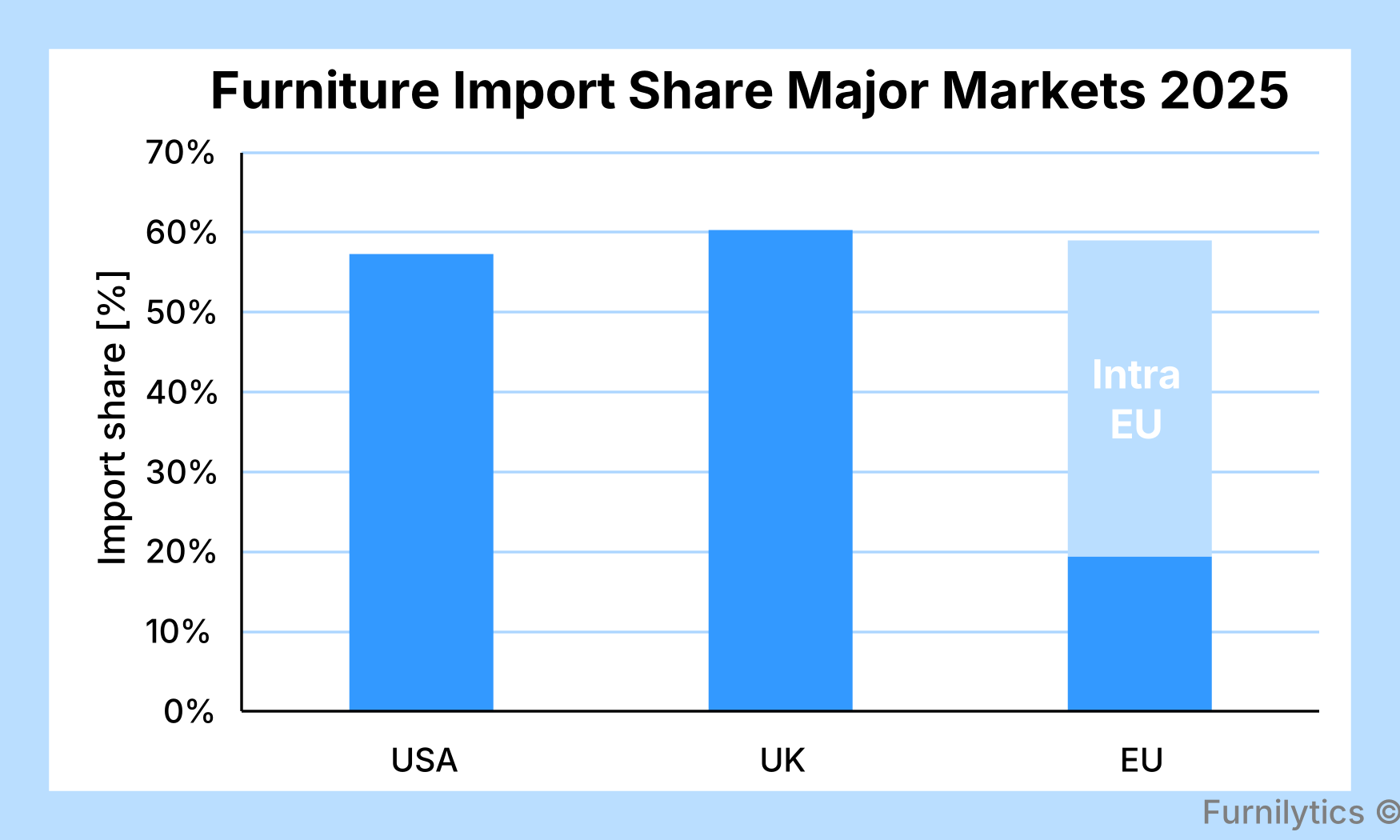
Import dependency across major furniture markets is remarkably similar. In 2025, imports accounted for 57.3% of apparent furniture consumption in the United States, 60.3% in the United Kingdom and 59.0% in the EU27.
The source of those imports, however, differs substantially. In the United States and United Kingdom, imported furniture originates almost entirely from outside the domestic market. In contrast, two-thirds of EU furniture imports originated from other EU member states. Of the EU's 59.0% import share, 39.6 percentage points came from intra-EU trade, compared with 19.4 percentage points from non-EU suppliers.
As a result, approximately 80% of furniture consumed in the EU originated within Europe, either through domestic production (41.0%) or trade between EU member states (39.6%). The data suggests that the European furniture industry operates less as a collection of national markets and more as an integrated regional production network.
Import Dependency Does Not Equal External Dependency
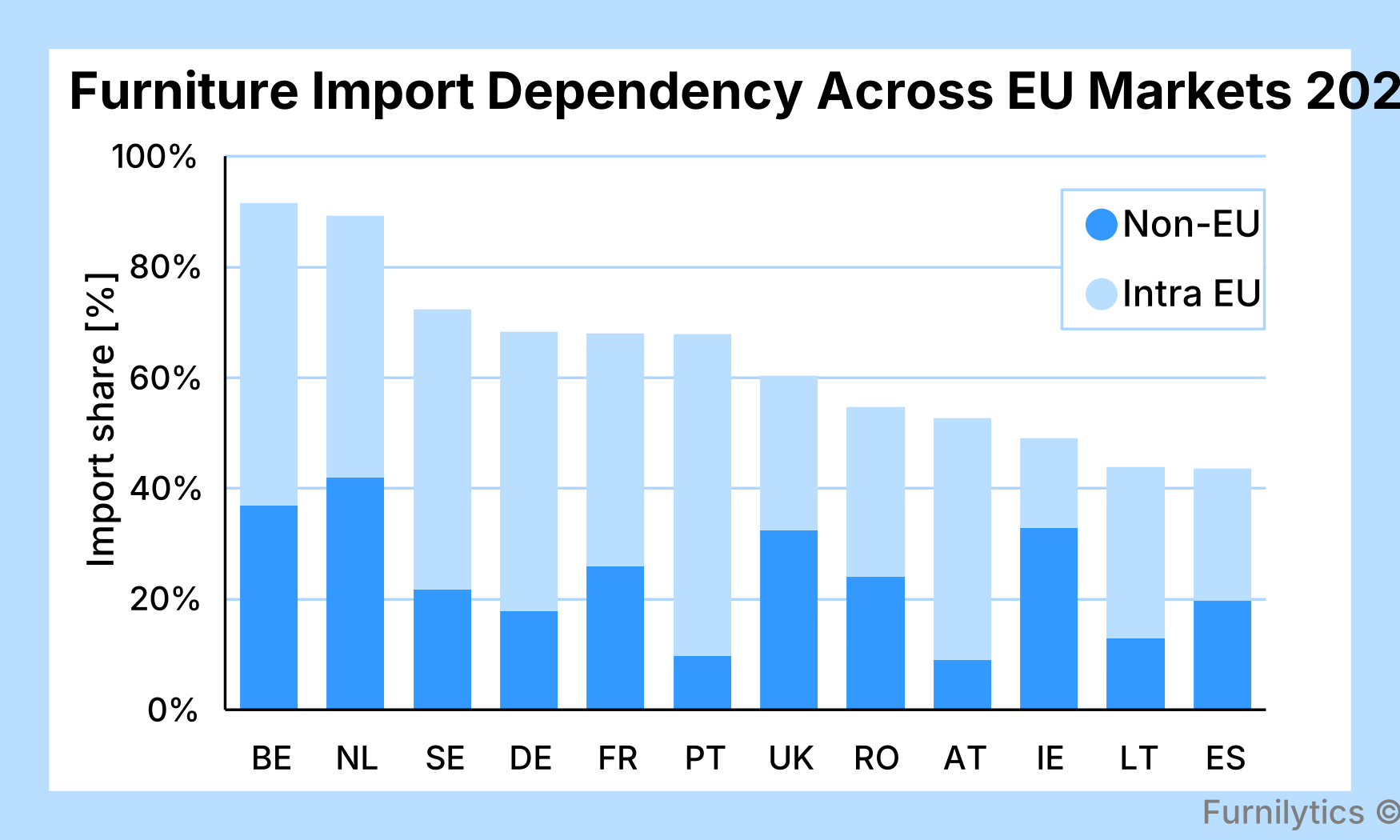
The role of imports varies considerably across European furniture markets. In 2025, imports accounted for more than 90% of apparent furniture consumption in Belgium (91.6%) and nearly 90% in the Netherlands (89.3%). By comparison, imports represented less than half of apparent consumption in Spain (43.6%), Lithuania (43.8%) and Ireland (49.0%).
The origin of those imports differs just as much. Portugal, Austria and Germany all exhibit relatively high import shares, yet the majority originate from within the EU. In Portugal, intra-EU imports accounted for 58.2% of apparent consumption, compared with just 9.7% from non-EU suppliers. Similar patterns can be observed in Austria (43.6% versus 9.1%) and Germany (50.4% versus 17.9%).
By contrast, non-EU imports accounted for 42.0% of apparent consumption in the Netherlands, 36.9% in Belgium, 32.9% in Ireland and 32.5% in the United Kingdom. The comparison focuses on a selection of major European consumer and import markets. Important furniture-exporting countries such as Italy, Poland and Denmark are not included and would generally be expected to exhibit lower import shares due to their larger domestic production base and export-oriented furniture industries.
The data nevertheless illustrates that import dependency and external dependency are not synonymous. While some markets are deeply integrated into European supply chains, others rely more heavily on suppliers outside Europe.
Growing External Competition, Stable European Integration
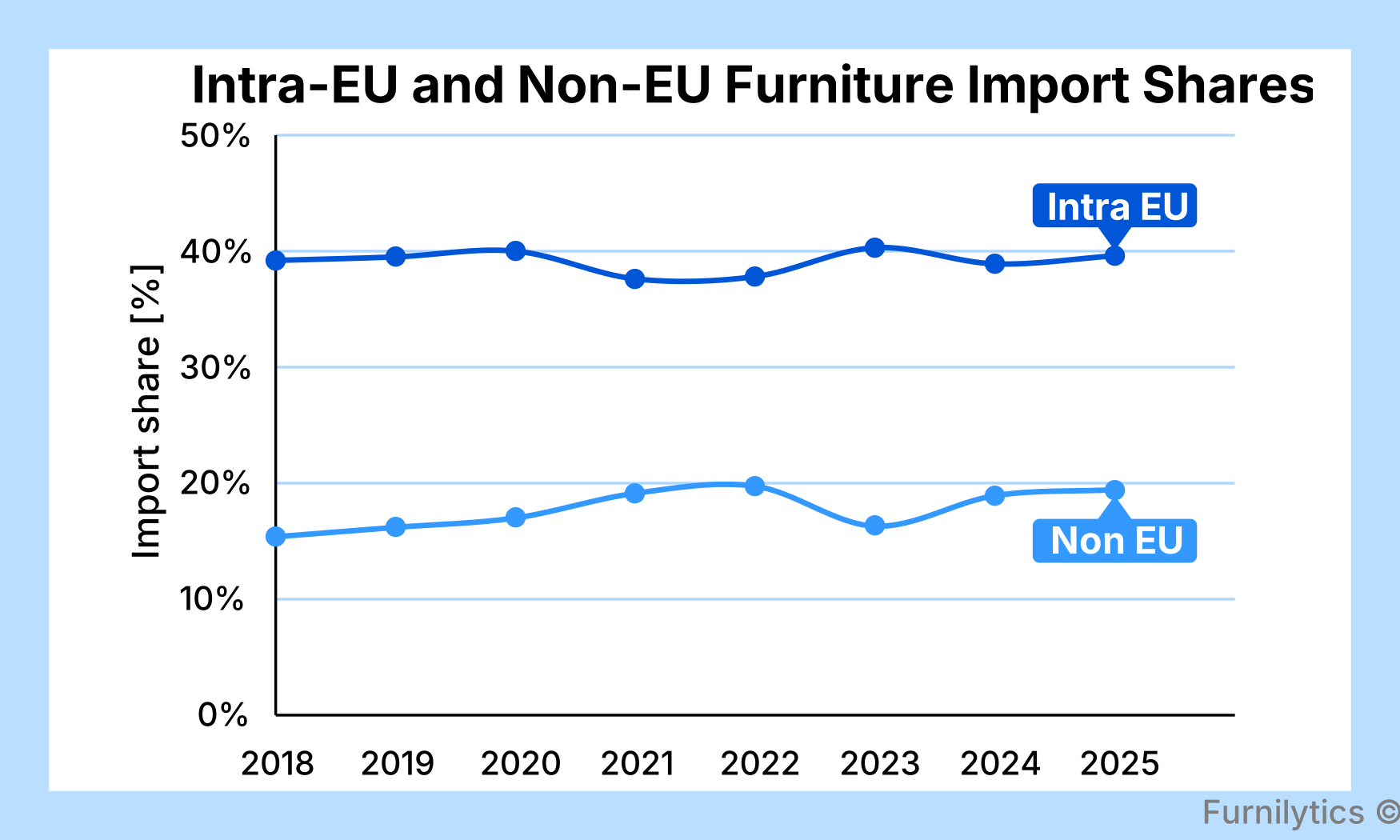
The balance between intra-EU and non-EU furniture imports has remained remarkably stable over the past decade. In 2025, intra-EU imports accounted for 39.6% of apparent furniture consumption in the EU27, almost unchanged from 39.2% in 2018. Throughout the period, approximately four out of every ten euros spent on furniture in the EU were linked to imports from other EU member states.
At the same time, non-EU suppliers increased their presence in the European market. The non-EU import share rose from 15.4% in 2018 to 19.4% in 2025, although the trend was not linear. Following a peak of 19.7% in 2022, the share declined in 2023 before recovering during 2024 and 2025.
The data suggests that growing non-EU competition has not fundamentally altered Europe's internal furniture supply network. Rather than replacing intra-EU trade, non-EU suppliers have gradually increased their share while trade between EU member states has remained broadly stable. In 2025, intra-EU imports remained more than twice as large as non-EU imports, underlining the continued importance of European production networks in supplying the EU furniture market.
Conclusion
The European furniture market remains heavily reliant on European production. In 2025, approximately 80% of furniture consumed in the EU originated within Europe, either through domestic manufacturing or trade between EU member states.
The analysis also shows that import dependency and external dependency are not the same. While some markets source a large share of their furniture from abroad, those imports often originate from other EU countries rather than non-EU suppliers.
Although non-EU suppliers have gradually increased their presence, intra-EU trade remains the dominant import channel, reinforcing the central role of European production networks in supplying the EU furniture market.
Sources:
European Union (Eurostat) - structural business statistics
European Union (Eurostat) - short term business statistics
European Union (Eurostat) Comext Trade Data – DS-045409
Methodology & limitations:
Import dependency is measured using a value-based apparent consumption approach, calculated as production value plus imports minus exports. Total, intra-EU and non-EU import shares are expressed as a percentage of apparent consumption.
EU27 and country-level trade data are based on Eurostat COMEXT furniture trade statistics (HS 9401, HS 9402 and HS 9403). Production values are based on NACE C31 furniture manufacturing turnover, using Eurostat Structural Business Statistics (SBS) as the annual benchmark and Eurostat short-term production and producer-price indicators to extend the series when the latest annual data is not yet available. The UK is treated as a non-EU country in all post-Brexit calculations and uses HMRC UK Trade Info trade statistics and ONS-based furniture manufacturing turnover data. Trade and production values are expressed in euro for comparability.
Trade statistics may be affected by logistics hubs, re-exports, country-of-dispatch reporting, exchange rates and product mix effects. As a result, highly trade-oriented markets such as Belgium and the Netherlands may show elevated import shares. The EU27 aggregate therefore provides the most robust measure of Europe's structural reliance on external furniture supply.