
Kave Home Growth and Business Model
Kave Home has become one of the most closely watched growth stories in the Spanish and wider European furniture market. The Catalonia-based group has combined rapid international expansion with a fast-growing physical retail network, while reported group turnover reached more than €320 million in 2025.
This analysis looks beyond the headline growth. Using statutory accounts, company filings, sustainability reports and account-derived financial data, it examines how Kave Home developed alongside the established B2B business of Julià Grup and within the wider Vilur Capital structure. The focus is on three areas: the acceleration of the physical network, the distribution and interaction of revenue across the group entities, and the development of profitability as Kave Home became the larger consumer-facing business.
The data point to a model that is more integrated than a conventional retail expansion story: rapid B2C growth has been built alongside a sizeable B2B platform that has continued to scale in parallel.
Kave Home Expansion Built on a B2B Foundation
Kave Home has become one of the more visible growth stories in European furniture retail. Group turnover exceeded €200 million in 2023, reached €262 million in 2024 and grew another 23% to €321.2 million in 2025, alongside rapid international and physical expansion. The business, however, has much deeper B2B roots. Julià Grup dates back to 1983 and developed an international wholesale, sourcing and product-development platform before Kave Home was launched in 2013 as its direct-to-consumer business, initially online.
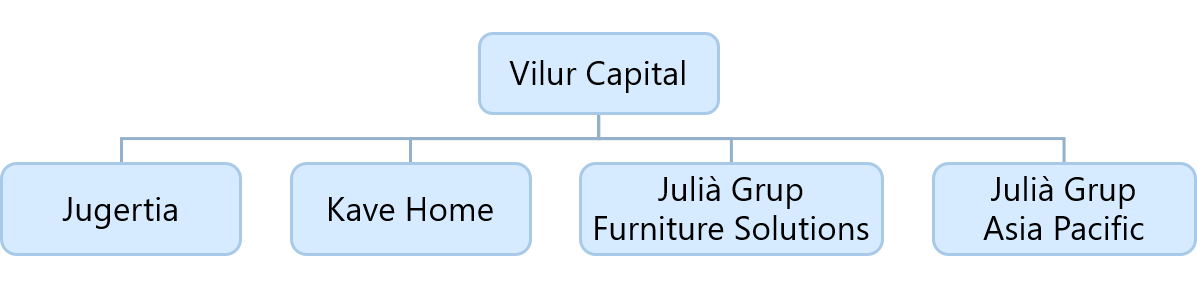
A key structural change came in 2017, when Vilur Capital was introduced as the holding company above the operating businesses. Today, Kave Home SLU operates the B2C business, while Julià Grup Furniture Solutions SLU focuses on B2B and wholesale, alongside other group activities in real estate and Asian sourcing/quality control. Physical retail was added later, with the first Kave Home stores opening in 2019. Since then, the model has evolved from online-first toward omni-channel, while the established B2B business has continued to grow alongside it.
Physical Expansion Accelerates
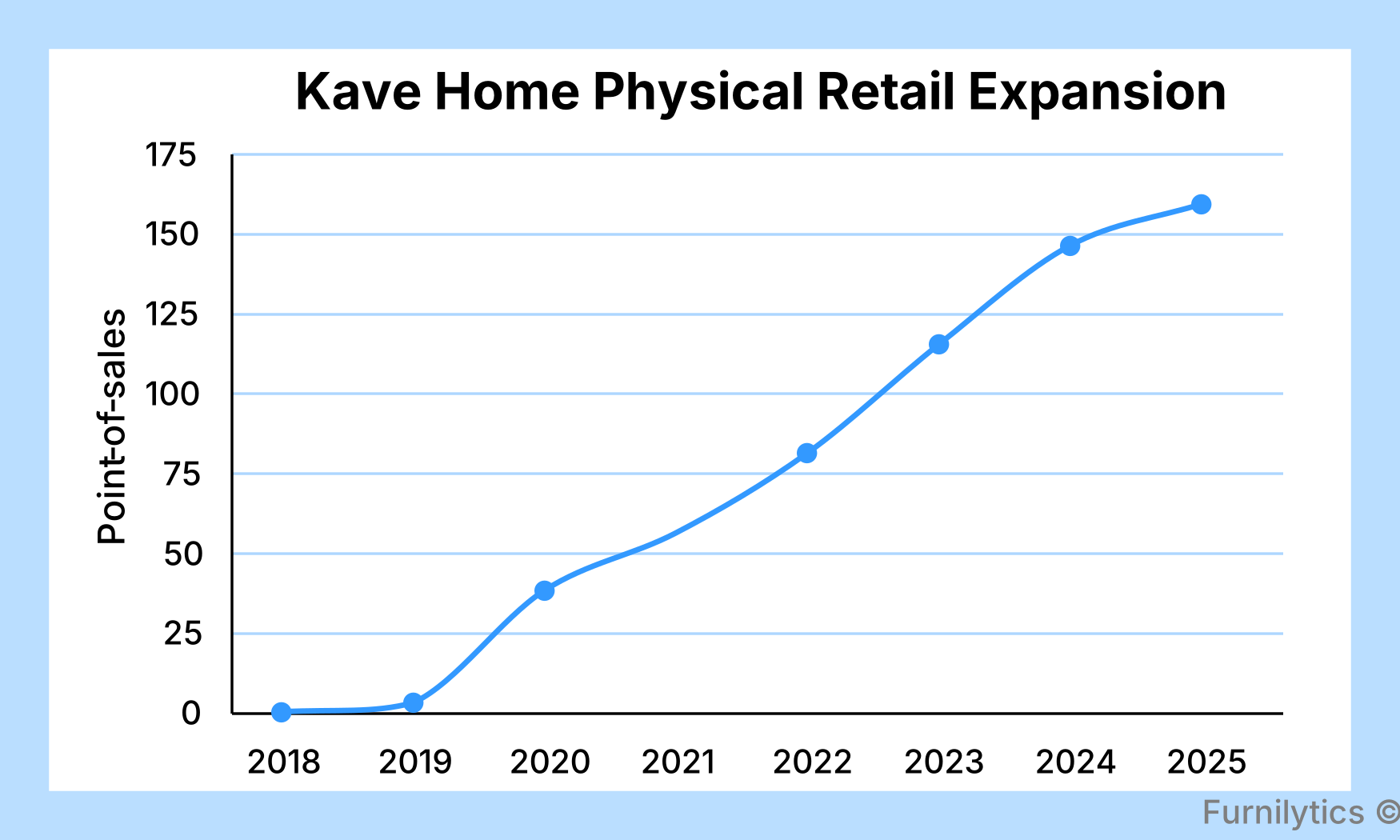
Kave Home has expanded rapidly from an online-first model into a broad physical retail network. The first stores opened in 2019, when reported group turnover was around €59 million. By 2025, the network had grown to 159 points of sale, while group turnover had reached €321.2 million.
The expansion accelerated particularly after 2021, with the network increasing from around 80 points of sale in 2022 to 115 in 2023 and 146 in 2024. Physical retail therefore became an increasingly important part of the growth model, complementing rather than replacing the established online channel.
Growth Across an Increasingly Integrated Group
Kave Home SLU did not grow at the expense of the established B2B business. Julià Grup Furniture Solutions expanded strongly alongside it, with revenue rising from around €38 million in 2018 to €168.9 million in 2024, while Kave Home SLU increased from about €15 million to €180.7 million over the same period. This suggests that the B2B platform remained an important commercial foundation and growth vehicle for the wider group.
The relationship between the two entities is strongly integrated. Julià Grup reported €86.2 million of sales to other group companies in 2024, up from €58.9 million in 2023, equivalent to around 51% of its total revenue. This substantial intra-group activity helps explain why Kave Home SLU and Julià Grup revenues cannot simply be added to derive reported group turnover.
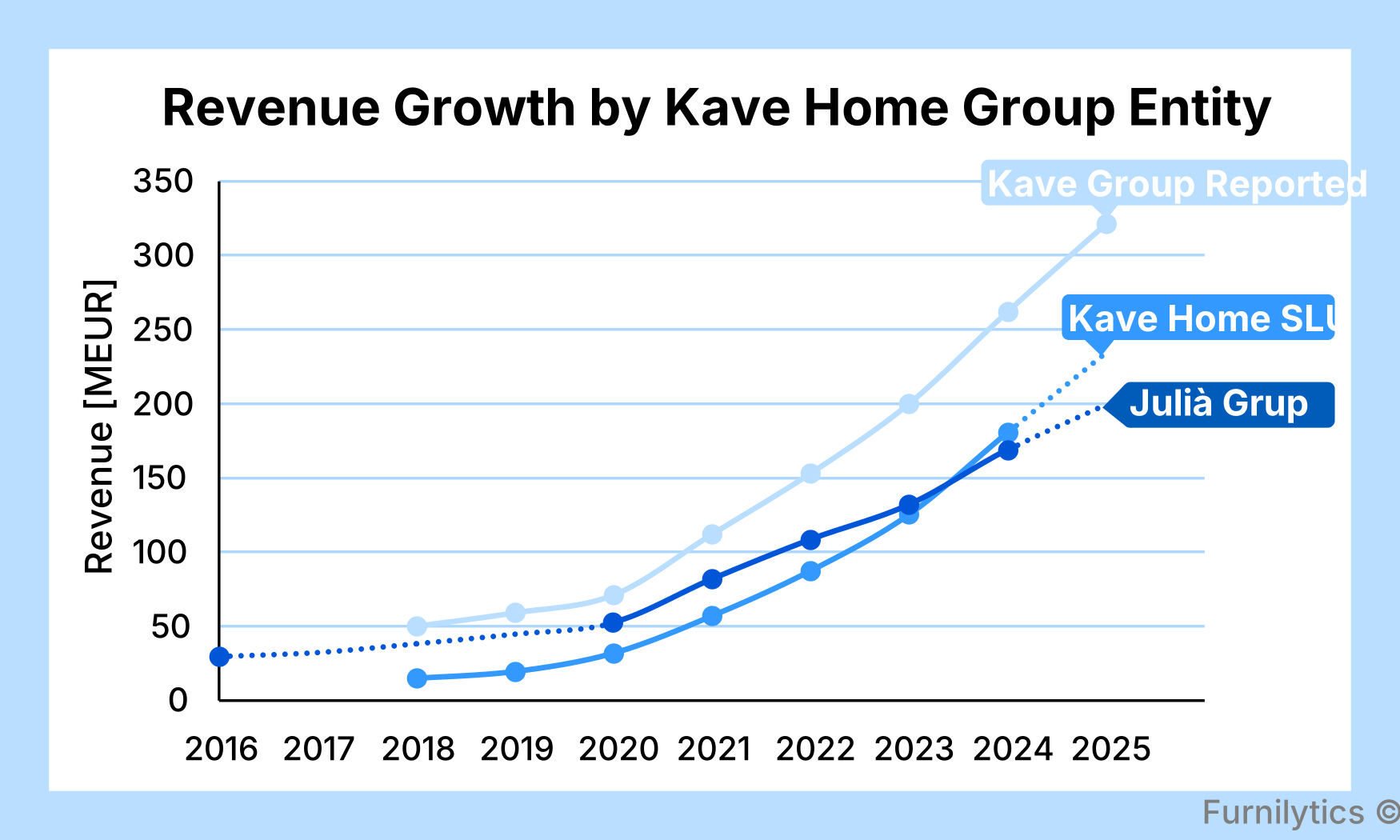
Kave Home SLU overtook Julià Grup in legal-entity revenue in 2024, marking an important shift in the balance of the group. Julià nevertheless remained a substantial business in its own right, reinforcing that Kave Home SLU growth developed alongside the original B2B platform. The two businesses therefore scaled together, but not with the same economics. As Kave Home SLU became the larger consumer-facing entity, its profitability developed very differently from the more established Julià Grup business.
Diverging Profitability Across B2C and B2B
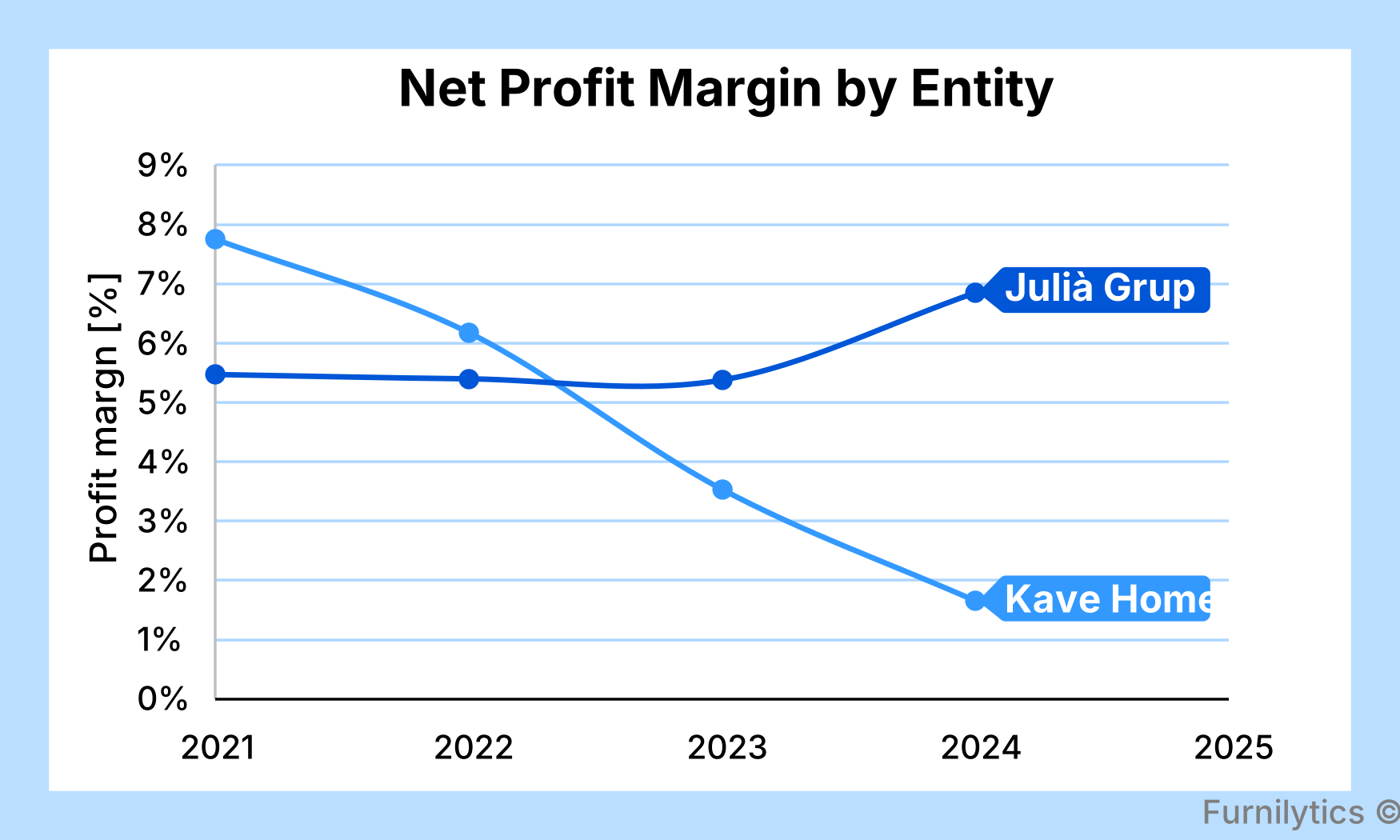
The rapid expansion of Kave Home has coincided with a clear decline in profitability. Net margin fell from 7.8% in 2021 to 1.6% in 2024, even as revenue more than tripled over the same period.
Julià Grup followed a different pattern. Its net margin remained around 5–7%, reaching 6.8% in 2024. This suggests that the established B2B operation remained materially higher-margin, while Kave Home SLU experienced significant margin compression alongside its rapid B2C, international and physical expansion.
The contrast highlights an important feature of the group model: Kave has become the larger growth engine, while Julià remains a sizeable and comparatively profitable B2B operation within the group.
Conclusion
Kave Home has evolved from an online B2C extension of an established furniture wholesaler into the largest operating entity within a rapidly growing international group. Physical expansion accelerated, group turnover increased sharply, and Kave Home overtook Julià Grup in legal-entity revenue by 2024.
At the same time, Julià Grup continued to grow, while the difference between combined entity revenues and reported group turnover are caused by a high degree of integration between the B2B and B2C activities. Their economics have diverged, however: Kave Home has experienced substantial margin compression while Julià has remained comparatively profitable.
Overall, Kave Home is better understood as the consumer-facing growth engine of an integrated B2B and B2C platform, rather than as a standalone retail success story.
Sources:
Registradores de España - governmental business registry
Reconstruction data gaps - eInforma, Infoempresa & Economía Digital
Kave Home - Sustainability reports
Methodology & limitations:
Revenue figures are primarily based on statutory accounts filed with Registradores de España, supplemented with account-derived data from eInforma, Infoempresa and Economía Digital. Kave Home SLU represents the B2C legal entity, Julià Grup Furniture Solutions SLU the B2B/wholesale entity. Group turnover is based on consolidated or group-level figures, often referred to in media and company communications as the Kave Home Group. Estimated observations are marked as such.
Point-of-sale data are based on Kave Home company communications and sustainability reports. Reporting definitions vary over time between own stores, franchises, partners and Shop-in-Shop locations, so earlier observations are less directly comparable. Profit margins are calculated as net profit divided by revenue and are based on statutory accounts for both Kave Home SLU and Julià Grup Furniture Solutions SLU.