
Poland Furniture Retail Trends and Market Share Analysis
The Poland furniture retail market expanded strongly between 2015 and 2025, supported by rising household purchasing power, housing market development, and the continued expansion of organised furniture retail chains. Poland has also become one of the largest specialist furniture retail markets in Central and Eastern Europe.
This analysis examines three structural dimensions of the Polish furniture retail market: long-term furniture retail turnover growth, specialist furniture retail intensity relative to household furniture consumption, and the market share positioning of major Polish furniture retailers including IKEA, JYSK, Agata, and Black Red White. Together, these indicators provide a broader view of how the Poland furniture retail market evolved between 2015 and 2025.
Poland Furniture Retail Growth Trend
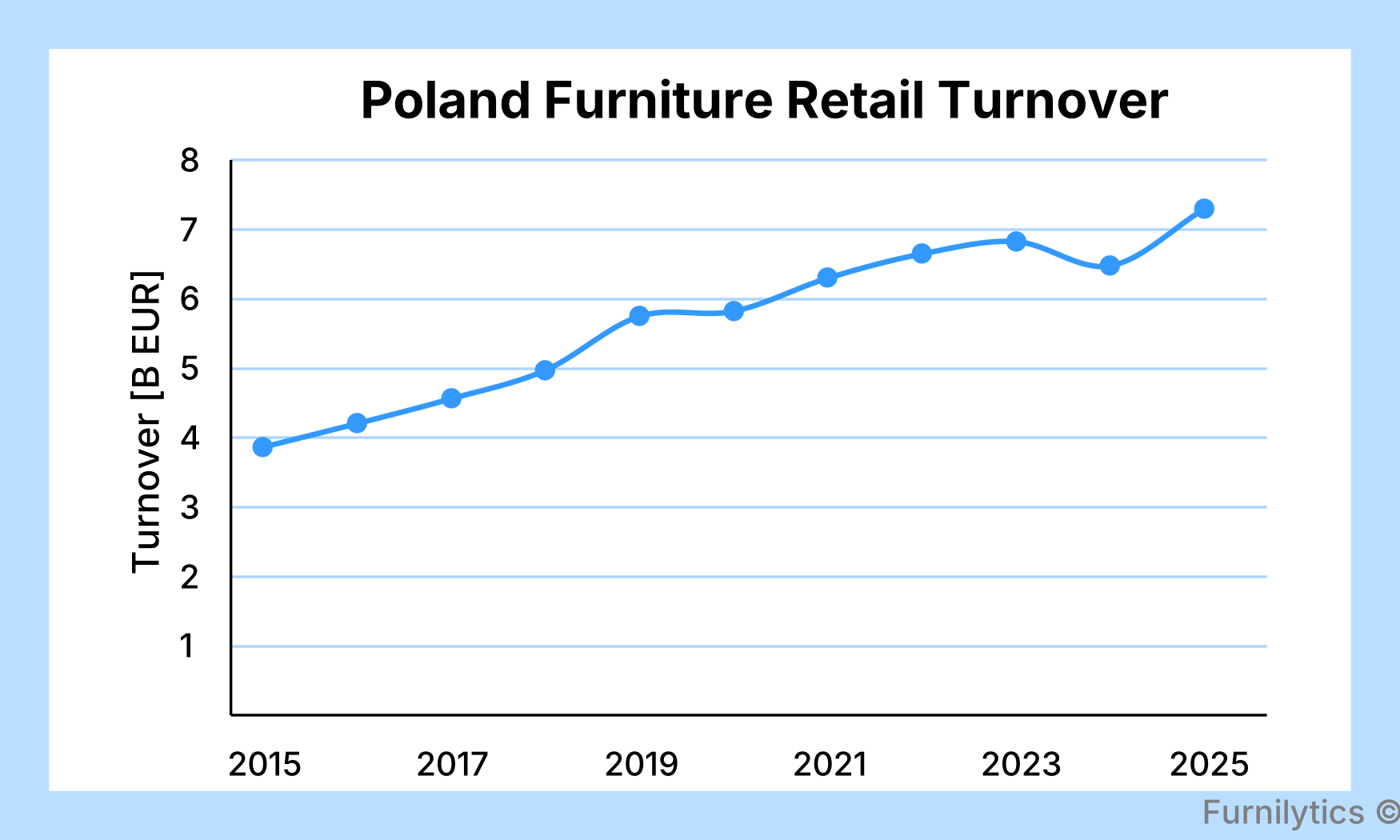
The Polish specialist furniture retail market expanded from approximately EUR 3.9 billion in 2015 to roughly EUR 7.3 billion in 2025, based on Eurostat SBS NACE G47.59 turnover data. This represents cumulative growth of around 87% over the period.
Growth accelerated particularly between 2018 and 2023, when retail turnover increased from approximately EUR 5.0 billion to EUR 6.8 billion. Despite weaker European furniture demand conditions during 2023-2024, the Polish market remained relatively resilient and returned to growth in 2025. The long-term expansion reflects rising household purchasing power, housing market development, and the continued scaling of organised specialist furniture retail chains in Poland.
Specialist Retail Intensity in Furniture Consumption
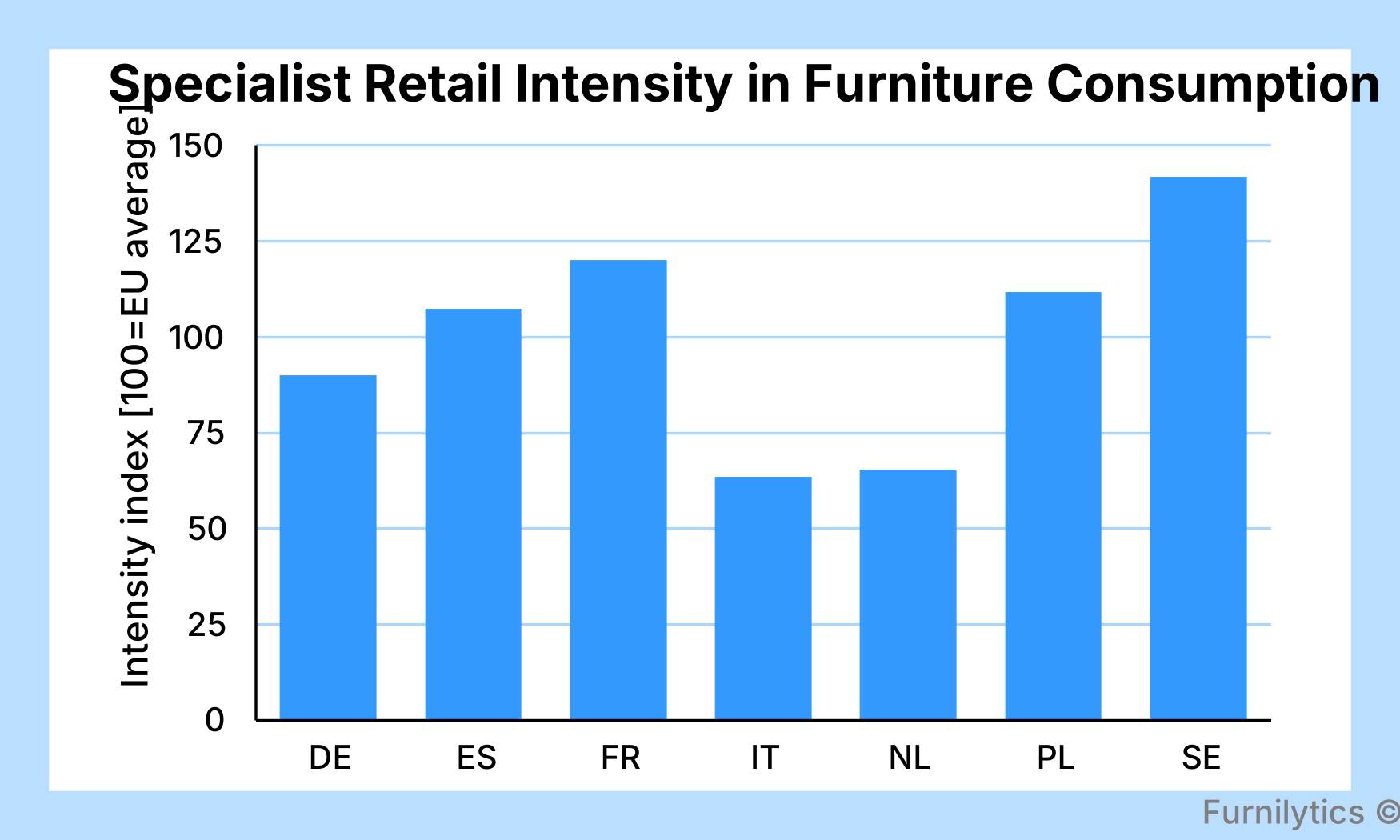
Poland shows a relatively high level of specialist furniture retail intensity compared with the European average. Based on the ratio between specialist furniture retail turnover and household furniture consumption expenditure, Poland scores approximately 112 relative to the EU average.
This suggests that a comparatively large share of furniture-related consumer spending in Poland flows through specialised furniture retail chains rather than through alternative channels such as general e-commerce platforms, DIY retailers, department stores, or hypermarkets. The result places Poland above larger Western European markets such as Germany and close to structurally retail-oriented markets such as Spain and France. Sweden shows the highest relative specialist retail intensity in this comparison set.
The relatively high Polish retail intensity likely reflects the strong position of organised furniture retail chains, the importance of large-format furniture stores, and the continued development of specialist omni-channel retail networks across the country.
Furniture Retail Market Share Proxy
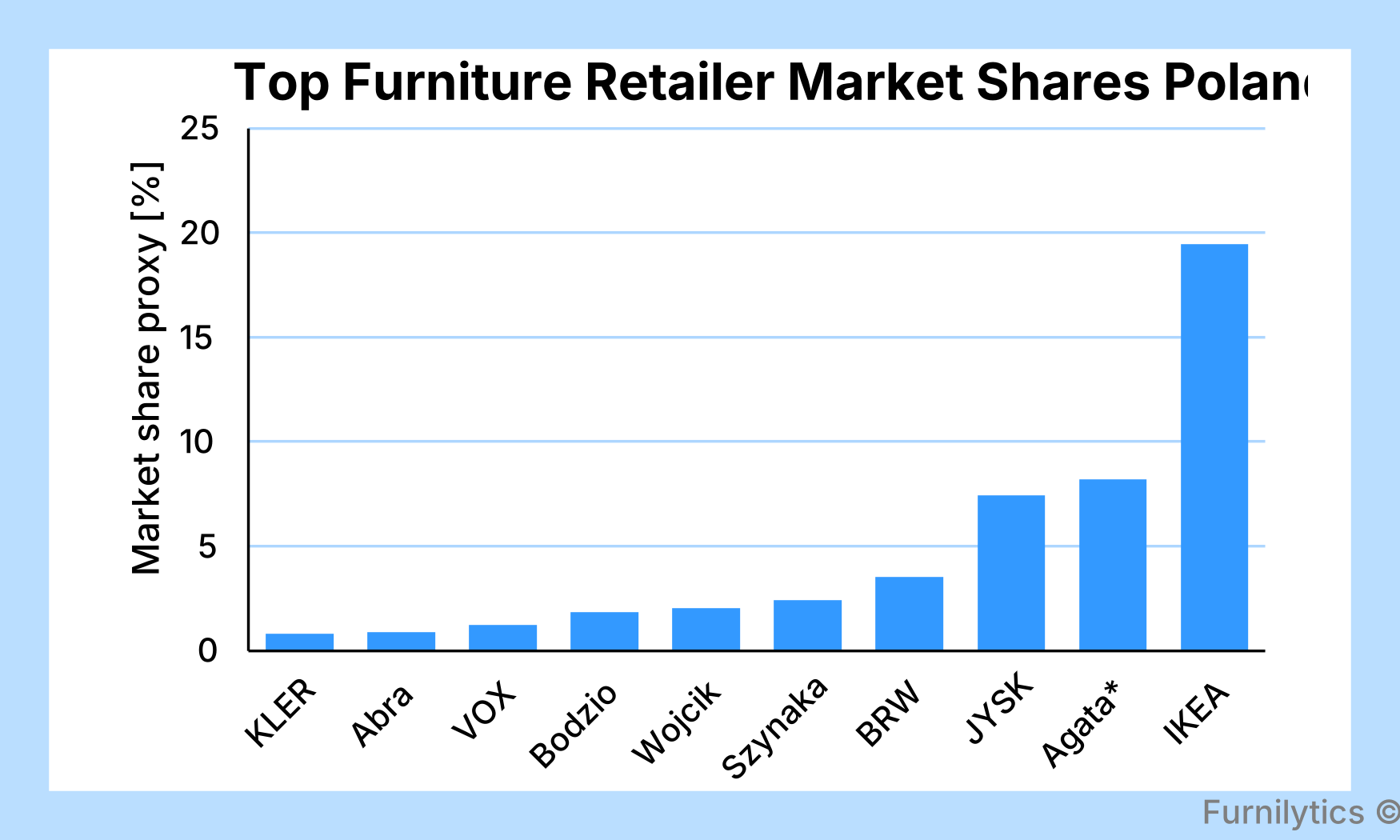
The retailer market shares shown above should be interpreted as a specialist furniture retail market share proxy rather than exact competitive market shares. Shares are estimated by comparing retailer-specific furniture retail turnover estimates with the total Polish specialist furniture retail market size (NACE G47.59).
The Polish furniture retail landscape remains relatively fragmented. Even the ten largest retailers together account for only roughly half of the estimated specialist furniture retail market, indicating that independent retailers, regional chains, ecommerce players, and broader home furnishing retailers still represent a substantial share of total market activity.
IKEA remains the dominant player by a wide margin, with an estimated market share of approximately 19–20% in 2025. Agata and JYSK form the second tier of large-scale retailers, each reaching estimated market shares above 7%, while Black Red White (BRW) accounts for roughly 3–4% of the market. The remaining identified retailers each individually represent relatively small shares, generally below 3%.
Trend developments also suggest differing competitive trajectories among the largest players. IKEA continued to increase turnover strongly in absolute terms, although market share growth appears to have moderated in recent years. JYSK shows the strongest long-term upward trend, steadily increasing its estimated market share over the past decade. Agata appears comparatively stable over time, while BRW’s relative market position appears weaker than during earlier years.
Overall, the market structure suggests that Poland combines the presence of several scaled national and international retail chains with a still relatively dispersed specialist retail base.
Conclusion
The Polish furniture retail market has undergone substantial expansion over the past decade, supported by rising household purchasing power, housing market development, and the continued scaling of organised furniture retail chains. Specialist furniture retail turnover nearly doubled between 2015 and 2025, while Poland also shows a relatively high level of specialist retail intensity compared with the European average.
Despite the presence of several large-scale retailers, the market structure remains relatively fragmented. IKEA continues to hold a dominant position, while JYSK has shown the strongest long-term market share expansion among the major players. Domestic retailers such as Agata and BRW remain important participants, although the broader market trend suggests increasing importance of larger omnichannel and international retail concepts within the Polish furniture retail landscape.
Sources:
Polish National Court Register - Krajowy Rejestr Sądowy (KRS)
Eurostat - Classification of individual consumption by purpose (COICOP)
Furnilytics indicator - Poland Furniture Retail Market Size
Furnilytics indicator - Poland Furniture Consumer Market Size
Methodology & limitations:
Retailer market shares are estimated by dividing retailer-specific furniture retail turnover estimates by the total Polish furniture retail market size published by Furnilytics. The retail market size is based on Eurostat Structural Business Statistics (SBS) for NACE G47.59 (“Retail sale of furniture, lighting equipment and other household articles in specialised stores”). Retailer turnover estimates are adjusted where possible to better reflect furniture-related retail activity rather than total group revenue. Full methodology: Poland Furniture Retailer Market Share Methodology
The “Specialist Retail Intensity” index compares furniture retail turnover (NACE G47.59) with household furniture consumption expenditure (COICOP CP051), indexed to the EU average. Higher values indicate a relatively larger role for specialist furniture retailers within total furniture-related consumer spending.
COICOP CP051 and NACE G47.59 measure different concepts. CP051 captures household furniture expenditure across all retail channels, while G47.59 only measures turnover generated by specialised furniture retailers. As a result, omni-channel retail structures, e-commerce penetration, VAT differences, and retailer classification differences may affect cross-country comparability. Retailer market shares should therefore be interpreted as approximate indicators of specialist retail positioning rather than exact competitive market shares.