
Ireland's Furniture Market: Strong Growth, Balanced Trade
Ahead of the Irish Furniture & Homewares Show (IFHS), this analysis uses the latest Eurostat data to examine Ireland's furniture market. It explores retail market growth, import dependence and evolving sourcing patterns, placing Ireland in the context of its Western European peers.
This analysis is made for Big Furniture Group.
Retail Market Expansion
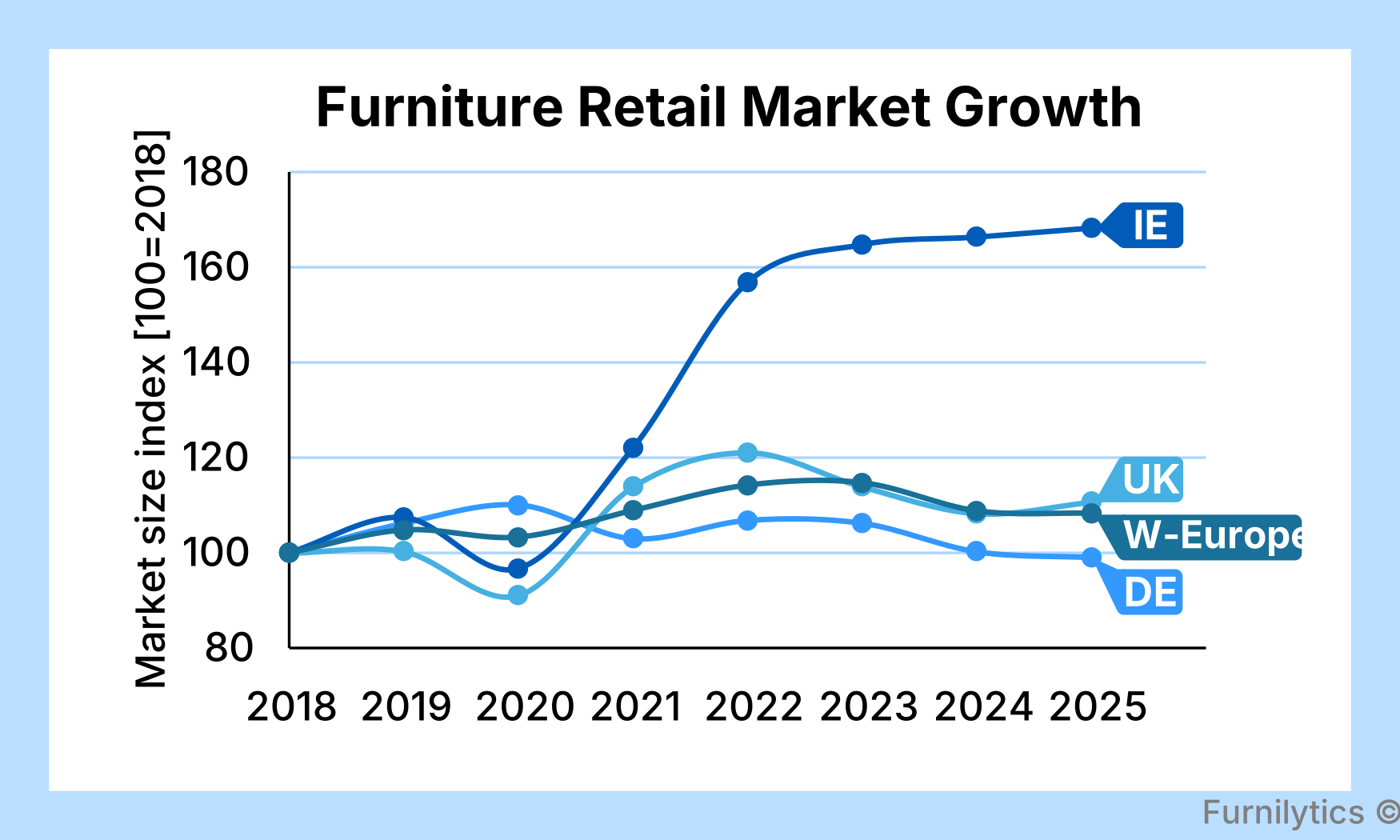
Ireland has recorded the strongest furniture retail market expansions among selected Western European markets since 2018. Measured by the value of furniture retail turnover (Eurostat G47.59), the market grew by around 68% between 2018 and 2025, significantly outperforming the UK, Germany and the Western European average.
The expansion has been accompanied by growth in both furniture production (+42.3%, Eurostat SBS C31) and household furniture expenditure (+62.3%, COICOP CP051), indicating broad-based market growth. Compared with many Western European peers, stronger consumer confidence and a more active housing market have likely supported furniture demand.
As the chart reflects retail turnover rather than sales volumes, part of the increase also reflects higher furniture prices and broader inflation following 2021. More recently, the market has begun to normalise, with retail turnover declining 6.6% year-on-year over the first quarter of 2026, compared with a 0.9% decline across Western Europe.
Balanced Import Dependence
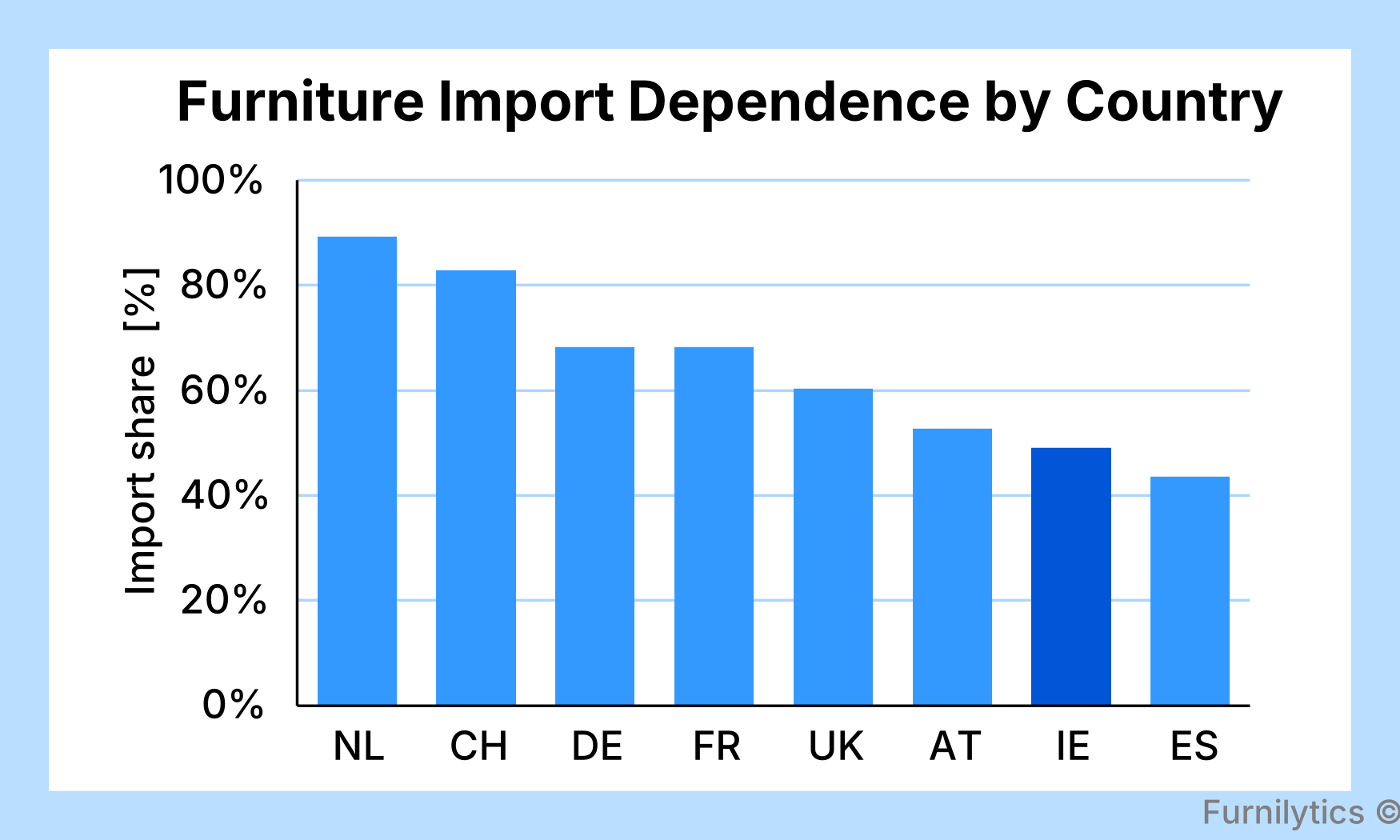
Despite one of Western Europe's strongest furniture market expansions, Ireland has maintained relatively low import dependence. Imports accounted for 49% of domestic furniture demand in 2025, well below the roughly 65–70% typically seen across many Western European markets. Following a peak of 53% in 2022, import dependence has gradually eased as the market normalised.
The comparatively low reliance on imports reflects the continued role of domestic manufacturing, although production has also begun to soften, with furniture manufacturing turnover declining 9.8% year-on-year during the first quarter of 2026.
A More Diversified Supply Chain
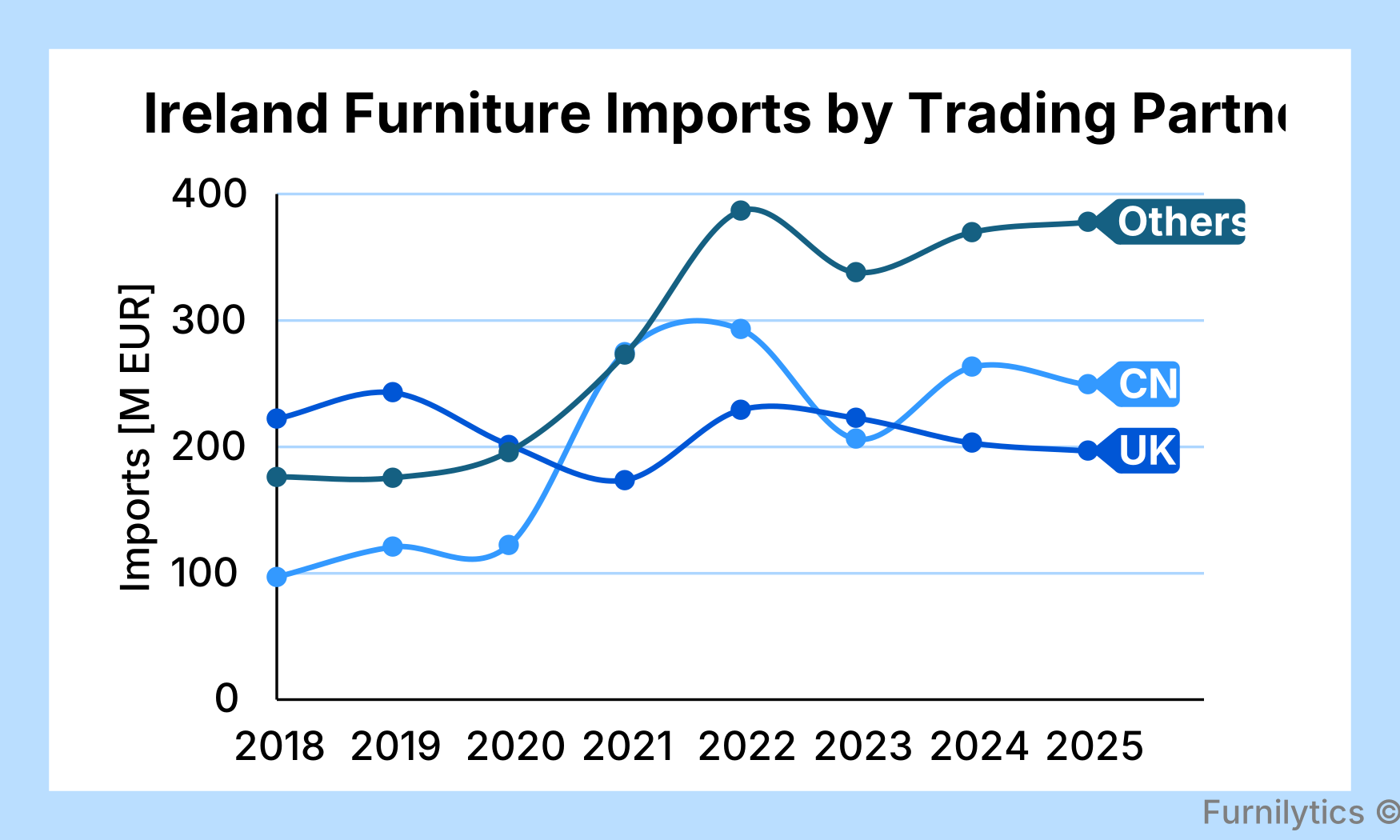
Despite remaining relatively concentrated, Ireland's furniture import base has become more diversified over recent years. The combined share of imports from the UK and China declined from 67.5% in 2019 to 54.1% in 2025, reflecting a broader mix of international suppliers.
The most significant shift has been the declining role of the UK. Its share of Irish furniture imports almost halved from 45% in 2019 to 24% in 2025, while China has largely replaced part of that share and maintained a stable contribution of around 30% in recent years. The trend highlights a structural shift away from UK dependence towards a more diversified international supply chain.
Conclusion
Ireland's furniture market has outperformed many Western European peers in recent years, supported by strong domestic demand, a relatively balanced import structure and an increasingly diversified supplier base. While recent indicators point to market normalisation, the long-term fundamentals remain comparatively strong.
Sources:
Eurostat – Short-term business statistics (STS)
Eurostat – Structural business statistics (SBS)
Eurostat – Comext database DS-045409
Methodology & limitations:
Furniture production is based on Furnilytics estimates for furniture manufacturing (NACE C31). Annual benchmark values are derived from Eurostat Structural Business Statistics (SBS), while monthly developments are estimated using Eurostat short-term production and producer price indicators. Furniture retail market size is based on Eurostat retail turnover statistics (NACE G47.59), and furniture import data is derived from Eurostat Comext (DS-045409) covering HS 9401, HS 9402 and HS 9403. Trade and short-term statistics may be subject to revisions, reporting lags and seasonal adjustments, while monetary indicators may also reflect changes in prices as well as sales volumes.