
UK Mattresses: A Larger, More International Market
With the Bed Show bringing the UK bed and mattress industry together, it is a good moment to review how the market has changed. The UK mattress market is larger than a decade ago, but domestic manufacturers are supplying a declining share of demand.
This analysis is made for Big Furniture Group.
A larger UK mattress market
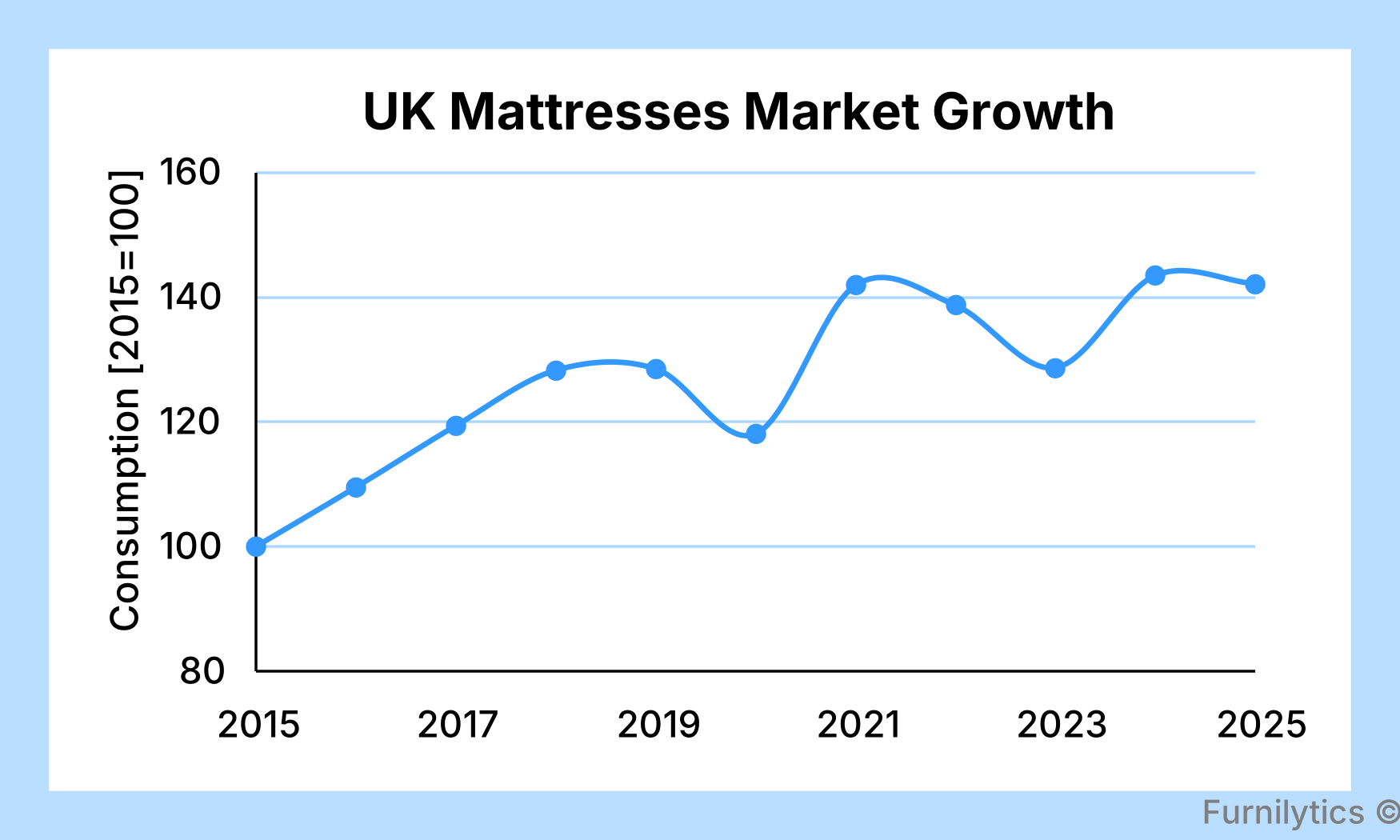
The UK mattress market is considerably larger than it was a decade ago. Based on ONS production data and apparent consumption — domestic production plus imports less exports — the market reached an estimated £783 million in 2025, compared with £551 million in 2015, an increase of around 42%.
Growth has not been linear. After expanding steadily up to 2019, the market fell back in 2020 before rebounding strongly in 2021. More recently, apparent consumption recovered from a weaker 2023 to around £790 million in 2024, before remaining broadly stable in 2025.
The longer-term picture is therefore one of a substantially larger market, although nominal market value has shown relatively little further growth since the post-pandemic rebound.
Domestic manufacturers are losing ground
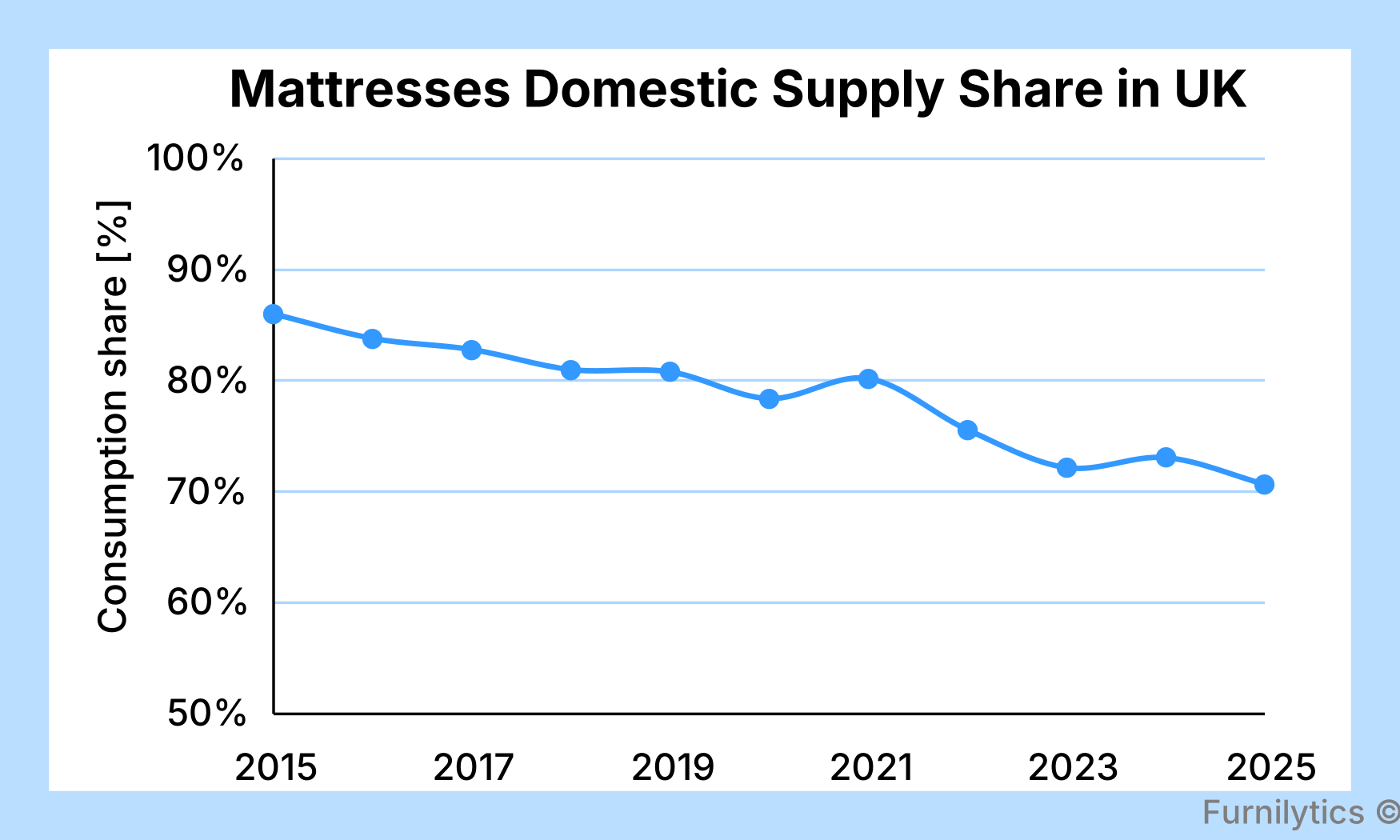
While the UK mattress market has grown, domestic manufacturers are supplying a smaller share of it. UK mattress production increased from around £508 million in 2015 to £607 million in 2025, but imports grew much faster, rising from £77 million to £229 million over the same period.
As a result, the domestic share of apparent consumption fell from 86.0% in 2015 to 70.7% in 2025. Put differently, imported mattresses now account for close to 30% of UK demand, compared with around 14% a decade ago.
The shift has been gradual rather than sudden, but the direction is clear: UK manufacturers are not necessarily producing less than ten years ago, but they are supplying a smaller share of a larger domestic market.
Demand recovery continues
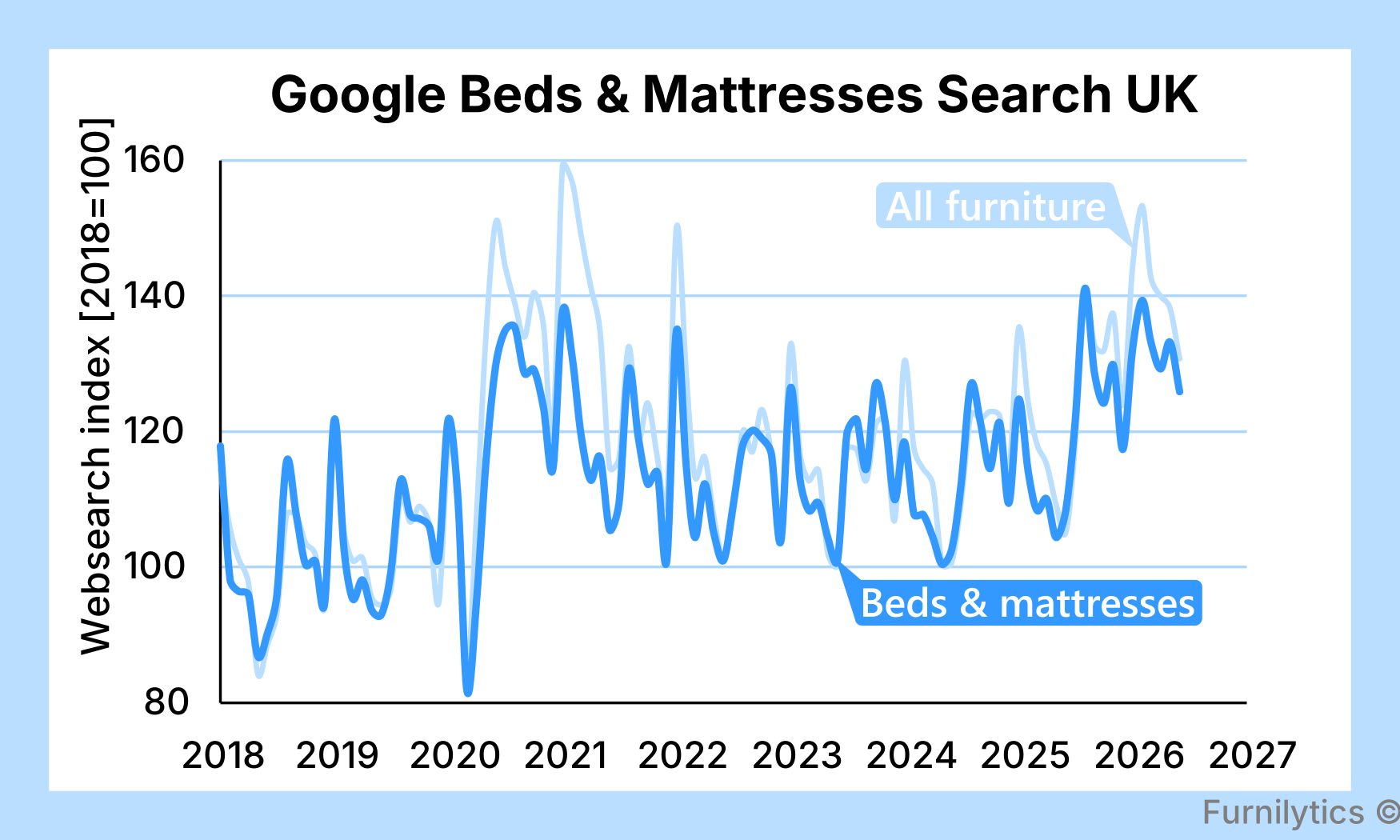
Google search interest in beds and mattresses recovered during 2025 and into 2026 after a weaker period through 2023 and 2024. However, the latest readings suggest that the category has recently underperformed the broader furniture search trend.
While general furniture searches have continued to strengthen, beds and mattresses have not kept pace to the same extent. That does not necessarily indicate weakening demand, but it does suggest that the recent recovery in consumer interest is broader across furniture rather than being led by the bed and mattress category.
Trade data show a similarly mixed picture. Mattress imports were 4.7% higher over the latest 12 months but declined by 1.0% over six months and 4.0% over three months, while exports increased by 15.0% over 12 months.
Taken together, the latest indicators point to an improving consumer environment, but with beds and mattresses currently falling somewhat short of the wider furniture recovery.
Conclusion
In review of the Bed Show, the UK mattress market remains larger than a decade ago, but also more competitive. Domestic manufacturers are supplying a smaller share of demand as imports have gained ground, while recent search and trade indicators point to a market that is stabilising rather than weakening further. Overall, the picture is of a larger, more international market with some signs of improving demand conditions.
Sources:
Google Trends
Furniture retailer web search
Furniture product web search trends by group
ONS Prodcom - Manufacturing sales by product type
Methodology & limitations:
This analysis combines Google Trends, HMRC UK Trade Info, and ONS PRODCOM data to track UK beds and mattresses search interest, trade momentum, and domestic supply coverage.
Search indicators use Great Britain Google Trends keyword baskets, aggregated monthly and indexed to 2018. Trade uses mattress imports and exports under HS 940421 and 940429, including value, weight, and GBP/kg measures. Domestic production uses ONS PRODCOM mattress rows 31031230, 31031250, 31031270, and 31031290, excluding mattress supports/divans.
Apparent supply is calculated as domestic production plus imports minus exports. Domestic supply share is (domestic production - exports) / apparent supply.
These figures are directional proxies, not exact retail market size. Search data reflects relative interest, trade values are border values, and PRODCOM reflects manufacturer sales. Results are sensitive to keyword selection, product-code mapping, Google Trends sampling, PRODCOM suppression, and changes in product mix or unit values.